










Last Watched

"Hun"  Sort by

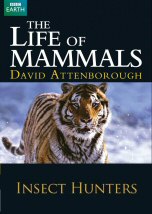
Insect Hunters

   2002    Nature
Mammals from tiny shrews, giant anteaters, armoured armadillo to bats have specialised in eating insects. Some have evolved into complex and effective hunters, even pursued their prey into the skies
Series: The Life of Mammals

Peril and Promise

   2013    History
In the 80s the nature of the Latino Diaspora changes again. From Cuba a second wave of refugees to United States – the Mariel exodus – floods Miami . The same decade sees the sudden arrival of hundreds of thousands of Central Americans (Salvadorans, Guatemalans, and Nicaraguans) fleeing death squads and mass murders at home like activist, Carlos Vaquerano. By the early 1990s, a political debate over illegal immigration – has begun. Globalization, empowered by NAFTA, means that as U.S. manufacturers move south, Mexican workers head north in record numbers. A backlash ensues: tightened borders, anti-bilingualism, state laws to declare all illegal immigrants felons. But a sea change is underway: the coalescence of a new phenomenon called Latino American culture-as Latinos spread geographically and make their mark in music, sports, politics, business, and education.
Series: Latino Americans

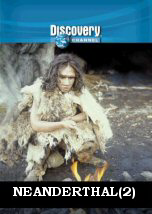
Neanderthal 2

       History
Long ago, two species of human beings coexisted on Earth until competition drove one of them to extinction. This program, set in the southwest of France 35,000 years ago, reconstructs the life in the Neanderthal world at the time Cro-Magnons first entered the scene. All aspects of Neanderthal clan life are examined, including tool- and weapon-making, hunting and gathering, health and healing, childbirth, rituals, and making fire. Footage of skeletal remains and the scholarly research of eminent paleontologist Chris Stringer and Oxford University's Paul Pettitt support the documentary.
Series: Neanderthal

Inside the Milky Way

   2011    Science
Embark on an astounding journey across 100,000 light-years to witness key moments in the history of the Milky Way. Using cutting-edge science, National Geographic constructs a 3-D state-of-the-art CGI model of our galaxy. We'll peer into the heart of the Milky Way on the hunt for super-massive black holes, watch how stars are born and die, fly out and above the plane of our galaxy to understand its true shape and scour its dusty spiral arms for the possibility of life

Ape Man: Search for the First Human

   2005    Science
After eight grueling years of hunting in the hot, wind-scoured desert of central Africa, an international team of researchers has uncovered one of the most sensational fossil finds in living memory: the well-preserved 7 million years old skull of a chimp-size animal, probably a male, that doesn't fit any known species. According to paleontologist Michel Brunet of the University of Poitiers in France, whose team reported the find in Nature last week, there is no way it could have been an ape of any kind. It was almost certainly a hominid — a member of a subdivision of the primate family whose only living representative is modern man.

Comets: Frozen Wanderers

   2012    Science
We think of comets as beautiful glowing balls of light streaking across our skies with their long sweeping tails, yet comets are so much more than just a cosmic firework display. Comets have a uniquely important place in modern science. As time machines from the early universe, they could hold the key to unlock the secrets of the cosmos. Comets could even be the origin of life itself. We follow the incredible odyssey of a comet as it sails through the solar system, watching it's every move as it evolves from a dormant chunk of ice and rock into a tumbling, violently active nucleus engulfed in a gaseous haze. What we learn is a revelation; comets are even more mysterious and fascinating than we had ever imagined.
Series: How the Universe Works