



Last Watched

"Ant "  Sort by

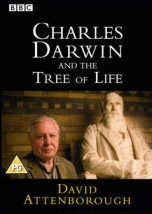
Charles Darwin and the Tree of Life

   2009    Science
David Attenborough asks three key questions: how and why did Darwin come up with his theory of evolution? Why do we think he was right? And why is it more important now than ever before? David starts his journey in Darwin's home at Down House in Kent, where Darwin worried and puzzled over the origins of life. David goes back to his roots in Leicestershire, where he hunted for fossils as a child, and where another schoolboy unearthed a significant find in the 1950s. And he revisits Cambridge University, where both he and Darwin studied, and where many years later the DNA double helix was discovered, providing the foundations for genetics. At the end of his journey in the Natural History Museum in London, David concludes that Darwin's great insight revolutionised the way in which we see the world. We now understand why there are so many different species, and why they are distributed in the way they are. But above all, Darwin has shown us that we are not set apart from the natural world, and do not have dominion over it. We are subject to its laws and processes, as are all other animals on earth to which, indeed, we are related.
The Story of Maths The Language of the Universe

   2008    Science
This four-part British television series outlines aspects of the history of mathematics. Written and presented by University of Oxford professor Marcus du Sautoy, it is a co-production between the Open University and the BBC. In the first episode, Marcus du Sautoy in Egypt uncovers use of a decimal system based on ten fingers of the hand and discovers that the way we tell the time is based on the Babylonian Base 60 number system. In Greece, he looks at the contributions of some of the giants of mathematics including Plato, Archimedes and Pythagoras, who is credited with beginning the transformation of mathematics from a counting tool into the analytical subject of today. A controversial figure, Pythagoras’ teachings were considered suspect and his followers seen as social outcasts and a little be strange and not in the norm. There is a legend going around that one of his followers, Hippasus, was drowned when he announced his discovery of irrational numbers. As well as his work on the properties of right angled triangles, Pythagoras developed another important theory after observing musical instruments. He discovered that the intervals between harmonious musical notes are always in whole number intervals.
Series: The Story of Maths

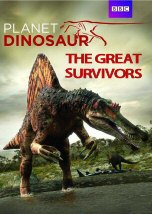
The Great Survivors

   2011    Science
The final episode explores dinosaurs' extraordinary ability to survive. Featured dinosaurs include the bizarre magyarosaurus, which lived in the shadow of the biggest flying animal - hatzegopteryx - and showed an amazing adaptation to island life; and the weird nothronychus, a carnivore that gave up meat eating. This astonishing capacity to evolve into ever more diverse and bizarre forms meant that dinosaurs not only spread throughout the world, but also dominated life upon it for more than 160 million years. It was only an unprecedented extraterrestrial event that finally saw the end of planet dinosaur.
Series: Planet Dinosaur

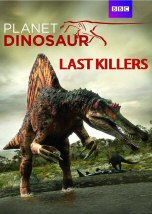
Last Killers

   2011    Science
In late Cretaceous Canada, in what will be known as Dinosaur Provincial Park, a Daspletosaurus stalks a Chasmosaurus in a forest, but loses the element of surprise and is forced to retreat. The Chasmosaurus comes across a younger Daspletosaurus, before being ambushed by a group of the tyrannosaurids. The episode then cuts to the high Arctic, where Edmontosaurus are hunted by a large species of Troodon. The theropods attack at night, separating a juvenile from the herd and severely wounding it, only to be driven away by an adult. In the morning, they return to eat the carcass of the juvenile, which died during the night. The episode returns to the Daspletosaurus, who chase and bring down the Chasmosaurus. The larger adults bully the youngsters off the carcass, forcing them to wait until they have finished. The episode then cuts to Madagascar, where a mother Majungasaurus (an Abelisaurid) and her two offspring chase a group of Rahonavis off a carcass. However, they are temporarily driven off themselves by a male Majungasaurus. But, after he steals some food from one of the young, the female attacks him, before she and her young cannibalise his body. The episode returns once again to North America, where the Daspletosaurus are waiting for the annual migration of Centrosaurus. They attack during a rainstorm, killing some of the ceratopsians. The Centrosaurus make it to a flooded river and begin to swim across, and although many make it to the other side, some are caught by giant crocodilians or are severely wounded by floating debris and thus drown, or drown for unseen reasons. In the morning, the carcasses attract scavengers, including the Daspletosaurus. A montage is then shown of Daspletosaurus and Majungasaurus, the narrator saying that together, the tyrannosaurids and abelisaurids were the last of the killer dinosaurs.
Series: Planet Dinosaur

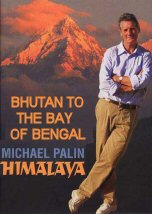
Bhutan to the Bay of Bengal

   2004    Culture
In Bhutan, Palin finds himself back in the land of yaks for a last look at the high Himalaya. Trekking to Chomolhari base camp he meets a nomad with a penchant for yak songs before heading down to Paro to witness the Buddhist festival or Tsechu. In a bar in Thimphu, he discusses reincarnation and the pursuit of happiness with Benji and Khendum, two of the king's cousins, and en route to Bangladesh is taken by Benji to see the rare black-neck cranes. On his journey south through Bangladesh, Michael visits the ship-breaking beaches of Chittagong and grid-locked Dhaka. He meets a man who made a fortune in Birmingham in the poultry business, and a woman who lends money only to women. On a 1920s paddle steamer he is serenaded with the words of Bengal's Shakespeare, and he completes his epic Himalayan journey aboard a fishing boat that carries him out into the Bay of Bengal and a westering sun.
Series: Himalaya with Michael Palin

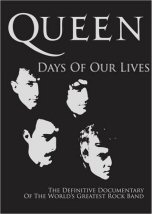
Queen Days of Our Lives

   2011    Art
In 1971, four university students got together to form a band. Since then, that certain band called Queen has released 26 albums and sold over 300 million records worldwide. The popularity of Freddie Mercury, Brian May, Roger Taylor and John Deacon is stronger than ever. Their story is a remarkable one, a narrative that covers early struggles, huge obstacles, success, arguments, breakups, triumph, tragedy and an enduring legacy - all against a backdrop of brilliant music and stunning live performances from every corner of the globe. In this film, for the first time, it is the band that tells their story. Guiding us through an extensive archive full of hitherto unseen footage, the documentary reveals how four strong-minded individuals, all capable of writing massive hit songs, worked together so successfully for four decades. Queen never did anything by halves - meaning their highs were massive, but their lows catastrophic. It is a compelling story told with intelligence, wit, plenty of humour and painful honesty.
Vice

Vice

2013  Culture
Love On The Spectrum

Love On The Spectrum

2019  Culture
Clarkson Farm Season 2

Clarkson Farm Season 2

2023  Nature
Myths and Heroes

Myths and Heroes

2005  History
Wonders Of The Universe

Wonders Of The Universe

2011  Science
Leaving Neverland

Leaving Neverland

2019  Culture