




Last Watched

"Science"  Sort by

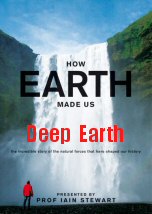
Deep Earth

   2010    Science
Our planet has amazing power, and yet that's rarely mentioned in our history books. This series tells the story of how the Earth has influenced human history, from the dawn of civilisation to the modern industrial age. It reveals how geology, geography and climate have been a far more powerful influence on the human story than has previously been acknowledged. A combination of epic story telling, visually stunning camerawork, extraordinary locations and passionate presenting combine to form a highly original version of human history" In the first episode professor Iain Stewart explores the relationship between the deep Earth and the development of human civilisation. He visits an extraordinary crystal cave in Mexico, drops down a hole in the Iranian desert and crawls through seven-thousand-year-old tunnels in Israel. His exploration reveals that throughout history, our ancestors were strangely drawn to fault lines, areas which connect the surface with the deep interior of the planet. These fault lines gave access to important resources, but also brought with them great danger.
Series: How Earth Made Us

How Big How Far How Fast

   2012    Science
Push the limits of your imagination as astronomers attempt to grasp the mind-boggling extremes of size, distance and speed within our universe by bringing them down to earth. In this episode, our cast uses awesome analogies to bring the biggest objects, farthest distances and fastest speeds down to earth. To truly understand the scale of the cosmos, we jump behind the wheel of monster trucks, scale the Golden Gate Bridge, and race across the desert in a rocket-powered car.
Series: The Universe

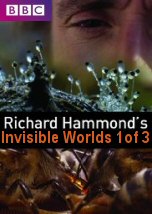
Speed Limits

   2010    Science
Richard Hammond explores the extraordinary wonders of the world of detail hidden in the blink of an eye. It takes our brain around a hundred and fifty milliseconds to process what we see. We're not aware of this time lag going on, but in those few milliseconds, there are extraordinary things happening that completely pass us by. But what if we could break through this speed limit? Bend and stretch time in ways never thought possible. What new marvels would we see? Now, using the latest high-speed cameras, Richard takes us on a journey beyond our eye's limits, letting us see secrets hidden in every element of our planet. A world where thin air can shatter rock. And water can tear through metal. A world where the fastest thing on earth lies right beneath our feet. And where a spectacular celestial display is finally captured, even though many have claimed it doesn't even exist.
Series: Invisible Worlds

Did Darwin kill God

   2009    Science
There are some who believe that Darwin's theory of evolution has weakened religion. Conor Cunningham argues that nothing could be further from the truth.He travels to the Middle East where he shows that from the very outset, Christianity warned against literal readings of the biblical story of creation. In Britain, he reveals that, at the time, Darwin's theory of evolution was welcomed by the Anglican and Catholic Churches. Instead, he argues that the conflict between Darwin and God was manufactured by American creationists in the 20th century for reasons that had very little to do with science and religion and a great deal to do with politics and morality. Finally, he comes face to face with some of the most eminent evolutionary biologists, geneticists and philosophers of our time to examine whether the very

The End of the Universe

   2014    Science
How and when will the Universe end? Gravity and dark matter are poised to annihilate the Universe in a big crunch. Expansion and dark energy may tear it apart. Or, a phase transition could kill us tomorrow in a cosmic death bubble.
Series: How the Universe Works

Our Place in the Milky Way

   2012    Science
An exploration of Earth's cosmic neighbourhood. Looking beyond the borders of our solar system, what's nearby in our galaxy? How do the other objects in our local area influence life on Earth? And, how did Earth's place in the galaxy make it the perfect place for the development of advanced life? Now that the Voyagers have visited the outer planets of the solar system they are heading for new adventures in places astronomers call the Oort Cloud, the heliopause, heliosheath and eventually they may encounter double stars and exoplanets, some of which may pay a visit to the solar system one day or explode showering us with radiation. If the Voyagers live so long they will experience the local fluff, local bubble and other parts of the habitable zone of the galaxy.
Series: The Universe
Atom

Atom

2007  Science
The Sky at Night

The Sky at Night

2025  Science
Through the Wormhole

Through the Wormhole

2011  Science
The Crime of the Century

The Crime of the Century

2021  Medicine
Ancient Apocalypse

Ancient Apocalypse

2024  History
Ancient Rome

Ancient Rome

2006  History