









Last Watched

"Leo"  Sort by

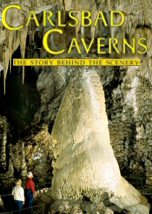
Carlsbad Caverns

   2013    Nature    3D
Carlsbad Caverns are located in the Chihuahuan Desert of southern New Mexico, within the Carlsbad Caverns National Park. There are more than 100 caves. The Natural Entrance is a path into the namesake Carlsbad Cavern. Stalactites cling to the roof of the Big Room, a huge underground chamber in the cavern.
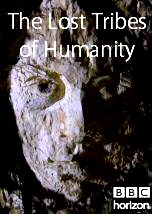

The Lost Tribes of Humanity

   2017    History
Alice Roberts explores the latest discoveries in the study of human origins, revealing the transformation that has been brought about in this field by genetics. Traditional Palaeoanthropology, based on fossils, is being transformed by advanced genome sequencing techniques. We now know that there were at least four other distinct species of human on the planet at the same time as us - some of them identified from astonishingly well-preserved DNA extracted from 50,000-year-old bones, others hinted at by archaic sections of DNA hidden in our modern genome. What's more, we now know that our ancestors met and interacted with these other humans, in ways that still have ramifications today. Alice uses these revelations to update our picture of the human family tree.

Florence and the Uffizi Gallery

       Art    3D    HD
This film is a multi-dimensional journey through the city that was once the cradle of the Italian Renaissance. Get an exclusive tour through the most beautiful and representative works of art of the period from Michelangelo and Brunelleschi, to Leonardo and Botticelli, with a detailed central chapter dedicated to the very treasure house containing their masterpieces: the Uffizi Gallery. This also includes the breathtaking 'Adoration of the Mag' by Leonardo Da Vinci, which, after several years of restoration, will be brought back to life and unveiled in this worldwide exclusive premiere on the big screen.

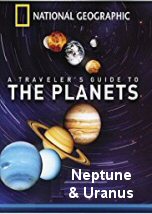
Neptune and Uranus

   2011    Science
Uranus and Neptune: The 'ice giants'. Strap yourselves in for an incredible voyage to the most remote and intriguing planets of all. There has never been a better time to boldly go where no human has gone before to follow in the footsteps of our robot pioneers and visit the planets of the Solar System. Ever wanted to be an astronaut? Imagine heading into the Ice Zone, the frigid, dark realm beyond the orbit of Saturn. So far from the Sun, you wouldn't expect much to be happening here. From orbit, Uranus appears sedate and calm. But why is the planet on its side? And Neptune: The second blue planet, and the last world in our Solar System. But something is driving its wild winds. And what about its Great Dark Spot? this planet just changes its spots. Leopards don't, but Neptune does.
Series: A Traveler Guide to the Planets

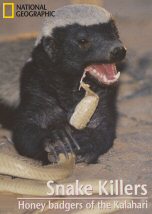
Snake Killers Honey Badgers of The Kalahari

   2007    Nature
The honey badger looks like something you might buy in pet shop and give to children, but turns out to be one of the most violent and determined creatures ever to scuttle across the face of the earth. Nothing in the badger’s world-not even the badgers themselves-are safe from its remarkable ability to create havoc and cause harm. Like a meter long skunk with the brain of a shark the Honey Badger’s metabolism compels it to eat constantly and live on the run. Its diet is admirably inclusive ranging from insects to its own young. If an animal is too big to eat then the badger will fight it anyway, indeed it is this almost supernatural tenacity that compels you respect it, as well as yielding some of the most spectacular sequences in the film. Five foot long cobra sleeping in the top of tree? No problem, the badger scoots up and bites its head off. When an ailing badger is attacked by a full size leopard it takes the leopard over an hour to finish it off. When one is bitten in the face by a snake that can kill a man, it just lies down for a while and sleeps it off.

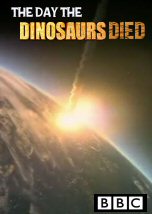
The Day the Dinosaurs Died

   2017    Science
Experts suspect that the dinosaurs were wiped out after a city-sized asteroid smashed into the Gulf of Mexico causing a huge crater. But until now, they haven't had any proof. In a world first, evolutionary biologist Ben Garrod joins a multi-million pound drilling expedition into the exact spot the asteroid hit to get hard evidence of the link. The team overcomes huge obstacles as it attempts to drill 1,500 metres beneath sea level to pull up rock from the Chicxulub crater. Meanwhile, paleopathologist Professor Alice Roberts travels the globe meeting top scientists and gaining exclusive access to a mass fossil graveyard in New Jersey - believed to date from the same time the asteroid hit. Alice also treks by horseback across the remote plains of Patagonia, to see if the effects of the asteroid impact could have wiped out dinosaurs across the world - almost immediately.
Animal

Animal

2021  Nature
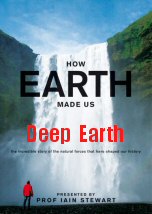
How Earth Made Us

How Earth Made Us

2010  Science
The Sky at Night

The Sky at Night

2020  Science
Cooked

Cooked

2016  Culture
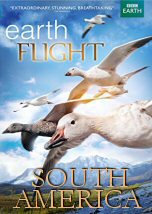
Earthflight

Earthflight

2012  Nature