









Last Watched

"DEA"  Sort by

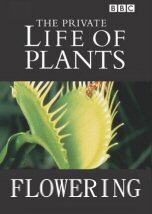
Flowering

   1995    Nature
The third episode is devoted to the ways in which plants reproduce. Pollen and a stigma are the two components needed for fertilisation. Most plants carry both these within their flowers and rely on animals to transport the pollen from one to the stigma of another. To do this, they attract their couriers with colour, scent and nectar. It isn't just birds that help pollination: some mammals and reptiles also do so. However, it is mostly insects that are recruited to carry out the task. To ensure that pollen is not wasted by being delivered to the wrong flower, some species of plant have developed exclusive relationships with their visitors, and the gentian and its attendant carpenter bees is one example. Since pollen can be expensive to produce in terms of calories, some plants, such as orchids, ration it by means of pollinia and a strategically placed landing platform. Other orchids offer no reward for pollination, but instead mislead their guests by mimicking their markings and aroma, thus enticing males to 'mate' with them (Pseudocopulation). The most extreme fertilisation method is one of imprisonment, and one plant that uses it is the dead horse arum. It is often found near gull colonies, and mimics the appearance and smell of rotting flesh. Blow-flies are attracted to it, and are forced to stay the night before being allowed to depart in the morning, laden with pollen. Finally, Attenborough introduces the world's largest inflorescence: that of the titan arum.
Series: The Private Life of Plants

Room 237

   2013    Art
Many movies lend themselves to dramatic interpretations, but none are as rich and far ranging as Stanley Kubrick's The Shining. In LA filmmaker Rodney Ascher's ROOM 237, we hear from people who have developed far-reaching theories and believe they have decoded the hidden symbols and messages buried in the late director's film. Carefully examining The Shining inside out, and forwards and backwards, and backwards and forwards, ROOM 237 as captivating, provocative as it is pure pleasure". It gives voice to the fans and scholars who espouse these theories, reworking the film to match their ideas and intercutting it with layers of dreamlike imagery to illustrate their streams of consciousness. Sometimes outrageous, always engaging, the words of those who were interviewed are given full force by Ascher's compelling vision. Also featured at the 2012 Sundance, Cannes and Toronto film festivals.

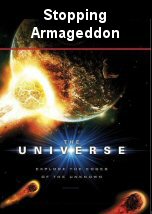
Stopping Armageddon

   2009    Technology
It sounds like a Hollywood blockbuster: a deadly asteroid is on a collision course with Earth. But in reality, it's only a matter of time before a giant space rock threatens to wipe out civilization. An asteroid took out the dinosaurs sixty-five million years ago. Are we next? This episode analyzes the threat and explores the many ways--from a nuclear bomb to ingenious new technology--that experts are proposing to stop Armageddon
Series: The Universe

Living Together

   2006    Nature
The documentary deals with the future of conservation. It begins by looking at previous efforts. The 'Save The Whales' campaign, which started in the 1960s, is seen to have had a limited effect, as whaling continues and fish stocks also decline. In the 1990s, as head of the Kenya Wildlife Service, Richard Leakey took on the poachers by employing armed units. Although it was successful in saving elephants, the policy was detrimental to the Maasai people, who were forced from their land. The need for "fortress" areas is questioned, and the recently highlighted Raja Ampat coral reef in Indonesia is an example. The more tourism it generates, the greater the potential for damage — and inevitable coastal construction. Sustainable development is viewed as controversial, and one contributor perceives it to currently be a "contradiction in terms". Trophy hunting is also contentious. Those that support it argue that it generates wealth for local economies, while its opponents point to the reducing numbers of species such as the markhor. Ecotourism is shown to be beneficial, as it is in the interests of its providers to protect their environments. However, in some areas, such as the Borneo rainforests, the great diversity of species is being replaced by monocultures. The role of both religion and the media in conservation is argued to be extremely important. Contributors to the programme admit a degree of worry about the future, but also optimism.

Ancient Aliens Debunked: Nazca Lines

       History
The Nazca Lines of Peru have been an important part of the Ancient Astronaut theory since its beginning. Originally Von Daniken claimed that the lines were kind of a UFO runway, or a type of alien airport, where the alien craft landed and took off. The idea that it was an airport makes no logical sense, and the symbols and rituals which were a huge part of the Nazcan culture more than explain the so called Nazca lines.
Series: Ancient Aliens

To Infinity and Beyond

   2010    Science
By our third year, most of us will have learned to count. Once we know how, it seems as if there would be nothing to stop us counting forever. But, while infinity might seem like an perfectly innocent idea, keep counting and you enter a paradoxical world where nothing is as it seems. Mathematicians have discovered there are infinitely many infinities, each one infinitely bigger than the last. And if the universe goes on forever, the consequences are even more bizarre. In an infinite universe, there are infinitely many copies of the Earth and infinitely many copies of you. Older than time, bigger than the universe and stranger than fiction. This is the story of infinity.
Prehistoric Planet

Prehistoric Planet

2022  Science
Clarkson Farm Season 2

Clarkson Farm Season 2

2023  Nature
Meet the Romans

Meet the Romans

2012  History
The Art of Germany

The Art of Germany

2010  Art
Tiger

Tiger

2020  History
The Putin Interviews

The Putin Interviews

2017  Culture
In the Age of AI

In the Age of AI

2019  Technology