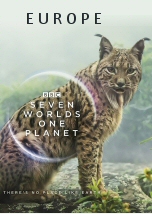
David Attenborough explores the continent of Europe - a crowded continent transformed by mankind, capturing the challenges and triumphs of its wildlife. The documentary showcases remarkable scenes, from pelicans engaging in coordinated fishing tactics to the resilient Iberian lynx fighting for survival. Amidst Europe's evolving environment shaped by human impact, it emphasizes the importance of protecting wilderness to ensure the future of the continent's precious wildlife. We will watch surprising encounters with elusive predators like wolves and lynxes living remarkably close to human communities. The documentary offers a unique glimpse into the intricacies of Europe's ecosystems and the delicate balance between its inhabitants and the changing world around them.
By August 1949 the USSR became the world's second superpower, thanks to its spies who had stolen America's atomic secrets. But by March 1953, Stalin is dead and KGB chief, Beria, is executed later the same year. Nikita Kruschev tries to reduce the power of the security service, splitting it into several sections...but it doesn't last and, soon, the KGB is back. In the USSR, countless KGB operatives spied on opponents of the regime at home, guarded the state and party leadership, and abroad tried to find out as much as possible about the intentions of the NATO countries and, if possible, to sabotage them.
The documentary series reveals the extraordinary riches and wonders of the Polar Regions that have kept people visiting them for thousands of years. Today, their survival relies on a combination of ancient wisdom and cutting-edge science. Most Arctic people live in Siberia, either in cities like Norilsk - the coldest city on earth - or out on the tundra, where tribes like the Dogan survive by herding reindeer, using them to drag their homes behind them. On the coast, traditional people still hunt walrus from open boats - it is dangerous work, but one big walrus will feed a family for weeks. Settlers are drawn to the Arctic by its abundant minerals; the Danish Armed Forces maintain their claim to Greenland's mineral wealth with an epic dog sled patrol, covering 2,000 miles through the winter. Above, the spectacular northern lights can disrupt power supplies so scientists monitor it constantly, firing rockets into it to release a cloud of glowing smoke 100 kilometres high. In contrast, Antarctica is so remote and cold that it was only a century ago that the first people explored the continent. Captain Scott's hut still stands as a memorial to these men. Science is now the only significant human activity allowed; robot submarines are sent deep beneath the ice in search of new life-forms, which may also be found in a labyrinth of ice caves high up on an active volcano. Above, colossal balloons are launched into the purest air on earth to detect cosmic rays. At the South Pole there is a research base designed to withstand the world's most extreme winters. Cut off from the outside world for six months, the base is totally self-sufficient, even boasting a greenhouse.
In the center of the story is the life of the indigenous people of the village Bakhtia at the river Yenisei in the Siberian Taiga. The camera follows the protagonists in the village over a period of a year. The natives, whose daily routines have barely changed over the last centuries, keep living their lives according to their own cultural traditions. Werner Herzog and Russian co-director Dmitry Vasyukov takes viewers on yet another unforgettable journey into remote and extreme natural landscapes. The acclaimed filmmaker presents this visually stunning documentary about indigenous people living in the heart of the Siberian Taiga. Deep in the wilderness, far away from civilization, 300 people inhabit the small village of Bakhtia at the river Yenisei. There are only two ways to reach this outpost: by helicopter or boat. There's no telephone, running water or medical aid. Follow the Siberian trappers through all four seasons of the year to tell the story of a culture virtually untouched by modernity.
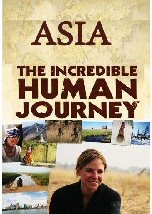
The journey continues into Asia, the world's greatest land mass, in a quest to discover how early hunter-gatherers managed to survive in one of the most inhospitable places on earth - the Arctic region of Northern Siberia. Alice also explores what may have occurred during human migration to produce Chinese physical characteristics, and considers a controversial claim about Chinese evolution: that the Chinese do not share the same African ancestry as other peoples.
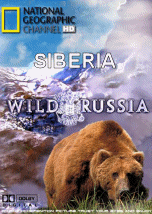
From east to west, via mountains, volcanoes, deserts, lakes and Arctic ice, this breathtaking series uses stunning cinematography to chart the dazzling natural wonders of this vast country. Accounting for around 10 per cent of the world’s dry land, Siberia is famous as a brutally cold place. Yet it is home to a diverse range of habitats and animal life – including musk deer, camels, gazelles and the extraordinary Siberian salamander, which can spend years encased in -40°C ice and still survive.
















We will watch surprising encounters with elusive predators like wolves and lynxes living remarkably close to human communities. The documentary offers a unique glimpse into the intricacies of Europe's ecosystems and the delicate balance between its inhabitants and the changing world around them.