For the past century, Russian history has also been the history of its security services. They were used by the Soviet state to crush dissent. Millions suffered at their hands. Mass executions, secret wars, spies capable of stealing the atomic bomb, poisoning scandals all add up to the most extraordinary and dangerous security network the world has ever known. But even today, the security network is arguably stronger than ever. This is the History of the KGB, told through its veterans and its victims. Founded in 1917, Cheka was the predecessor organization of the KGB. Set up as a 'temporary' measure by Lenin, unknown number of Soviet citizens would die at the hands of the secret services as internal dissents in the 1920s. An inglorious chapter is the "Great Terror" phase, when millions of Soviet citizens were convicted and executed in mock trials under Stalin's rule in the 1930s. Outside the Soviet Union, during the WWII they were busy infiltrating German High Command, British Intelligence and America's Manhattan Project. The Cold War had begun in earnest.
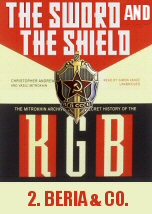
By August 1949 the USSR became the world's second superpower, thanks to its spies who had stolen America's atomic secrets. But by March 1953, Stalin is dead and KGB chief, Beria, is executed later the same year. Nikita Kruschev tries to reduce the power of the security service, splitting it into several sections...but it doesn't last and, soon, the KGB is back. In the USSR, countless KGB operatives spied on opponents of the regime at home, guarded the state and party leadership, and abroad tried to find out as much as possible about the intentions of the NATO countries and, if possible, to sabotage them.
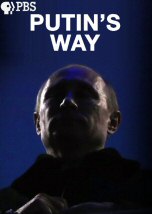
PBS FRONTLINE investigates the accusations of criminality and corruption that have surrounded Vladimir Putin's reign in Russia. Tracing his career back over two decades, Putin's Way reveals how the accumulation of wealth and power has led to autocratic rule and the specter of a new Cold War
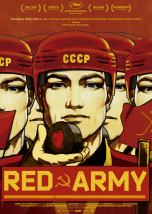
A feature documentary about the Soviet Union and the most successful dynasty in sports history: the Red Army hockey team. Told from the perspective of its captain Slava Fetisov, the story portrays his transformation from national hero to political enemy. From the USSR to Russia, the film examines how sport mirrors social and cultural movements and parallels the rise and fall of the Red Army team with the Soviet Union. RED ARMY is an inspiring story about the Cold War played out on the ice rink, and a man who stood up to a powerful system and paved the way for change for generations of Russians. From Oscar nominated and Emmy award-winning filmmaker Gabe Polsky.
For 45 years, America was locked in the Cold War with the Soviet Union, and fear of global nuclear annihilation was constant. The end of the Cold War in 1991 was supposed to usher in a new era of peace and cooperation, but it didn’t last. Tensions between the U.S. and Russia have been simmering for years. And now, the conflict in Ukraine has pushed the relationship to the brink of full-blown crisis. VICE Founder Shane Smith met Kremlin officials and American leaders to figure out what’s really driving the new standoff between the powers, while correspondent Simon Ostrovsky reported from the front lines of the bloody war in Eastern Ukraine.
'The Coldest War': With the polar ice caps shrinking due to global warming, new trade routes are being exposed, along with billions of dollars' worth of natural-resource reserves. The five nations bordering the Arctic are readying themselves to fight for it. The problem is that there's one non-NATO country that already considers itself rightful owner of the region: Russia. With Vladimir Putin's recent military annexation of Crimea, there's a definite possibility its aggressions will boil over, returning the international community to precarious Cold War footing. We will head north to witness NATO forces participating in the largest polar military exercise in history. 'Heroin Warfare': Since the U.S. occupation of Afghanistan, heroin production in the region has skyrocketed, making the country the number-one producer by a large margin. Though Iran, Afghanistan's neighbor, is an ultraconservative country, Afghan heroin flowing across the border has actually caused Iran to have the worst heroin use problem in the world. Suroosh Alvi gets a rare look inside Iran to meet the suffering heroin addicts, and see how the country is coping with the illegal drug trade.









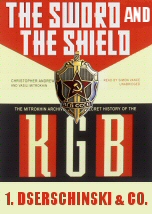






Founded in 1917, Cheka was the predecessor organization of the KGB. Set up as a 'temporary' measure by Lenin, unknown number of Soviet citizens would die at the hands of the secret services as internal dissents in the 1920s. An inglorious chapter is the "Great Terror" phase, when millions of Soviet citizens were convicted and executed in mock trials under Stalin's rule in the 1930s. Outside the Soviet Union, during the WWII they were busy infiltrating German High Command, British Intelligence and America's Manhattan Project. The Cold War had begun in earnest.