






Last Watched

"Eden"  Sort by

Enemy of the State

   2010    Technology
Here, Aleks charts how the Web is forging a new brand of politics, both in democracies and authoritarian regimes. With contributions from Al Gore, Martha Lane Fox, Stephen Fry and Bill Gates, Aleks explores how interactive, unmediated sites like Twitter and YouTube have encouraged direct action and politicised young people in unprecedented numbers. Yet, at the same time, the Web's openness enables hardline states to spy and censor, and extremists to threaten with networks of hate and crippling cyber attacks.
Series: The Virtual Revolution
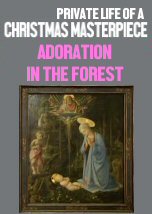
Adoration in the Forest

   2010    Art
Painted over five centuries ago, Filippo Lippi's nativity is like none other: it shows the birth of Christ in a dark, wooded wilderness. There are no shepherds, kings, ox, ass – there is no Joseph. Its beauty inspired Michelangelo, Leonardo da Vinci and Botticelli. But it also conceals a deeply personal story. It was painted for Cosimo de Medici, a wealthy banker who feared that his money was dragging him straight to hell. The artist's life was equally surprising. One of the most celebrated painters of his day, Filippo Lippi was also a Carmelite friar, but he was no stranger to the temptations of the flesh, to which he frequently yielded. Shortly before painting his Adoration, he caused uproar by seducing a twenty year-old nun. His paintings rejoice not only in divine beauty, but in the beauty of women. In later times, the Adoration's history was interwoven with that of rulers and dictators. It became a bargaining chip after Napoleon's allies seized twenty merchant ships. And in the 20th century, it was hidden by the Nazis in a potassium mine, where specialist american officers, known as Monuments Men, stumbled upon it. they were now told to get it ready to be shipped out. In an unprecedented turn of events they refused. This is the only known case in the whole of the Second World War of American officers refusing an order. It was sent to the National Gallery of Art, but in 1949 Lippi's Adoration was returned to Germany.
Series: The Private Life of a Masterpiece

Alien Faces

   2009    Nature
They soar through the heavens, fly through the oceans and glide along land. But these are not creatures found on a wildlife safari. These are life forms from another planet. Armed with scientific fact and a little imagination, experts come together to take you on an unprecedented journey to the edges of our imagination.
Series: The Universe

Monster we met: The End of Eden

   2006    Science
New Zealand - 850 years ago New Zealand was the last major land mass to be discovered and colonised by humans. A mere 850 years ago, Polynesian seafarers arrived in a land with no terrestrial mammals. New Zealand was a land of birds, and its avian rulers were giants: huge herbivorous moas were hunted by Haast's eagle - the largest eagle the world has ever seen. But within the space of only 100-400 years, the eagle, all the moas and over 20 other species of birds were gone. Had mankind become the monster?

The Jungles

   2006    Nature
Jungles cover roughly three per cent of our planet yet contain 50 per cent of the world's species. High-definition cameras enable unprecedented views of animals living on the dark jungle floor. In the Ngogo forest the largest chimpanzee group in the world defends its territory from neighbouring groups. Other jungle specialists include parasitic fungi which infiltrate an insect host, feed on it, and then burst out of its body.
Series: Planet Earth

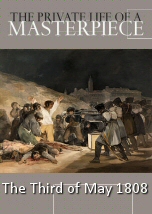
The Third of May 1808

   2004    Art
Arguably the most powerful painting about war ever achieved. It portrays the slaughter of civilians after Napoleonic troops entered Madrid in 1808. The programme reveals the historical truths behind the painting and shows exactly how Goya achieved this masterpiece of protest. he painting's content, presentation, and emotional force secure its status as a groundbreaking, archetypal image of the horrors of war. Although it draws on many sources from both high and popular art, The Third of May 1808 marks a clear break from convention. Diverging from the traditions of Christian art and traditional depictions of war, it has no distinct precedent, and is acknowledged as one of the first paintings of the modern era.
According to the art historian Kenneth Clark, The Third of May 1808 is 'the first great picture which can be called revolutionary in every sense of the word, in style, in subject, and in intention'. Discover how Goya used drawings by authentic witnesses to depict a real firing squad.
Series: The Private Life of a Masterpiece
Strangest Things

Strangest Things

2021  History
The Hunt

The Hunt

2015  Nature
Zeitgeist

Zeitgeist

2007  Culture
The Story of Us

The Story of Us

2018  Culture
Untold

Untold

2021  Culture
Animal

Animal

2021  Nature