Click CC for subtitles. Torn between the Roman Empire that raised him and the Germanic people into which he was born, a Roman officer finds himself trapped between loyalty, identity and rebellion. As Rome tightens its grip over the tribes beyond the Rhine, resentment grows and old bonds are tested. At the center of the conflict stands Arminius, a man shaped by Roman discipline but increasingly confronted with the suffering of his own people, while Thusnelda and Folkwin become symbols of defiance against an empire that demands obedience at any cost. Based on real historical events and figures, the series reinforces its sense of authenticity by using Latin and Germanic dialogue, helping recreate the cultural and historical setting of the period as faithfully as possible. In the first three episodes, tensions erupt when the Cherusci are pushed beyond endurance by Governor Varus’s demands. Thusnelda and Folkwin strike a provocative blow against Roman authority by stealing the legion’s sacred eagle standard, triggering a brutal response. The crisis brings Arminius back face to face with his father Segimer and with the childhood friends he left behind. Ordered by Varus to hunt down Folkwin and return with his head, Arminius is forced into an impossible choice as Roman reprisals threaten Folkwin’s family, his village and the fragile loyalties that bind them all together.
Click CC for subtitles. In the final three episodes of Season 1, Ari fully embraces his identity as Arminius and begins the dangerous task of turning divided Germanic tribes into a force capable of challenging Rome. While Varus believes he has placed a loyal Roman-trained leader at the head of the Cherusci, Arminius secretly works against him. Thusnelda and Folkwin seek support from the Bructeri, and Arminius realizes that defeating three Roman legions will require something almost impossible: convincing rival tribes to put aside their feuds and fight as one people. A political marriage between Arminius and Thusnelda strengthens their cause, while Folkwin, thought dead, is actually alive and enslaved in the Roman camp. Everything then moves toward the confrontation that will change history. Drawing on his intimate knowledge of Roman military tactics, Arminius persuades Varus to lead his legions through the forests and swamps of Germania, where their disciplined formations become a deadly weakness. As mistrust, betrayal and sacrifice threaten the fragile tribal alliance, Thusnelda takes an extreme step to preserve unity and Arminius prepares his ambush. The season culminates in the Battle of the Teutoburg Forest, where three Roman legions are drawn into a trap that will become one of the most devastating defeats in the history of the Roman Empire.
Professor Jerry Brotton reveals that maps are far more than neutral guides to places: they are expressions of the societies that create them and powerful instruments for shaping territory, belief and authority. Beginning with some of the earliest known maps, he traces how cartography evolved from marking land and ownership to serving kings, empires, scientists and governments. From Henry VIII’s coastal surveys and the Cassini family’s scientific breakthroughs to the drawing of modern national borders, the series shows how maps can define who controls land, who belongs where and even how entire peoples understand the world around them. Across the three episodes, presented here together in a single uninterrupted video, the journey moves from ancient and medieval worldviews to imperial expansion and the digital age. Brotton explores religious maps, Aztec symbolism, Victorian attempts to classify societies, the politics behind projections of the globe, and the rise of Google Earth and data-driven mapping. He then follows the mapmakers and explorers who turned distant lands into targets for conquest and profit, from Ptolemy and Columbus to Walter Raleigh and the trading empires that followed. The story ends in the Arctic, where new maps are once again being used to stake claims over oil, gas and minerals, proving that even in the twenty-first century, cartography remains inseparable from power, plunder and possession.
The film chronicles the life of Quentin Tarantino, from his start at Video Archives up to the releasing of Once Upon a Time in Hollywood. The documentary features interviews from his frequent collaborators of his films. The filmmaker Richard Linklater explores Quentin Tarantino from his trendsetting work on Reservoir Dogs and examines how his films have changed the movie making landscape forever.
Far from land, where few of us ever venture, is the ocean beyond the boundary of any country. Largely ungoverned, wild, and lawless. Venture into the deep, dark and desolate oceans that are home to an abundance of beautiful - and downright strange - creatures.
Join scientists as they grab light from across the universe to prove quantum entanglement is real. Einstein called it 'spooky action at a distance,' but today quantum entanglement is poised to revolutionize technology from computers to cryptography. Physicists have gradually become convinced that the phenomenontwo subatomic particles that mirror changes in each other instantaneously over any distance is real. But a few doubts remain. The film follows a ground-breaking experiment in the Canary Islands to use quasars at opposite ends of the universe to once and for all settle remaining questions.
















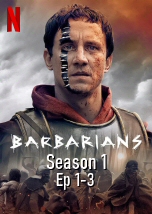





In the first three episodes, tensions erupt when the Cherusci are pushed beyond endurance by Governor Varus’s demands. Thusnelda and Folkwin strike a provocative blow against Roman authority by stealing the legion’s sacred eagle standard, triggering a brutal response. The crisis brings Arminius back face to face with his father Segimer and with the childhood friends he left behind. Ordered by Varus to hunt down Folkwin and return with his head, Arminius is forced into an impossible choice as Roman reprisals threaten Folkwin’s family, his village and the fragile loyalties that bind them all together.