




Last Watched

"Energy"  Sort by

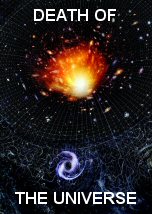
Death Of The Universe

   2008    Science
While scientists have previously theorised about a “Big Crunch” where the universe retracts back to its original size, the discovery of Dark Matter and Dark Energy has placed that hypothesis on the backburner. Some astronomers now believe that if Dark Matter offsets Dark Energy then as the universe slowly expands, stars will gradually fade, running out of fuel and leading to a dark, cold and lifeless universe. Others hypothesise a much more violent end where Dark Energy continues to expand the universe at a greater and greater speed. Stronger than gravity, Dark Energy would pull apart everything down to the fundamental particles – the universe’s very fibres. While the universe’s end may be 50 billion years away, great leaps in science will continue to alter how we believe the universe was formed – and how it will end.
Atom: The Clash of Titans

   2007    Science
Author and nuclear physicist Professor Jim Al-Khalili looks at what led to the discovery that everything is made of atoms. The programme looks at how the discovery affected the scientific world including the atomic energy theories of Albert Einstein and Werner Heisenberg and quantum mechanics
Series: Atom

The Secrets of the Sun

   2007    Science    3D
A look at how the Sun was formed and how it could potentially die; its physical composition; how it makes energy; and the nature of solar eclipses, solar flares and sunspot activity. Behold the sun and all of its glory. Learn all things about the sun ranging from its beginning to its death. Also learn about how stars work in general and MUCH, MUCH more.
Series: The Universe

Tesla: Master of Lightning

   2007    History
The story of Nikola Tesla, the great scientist, visionary, and inventor who gave the world alternating current electricity, as well as being the father of radio. The film tells the story of this man's astonishing genius, his visions and inventions. Tesla's own scientific and autobiographical writings, as well as archival photographs and re-enactments are used to tell the story. A native of Austro-Hungary, Tesla came to America in 1884. Working first with Edison, the two inventors fell out over Edison's insistence on using direct current. Tesla took his alternating current vision to Westinghouse. Tesla worked to unlock the secrets of energy and electricity. The film follows Tesla's exploits and eccentricities, which made him a darling of the press. Largely forgotten today in spite of the great debt the modern world owes him, the film pays tribute to this overlooked genius

Beyond the Darkness

   2001    Science
Thirty years ago, scientists first realized that some unknown dark substance was affecting the way galaxies moved. Today, they think there must be five times as much dark matter as regular matter out there. But they have no idea what it is - onl that it's not made of atoms, or any other matter we are familiar with. And Dark Matter is not the only strange substance in the Universe - a newly discovered force, called Dark Energy, seems to be pushing the very fabric of the cosmos apart.
Series: Through the Wormhole

The Mastery of Flight

   1998    Nature
The second programme deals with the mechanics of flight. Getting into the air is by far the most exhausting of a bird's activities, and Sir Attenborough observes shearwaters in Japan that have taken to climbing trees to give them a good jumping-off point. The albatross is so large that it can only launch itself after a run-up to create a flow of air over its wings. A combination of aerodynamics and upward air currents (or thermals), together with the act of flapping or gliding is what keeps a bird aloft. Landing requires less energy but a greater degree of skill, particularly for a big bird, such as a swan. Weight is kept to a minimum by having a beak made of keratin instead of bone, a light frame, and a coat of feathers, which is maintained fastidiously. The peregrine falcon holds the record for being fastest in the air, diving at speeds of over 300 km/h. Conversely, the barn owl owes its predatory success to flying slowly, while the kestrel spots its quarry by hovering. However, the true specialists in this regard are the hummingbirds, whose wings beat at the rate of 25 times a second. The habits of migratory birds are explored. After stocking up with food during the brief summer of the north, such species will set off on huge journeys southwards. Some, such as snow geese, travel continuously, using both the stars and the sun for navigation. They are contrasted with hawks and vultures, which glide overland on warm air, and therefore have to stop overnight.
Series: The Life of Birds
Rise of Empires: Ottoman

Rise of Empires: Ottoman

2020  History
Reel Rock

Reel Rock

2015  Culture
Big Oil vs The World

Big Oil vs The World

2022  Nature
Through the Wormhole

Through the Wormhole

2011  Science
The Gene Code

The Gene Code

2011  Science
Empire of the Tsars

Empire of the Tsars

2017  History