Richard Rudgley goes in search of evidence of the barbarians of the dark ages, people whose names have for 1500 years been bywords for mindless brutality. The real truth about the barbarians who marched across Europe during the Dark Ages is more shocking than what you may know. Where did they come from? Who are their descendants? Are any of their techniques and inventions still used? Richard discovers the secrets of forgotten empires, and of mighty clashes throughout Europe. The art, society and cultural legacy of the barbarians are shown to have shaped and moulded the destiny of Europe even more than the Roman Empire. In the first part of the journey through the Dark Ages we will be tracing the legacies of the Huns, Vandals and Goths, to ask whether the 'dark ages' represent a resurfacing of much older tribal lines. Sites in Austria show how sophisticated pre-Roman communities had become with evidence of stunning craftsmanship and sophisticated farming techniques which defy the image of a mindless rabble we have come to accept without challenge.
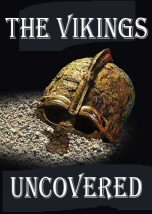
The third assault on the tattered remains of Roman civilization came from even further North, where the melting glacial ice had created immense sheltered fjords, leaving its inhabitants little choice but the sea. These fearless navigators understood that dominion over the oceans was the key to their ambitions. Where the Romans expanded incrementally, the Vikings adopted a bolder, more aggressive approach. So was it the Dark Age which failed Europe, or the stifling uniformity of the great Roman experiment? Were the lost tribes more victim than failure? Richard Rudgley will hope to shed new light on the real secrets of the so-called Dark Age.
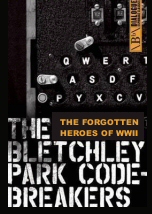
The film reveals the secret story behind one of the greatest intellectual feats of World War II, a feat that gave birth to the digital age. In 1943 Bill Tutte, a 24-year-old maths student and a GPO engineer called Tommy Flowers combined to hack into Hitler's personal super code machine - not Enigma but an even tougher system, which he called his 'secrets writer'. Their break turned the Battle of Kursk, powered the D-day landings and orchestrated the end of the conflict in Europe. But it was also to be used during the Cold War - which meant both men's achievements were hushed up and never officially recognised.
Join us on an unforgettable voyage through one of the most desolate periods in human history as the rulers, conflicts, and cataclysmic societal breakdown of Early Middle Ages are brought to light. At its height in the second century A.D., the Roman Empire was the beacon of learning, trade, power and prosperity in the western world. But the once-powerful Rome--rotten to the core by the fifth century--lay open to barbarian warriors who came in wave after wave of invasion, slaughtering, stealing, and ultimately, settling. As chaos replaced culture, Europe was beset by famine, plague, persecutions, and a state of war that was so persistent it was only rarely interrupted by peace. The documentary profiles those who battled to shape the future, from the warlords whose armies threatened to case the demise of European society, like Alaric, Charles the Hammer, and Clovis; to the men and women who valiantly tended the flames of justice, knowledge, and innovation including Charlemagne, St. Benedict, Empress Theodora, and other brave souls who fought for peace and enlightenment. It was in the shadows of this turbulent millennium that the seeds of modern civilization were sown.


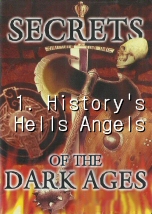
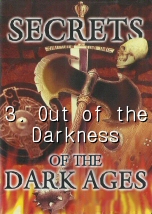




In the first part of the journey through the Dark Ages we will be tracing the legacies of the Huns, Vandals and Goths, to ask whether the 'dark ages' represent a resurfacing of much older tribal lines. Sites in Austria show how sophisticated pre-Roman communities had become with evidence of stunning craftsmanship and sophisticated farming techniques which defy the image of a mindless rabble we have come to accept without challenge.