Richard Rudgley goes in search of evidence of the barbarians of the dark ages, people whose names have for 1500 years been bywords for mindless brutality. The real truth about the barbarians who marched across Europe during the Dark Ages is more shocking than what you may know. Where did they come from? Who are their descendants? Are any of their techniques and inventions still used? Richard discovers the secrets of forgotten empires, and of mighty clashes throughout Europe. The art, society and cultural legacy of the barbarians are shown to have shaped and moulded the destiny of Europe even more than the Roman Empire. In the first part of the journey through the Dark Ages we will be tracing the legacies of the Huns, Vandals and Goths, to ask whether the 'dark ages' represent a resurfacing of much older tribal lines. Sites in Austria show how sophisticated pre-Roman communities had become with evidence of stunning craftsmanship and sophisticated farming techniques which defy the image of a mindless rabble we have come to accept without challenge.
On the second part of his journey through the dark ages Richard Rudgley continues into the age of the wandering peoples, the Volkerwanderung. These Northern people enjoyed a golden age unaffected by Rome and just 30 years after the Romans relinquished Britain, the 'Anglo-Saxons' made their move. The bedraggled legions are in retreat. Walls are pulled down. Mosaics shattered. And yet there never was a people called Anglo-Saxon. We look at the lasting influence of Saxon leaders like Alfred the Great, and his blue print for social justice.
The third assault on the tattered remains of Roman civilization came from even further North, where the melting glacial ice had created immense sheltered fjords, leaving its inhabitants little choice but the sea. These fearless navigators understood that dominion over the oceans was the key to their ambitions. Where the Romans expanded incrementally, the Vikings adopted a bolder, more aggressive approach. So was it the Dark Age which failed Europe, or the stifling uniformity of the great Roman experiment? Were the lost tribes more victim than failure? Richard Rudgley will hope to shed new light on the real secrets of the so-called Dark Age.
(Click CC for subtitles) Hannes Rossacher's documentary is a great journey. It begins in summer 1988 on the Ostseestrand in East Germany and accompanies the band on their long, sometimes painful, but finally successful conquest of the American continents up until 2001. It continues with their farewell to the US after the events of September 11th and ends in front of thousands of cheering Americans in Madison Square Garden. For the documentary, Rammstein provided extensive, previously unreleased footage and photos from the band archive. In numerous interviews from various periods in the band's history, the band members speak about their experiences across the Atlantic. Old and new friends and acquaintances, as well as many American colleagues, pay tribute to the band and recount anecdotes. Chad Smith (Red Hot Chili Peppers), Moby, CJ Ramone, Steven Tyler (Aerosmith), Iggy Pop, Gene Simmons and Paul Stanley from KISS, Wes Borland (Limp Bizkit), Marilyn Manson, Melissa Auf der Maur, Scott Ian (Anthrax), Jonathan Davis and Munky Shaffer from Korn, Shawn Crahan (Slipknot), director David Lynch, actor Kiefer Sutherland and many more.
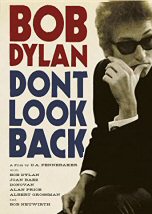
The film is a intimate diary of Bob Dylan's 1965 tour of Britain, chronicling reactions as his tunes caught the nation off-guard, but ultimately won him critical acclaim and worldwide fame and fortune. Featuring interviews with various Sixties cult figures, including the man himself, his then-girlfriend Joan Baez and poet Allen Ginsberg.
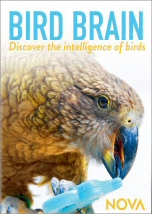
In the past few decades, scientists have learned that the basis of everything they thought they knew about bird brains—that they were largely comprised of the most primitive and instinctual of brain structures—was wrong. Fully 75 percent of the brains of parrots and thousands of other species of birds is actually made up of a sophisticated information processing system that works much the same way as the locus of human higher-mindedness, the cerebral cortex. The film shows scientists putting birds to the test. Can they solve problems? Can they cooperate? Do they feel emotion? New research demonstrates just how clever they can be.

















In the first part of the journey through the Dark Ages we will be tracing the legacies of the Huns, Vandals and Goths, to ask whether the 'dark ages' represent a resurfacing of much older tribal lines. Sites in Austria show how sophisticated pre-Roman communities had become with evidence of stunning craftsmanship and sophisticated farming techniques which defy the image of a mindless rabble we have come to accept without challenge.