

Last Watched

"Television"  Sort by

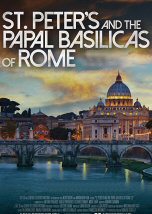
St Peter and the Papal Basilicas of Rome

   2016    Art
After the success of Florence and the Uffizi, a new film production by Sky 3D and the Vatican Television Centre, taking you on a journey through the four Papal Basilicas in Rome and their treasures: St. Peter’s (one of the 25 destinations most visited by travellers from all over the world), St. John in the Lateran, St. Mary Major and St. Paul Outside the Walls. Four majestic buildings – each with a precious papal altar, each a treasure trove of timeless works of art and a destination for millions of travellers and pilgrims over the centuries – play the leading role in a new film tour that has been recognized as a work of cultural interest by the film board of the Ministry of Culture, Heritage and Tourism.
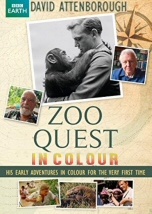
Zoo Quest in Colour

   2016    Nature
Thanks to a recent remarkable discovery in the BBC's Film Vaults, the best of David Attenborough's early Zoo Quest adventures can now be seen as never before - in colour - and with it the remarkable story of how this pioneering television series was made. First broadcast in December 1954, Zoo Quest was one of the most popular television series of its time and launched the career of the young David Attenborough as a wildlife presenter. Zoo Quest completely changed how viewers saw the world - revealing wildlife and tribal communities that had never been filmed or even seen before.
Broadcast ten years before colour television was seen in the UK, Zoo Quest was thought to have been filmed in black and white. Until now. Using this extraordinary new-found colour film, together with new behind the scenes stories from David Attenborough and cameraman Charles Lagus, this 90 minute special showcases the very best of Zoo Quest to West Africa, Zoo Quest to Guiana and Zoo Quest for a Dragon in stunning HD colour for the very first time.

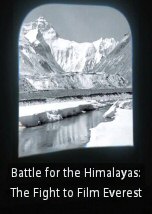
Battle for the Himalayas: The Fight to Film Everest

   2015    History
Between the 1920s and the 1960s the world's great powers sent vast military-style expeditions to conquer the peaks of the Himalayas, with Everest at their head. This was a great game played - camera in hand - by Imperial Britain, Nazi Germany and superpower America. As a result, Himalayan mountaineering's most iconic, epic and tragic moments didn't just go down in history, but were caught on film - from the deaths of Mallory and Irvine on Everest in 1924, to Everest's final conquest in 1953 by Hillary and Tensing. Using footage never before seen on British television, this is the story how of how film-makers turned the great peaks into great propaganda.

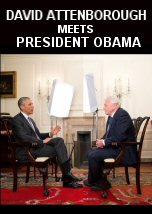
David Attenborough Meets President Obama

   2015    Nature
In a far cry from the steamy jungles of Rwanda or the icy waters of the Arctic, British naturalist Sir David Attenborough has donned a necktie and met with US president Barack Obama to discuss climate change and the future of the planet. The two met at the White House — a place the naturalist had never yet explored — on Sir David's 89th birthday in May to film the interview". It was the first time the respected wildlife filmmaker had met an American president and he seemed a little awed by the experience. Mr Obama, who grew up watching Sir David's programs, seemed equally thrilled. The president has the environment and climate change on his radar and is anxious to see progress made as his presidency comes to a close. He faces stiff opposition from Republicans in Congress on his plans to tackle climate change, but remains determined to make changes before leaving office. "I don't have much patience for anyone who denies that this challenge is real," he said. "We don't have time for a meeting of the Flat Earth Society." Sir David, who has been called "the godfather of natural history TV" by the BBC, brought to the meeting six decades dedicated to sharing the wonders of the natural world with television audiences. After initially being rejected for television because his teeth were deemed "too big", Sir David went on to make his Life on Earth television series, which has been watched by more than 500 million people worldwide. His name is now synonymous with nature, conservation and wildlife. During the television interview, the men discussed global warming, renewable energy and how children and young people hold the key to reversing the damage.

The Wonderful World Of Blood

   2015    Medicine
Of all the wonders of the human body, there's one more mysterious than any other. Blood: five precious litres that keep us alive. Yet how much do we really know about this sticky red substance and its mysterious, life-giving force? Michael Mosley gives up a fifth of his own blood to perform six bold experiments". From starving it of oxygen to injecting it with snake venom, Michael reveals the extraordinary abilities of blood to adapt and keep us alive. Using specialist photography, the programme reveals the beauty in a single drop. Michael even discovers how it tastes when, in a television first, he prepares a black pudding with his own blood. Down the ages, our understanding of blood has been as much myth as science, but Michael reveals there might be truth in the old vampire legends, as he meets one of the scientists behind the latest research that shows young blood might be able to reverse the ageing process - the holy grail of modern medicine.

Magician: The Astonishing Life and Work of Orson Welles

   2014    Culture
This documentary looks at the remarkable genius of Orson Welles on his centenary - the enigma of his career as a Hollywood star, a Hollywood director (for some a Hollywood failure), and a crucially important independent filmmaker. Orson Welles's life was magical: a musical prodigy at age 10, a director of Shakespeare at 14, a painter at 16, a star of stage and radio at 20, romances with some of the most beautiful women in the world, including Rita Hayworth. His work was similarly extraordinary, most notably Citizen Kane, (considered by many to be the most important movie ever made), created by Welles when he was only 25. In the years following Citizen Kane, Welles's career continued to change as he made film after film (some never finished, many dismissed) and acted in other projects often to earn money in order to keep making his own films. Magician features scenes from almost every existing Welles film, from Hearts of Age, (which he made in a day when he was only 18 years old) to rarely-seen clips from his final unfinished works like The Other Side of the Dream, The Deep, and Don Quixote, as well as his television and commercial work.
Universe

Universe

2021  Science
High Score

High Score

2020  Technology
The Crime of the Century

The Crime of the Century

2021  Medicine
Top Gear

Top Gear

2012  Technology
All or Nothing: Arsenal

All or Nothing: Arsenal

2022  Culture
Follow This

Follow This

2018  Medicine