A kaleidoscopic immersion into the underground art and music scene of 1960s New York, this documentary eschews conventional rock biographies in favor of a sensory-rich, cinematic experience. Through a vibrant mosaic of avant-garde films, rare archival footage, and personal testimonies, it paints the Velvet Underground not just as a band—but as the beating heart of a creative explosion. By interweaving interviews with John Cale and Maureen Tucker alongside voices from their cultural milieu, the film evokes the fraught, fragile energy of a time when music intersected with performance, queerness, and counterculture. More than a story about a band, it is a journey into a cultural explosion that still resonates today.
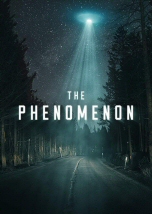
This explosive documentary is the most credible examination of the global mistery and cover-up of unidentified aerial phenomenon. With shocking testimony from high-ranking government officials and NASA Astronauts, Senator Harry Reid says it 'makes the incredible credible.' The same year that life-giving water was discovered on a distant planet, the US Navy made a startling announcement: Images captured by its pilots of objects exhibiting a vastly superior technology were authentic.
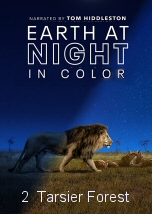
Deep in the twisted roots of a giant strangler fig tree, hidden from view, lives perhaps the most bizarre nighttime creature of all. The spectral tarsier, tiny primates barely larger than a tennis ball. As darkness falls, a family of these small primates in Sulawesi ventures into the jungle to find food while protecting their babies.
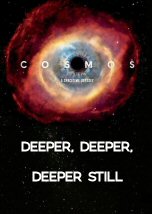
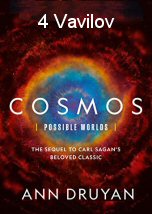
The fourth episode sees host Neil deGrasse Tyson exploring our eternal quest to end hunger and honoring Nikolai Ivanovic Vavilov, pioneer of modern plant breeding, who risked his life for a discovery that would change the history of science. Vavilov's story is marked by both the tenacity and creativity and is particularly tragic. Interwoven into Vavilov's somber narrative are warnings and treatments of science and its ethical implications, especially when science itself comes under attack from political forces.
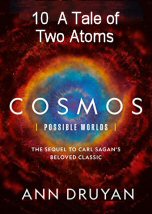
Inside the heart of the atom, its nucleus houses energy. This hidden treasure was forged billions of years ago in distant stellar furnaces. The secret of starlight is nothing to fool with. It can bring a civilization to life and it can burn it to the ground. Two atoms from different parts of the universe meet on a small planet. A deadly embrace between science and state altered the fate of the world and a gripping cautionary tale of others who grew used to living in the shadow of grave danger until it killed them all except one.
Five times, the Earth has faced apocalyptic events. Cataclysms that have swept away all life forms, or almost. Each time, a handful of species has survived, establishing a new world. What did these prehistoric worlds look like? What catastrophes led to their disappearance? How did our distant ancestors manage to survive the five mass extinctions that the Earth has suffered, finally giving rise to the world we know today? Combining CGI of ancient animal and plant life, VFX and filming, 'Prehistoric Worlds' looks back at the five mass extinctions of life on Earth that allowed the advent of the human race. On the brink of a sixth mass extinction that the scientific community considers imminent – this time caused by mankind – this film gives us an interesting and powerful look at Man's existence on the scale of the history of our planet.



















By interweaving interviews with John Cale and Maureen Tucker alongside voices from their cultural milieu, the film evokes the fraught, fragile energy of a time when music intersected with performance, queerness, and counterculture. More than a story about a band, it is a journey into a cultural explosion that still resonates today.