

Last Watched

" The Universe"  Sort by

How Do I Decide

   2015    Medicine
The human brain is the most complex object we’ve discovered in the universe, and every day much of its neural circuitry is taken up with the tens of thousands of decisions we need to make. ‘How do I decide?’ is a journey through the unseen world of decisions, and how they get made. Decisión-making is what allows us to navigate a course through life. Discover how important emotions are in making decissions and, as we learn more about our own brains, we can break away from slavery to our impulses. Neuroscience shows that you're made up of multiple competing drives and by understanding how choices battle it out in the brain, we can learn how to make better decisions.
Series: The Brain with David Eagleman

2015 Year In Sci-Tech

   2015    Technology
Explore the latest science behind the headlines and the coolest scientific developments that impact our lives. Technology catapults to new heights in 2015, going faster and further than ever before. We have canvassed the world in search of the best and most fascinating science and tech stories of the year for 2015 YEAR IN SCI-TECH". This action-packed hour of fun and intrigue revisits the world’s first glimpse of Pluto and images of water on Mars while exploring what this all could mean for intelligent life in the universe – all while earthling’s inch closer to becoming actual space tourists. Throughout the hour, we revisit the year’s most amazing techological feats and scientific discoveries, including new and elusive animal species discovered deep under the ocean, as well as the hottest tech trends – from hover boards to driverless cars and trucks, and the newest advances in mind-blowing virtual reality.

Is Anybody Out There

   2015    Science
In August 1977, the Big Ear Radio-telescope in Ohio received a strange signal from the Sagittarius constellation while searching for intelligent extra-terrestrial life. It had a duration of 72 seconds and an intensity 30 times higher than usual. Named the Wow signal, it is still being considered as one of the best examples of having being sent by intelligent extraterrestrial life. But, nothing has revolutionised the search of extra-terrestrial intelligent life as much as the recent discovery by the Kepler Satellite, of thousands of Earth-like planets where life could be possible. Join the debate with this stunning documentary, as we ask Is Anybody Out There?

Cosmos: A Spacetime Odyssey. Standing Up in the Milky Way

   2014    Science    HD
Famed astrophysicist Neil deGrasse Tyson takes a tour of the Solar System and the known universe establishing the components of Earth's "address" within the Virgo Supercluster. He then shares the story of the person who championed an expansive understanding of Earth's place in the universe by presenting Renaissance Italian Giordano Bruno's vision of the universe as a limitless expanse of space and time. He then makes an exploration into the Cosmic Calendar, which dates back to the dawn of the Big Bang (similar to the presentation from episode 1 of the original series). The episode ends with deGrasse Tyson narrating how he met his mentor Carl Sagan, who hosted the first Cosmos series.
Series: Cosmos: A Spacetime Odyssey

When Knowledge Conquered Fear

   2014    Science
The episode begins with Tyson describing how pattern recognition manifested in early civilization as using astronomy and astrology to predict the passing of the seasons, including how the passage of a comet was often taken as an omen. Tyson continues to explain that the origin of comets only became known in the 20th century due to the work of Jan Oort and his hypothesis of the Oort cloud. Tyson then continues to relate the collaboration between Edmond Halley and Isaac Newton in the last part of the 17th century in Cambridge. The collaboration would result in the publication of Philosophiæ Naturalis Principia Mathematica, the first major work to describe the laws of physics in mathematical terms, despite objections and claims of plagiarism from Robert Hooke and financial difficulties of the Royal Society of London. Tyson explains how this work challenged the prevailing notion that God had planned out the heavens, but would end up influencing many factors of modern life, including space flight. Tyson further describes Halley's contributions including determining Earth's distance to the sun, the motion of stars and predicting the orbit of then-unnamed Halley's Comet using Newton's laws. Tyson contrasts these scientific approaches to understanding the galaxy compared to what earlier civilizations had done, and considers this advancement as mankind's first steps into exploring the universe. The episode ends with an animation of the Milky Way and Andromeda galaxies' merging based on the principles of Newton's laws.
Series: Cosmos: A Spacetime Odyssey

A Sky Full of Ghosts

   2014    Science
Tyson begins the episode by explaining the nature of the speed of light and how much of what is seen of the observable universe is from light emanated from billions of years in the past. Tyson further explains how modern astronomy has used such analyzes via deep time to identify the Big Bang event and the age of the universe. Tyson proceeds to describe how the work of Isaac Newton, William Herschel, and James Clerk Maxwell contributed to understanding the nature of electromagnetic waves and gravitational force, and how this work led towards Albert Einstein's Theory of Relativity, that the speed of light is a fundamental constant of the universe and gravity can be seen as distortion of the fabric of space-time. Tyson describes the concept of dark stars as postulated by John Michell which are not visible but detectable by tracking other stars trapped within their gravity wells, an idea Herschel used to discover binary stars. Tyson then describes the nature of black holes, their enormous gravitational forces that can even capture light, and their discovery via X-ray sources such as Cygnus X-1. Tyson uses the Ship of Imagination to provide a postulate of the warping of spacetime and time dilation as one enters the event horizon of the black hole, and the possibility that these may lead to other points within our universe or others, or even time travel. Tyson ends on noting that Herschel's son, John would be inspired by his father to continue to document the known stars as well as contributions towards photography that play on the same nature of deep time used by astronomers.
Series: Cosmos: A Spacetime Odyssey
Fierce Queens

Fierce Queens

2020  Nature
Dynamic Genomes Series

Dynamic Genomes Series

2019  Medicine
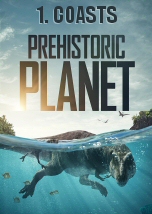
Prehistoric Planet

Prehistoric Planet

2022  Science
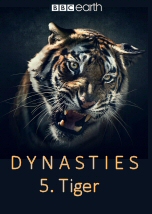
Dynasties

Dynasties

2018  Nature
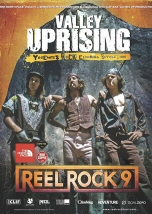
Reel Rock

Reel Rock

2014  Culture
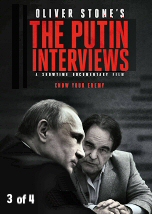
The Putin Interviews

The Putin Interviews

2017  Culture
Evolution

Evolution

2004  Science