





Last Watched

"Travel"  Sort by

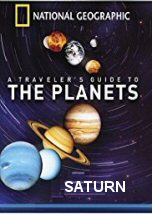
Saturn

   2011    Science
No planet beats Saturn for jaw-dropping beauty. Saturn is the most photogenic planet in all the solar system. Some of the pictures are to die for. But the postcards only tell part of the story. It really is rolling and seething inside. For ringside action, soar above the planet with its six-sided storms. Even more mystery surrounds the impressive Fountains of Enceladus where the secrets of life might spring from the moons salty geysers. And the samples are coming out in space, there's a big sign there: Free Samples: Take One.
Series: A Traveler Guide to the Planets
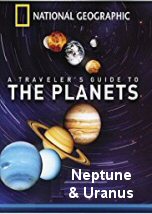
Neptune and Uranus

   2011    Science
Uranus and Neptune: The 'ice giants'. Strap yourselves in for an incredible voyage to the most remote and intriguing planets of all. There has never been a better time to boldly go where no human has gone before to follow in the footsteps of our robot pioneers and visit the planets of the Solar System. Ever wanted to be an astronaut? Imagine heading into the Ice Zone, the frigid, dark realm beyond the orbit of Saturn. So far from the Sun, you wouldn't expect much to be happening here. From orbit, Uranus appears sedate and calm. But why is the planet on its side? And Neptune: The second blue planet, and the last world in our Solar System. But something is driving its wild winds. And what about its Great Dark Spot? this planet just changes its spots. Leopards don't, but Neptune does.
Series: A Traveler Guide to the Planets

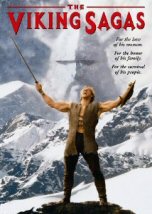
The Viking Sagas

   2011    History
Hundreds of years ago in faraway Iceland the Vikings began to write down dozens of stories called sagas - sweeping narratives based on real people and real events. But as Oxford University's Janina Ramirez discovers, these sagas are not just great works of art, they are also priceless historical documents which bring to life the Viking world. Dr Ramirez travels across glaciers and through the lava fields of Iceland to the far north west of the country to find out about one of the most compelling of these stories - the Laxdaela Saga.

Birth of the British Novel

   2011    Art
Author Henry Hitchings explores the lives and works of Britain's radical and pioneering 18th-century novelists who, in just 80 years, established all the literary genres we recognise today. It was a golden age of creativity led by Daniel Defoe, Jonathan Swift, Henry Fielding, Laurence Sterne, Fanny Burney and William Godwin, amongst others. Robinson Crusoe, Gulliver's Travels, Tom Jones and Tristram Shandy are novels that still sparkle with audacity and innovation. On his journey through 18th-century fiction, Hitchings reveals how the novel was more than mere entertainment, it was also a subversive hand-grenade that would change British society for the better. He travels from the homes of Britain's great and good to its lowliest prisons, meeting contemporary writers like Martin Amis, Will Self, Tom McCarthy and Jenny Uglow on the way.

Messengers

   2011    Science
Professor Brian Cox travels from the fossils of the Burgess Shale to the sands of the oldest desert in the world to show how light holds the key to our understanding of the whole universe, including our own deepest origins. To understand how light holds the key to the story of the universe; you first have to understand its peculiar properties. Brian considers how the properties of light that lend colour to desert sands and the spectrum of a rainbow can lead to profound insights into the history and evolution of our universe. Finally, with some of the world's most fascinating fossils in hand, Brian considers how but for an apparently obscure moment in the early evolutionary history of life, all the secrets of light may have remained hidden. Because although the universe is bathed in light that carries extraordinary amounts of information about where we come from, it would have remained invisible without a crucial evolutionary development that allowed us to see. Only because of that development can we now observe, capture and contemplate the incredible wonders of the universe that we inhabit.
Series: Wonders of the Universe

Frozen Planet: On Thin Ice

   2011    Science
Sir David Attenborough journeys to both Polar Regions to investigate what rising temperatures will mean for the people and wildlife that live there and for the rest of the planet. David starts out at the North Pole, standing on sea ice several metres thick, but which scientists predict could be Open Ocean within the next few decades. The Arctic has been warming at twice the global average, so David heads out with a Norwegian team to see what this means for polar bears. He comes face-to-face with a tranquilised female, and discovers that mothers and cubs are going hungry as the sea ice on which they hunt disappears. In Canada, Inuit hunters have seen with their own eyes what scientists have seen from space; the Arctic Ocean has lost 30% of its summer ice cover over the last 30 years. For some, the melting sea ice will allow access to trillions of dollars worth of oil, gas and minerals. For the rest of us, it means the planet will get warmer, as sea ice is important to reflect back the sun's energy. Next David travels to see what's happening to the ice on land: in Greenland, we follow intrepid ice scientists as they study giant waterfalls of meltwater, which are accelerating iceberg calving events, and ultimately leading to a rise in global sea level. Temperatures have also risen in the Antarctic - David returns to glaciers photographed by the Shackleton expedition and reveals a dramatic retreat over the past century. It's not just the ice that is changing - ice-loving adelie penguins are disappearing, and more temperate gentoo penguins are moving in. Finally, we see the first ever images of the largest recent natural event on our planet - the break up of the Wilkins Ice Shelf, an ice sheet the size of Jamaica, which shattered into hundreds of icebergs in 2009.
Series: Frozen Planet
Universe

Universe

2021  Science
Top Gear

Top Gear

2012  Technology
Planet Earth II

Planet Earth II

2016  Nature
Clarkson Farm Season 2

Clarkson Farm Season 2

2023  Nature
Unknown

Unknown

2023  Technology