


Last Watched

"Twin"  Sort by

The Power Of The Placebo

   2014    Medicine
Placebos come in all shapes and sizes, but they contain no active ingredient. They are the miracle pills that shouldn't really work at all. Now they are being shown to help treat pain, depression and even alleviate some of the symptoms of Parkinson's disease. It seems they're not acting alone. The placebo effect is intertwined with how is did the healthcare. Explores why they work, and how we could all benefit from the hidden power of the placebo.
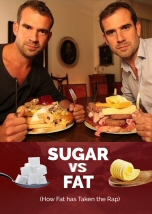
Sugar vs Fat

   2014    Medicine
What's worse for us: sugar or fat? To answer the hottest question in nutrition, twin doctors Chris and Xand Van Tulleken go on month-long high-fat and high-sugar diets. The effects on their bodies are shocking and surprising. But they also discover that in the debate about fat and sugar, the real enemy might have been hiding in plain sight.

Stardust

   2011    Science
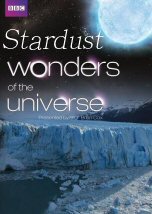
In the second stop in his exploration of the wonders of the universe, Professor Brian Cox goes in search of humanity's very essence to answer the biggest questions of all: what are we? And where do we come from? This film is the story of matter - the stuff of which we are all made. Brian reveals how our origins are entwined with the life cycle of the stars. But he begins his journey here on Earth. In Nepal, he observes a Hindu cremation. Hindu philosophy is based on an eternal cycle of creation and destruction, where the physical elements of the body are recycled on to the next stage. Brian draws a parallel with the life cycle of the stars that led to our own creation. Next, he explains how the Earth's resources have been recycled through the ages. How every atom that makes up everything we see, was at some time a part of something else. Our world is made up of just 92 elements, and these same 92 elements are found throughout the entire universe. We are part of the universe because we are made of the same stuff as the universe.
Series: Wonders of the Universe

Frozen Planet: Autumn

   2011    Nature
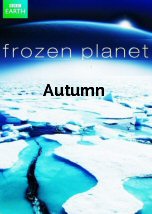
For the animals in the polar regions, autumn means dramatic battles and epic journeys. Time is running out - the Arctic Ocean is freezing over and the sea ice is advancing at 2.5 miles per day around Antarctica. Polar bears gather in large numbers on the Arctic coast as they wait for the return of the ice. Soon, tempers fray and violent sparring contests break out. Meanwhile 2,000 beluga whales head for one special estuary, a gigantic 'whale spa' where they will thrash their snow-white bodies against the gravel and exfoliate. Inland, the tundra undergoes a dramatic transformation from green to fiery red. Here, musk ox males slam head-first into each other with the force of a 30mph car crash as they struggle to defend their harems. Frisky young caribou males play a game of 'grandma's footsteps' as they try to steal the boss's female. Down in Antarctica, Adelie penguin chicks huddle together in creches. When a parent returns from fishing, it leads its twins on a comical steeplechase - sadly there's only enough for one, so the winner gets the meal. Two months later and the chicks are fully feathered apart from downy Mohican hairdos - they're ready to take their first swim - reluctantly though, as it seems penguins are not born with a love of water! And with good reason - a leopard seal explodes from the sea and pulls one from an ice floe, a hunting manoeuvre that has never been filmed before. As winter approaches and everyone has left, the giant emperor penguin arrives and makes an epic trek inland to breed. The mothers soon return to the sea leaving the fathers to hold the eggs and endure the coldest winter on earth.
Series: Frozen Planet

Nemesis The Sun Evil Twin

   2011    Science
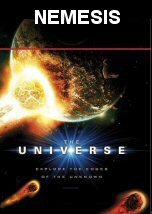
The theory of Némesis, a star that orbits the Sun and causes catastrophic events is explored. Nemesis is a hypothetical red dwarf or brown dwarf, originally postulated in 1984 to be orbiting the Sun at a distance of about 95,000 AU (1.5 light-years) somewhat beyond the Oort cloud, to explain a perceived cycle of mass extinctions in the geological record, which seem to occur more often at intervals of 26 million years.
Series: The Universe

Who are We

   2010    Medicine
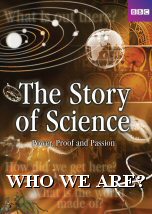
We now know that the brain - the organ that more than any other makes us human - is one of the wonders of the universe, and yet until the 17th century it was barely studied. The twin sciences of brain anatomy and psychology have offered different visions of who we are. Now these sciences are coming together and in the process have revealed some surprising and uncomfortable truths about what really shapes our thoughts, feelings and desires. And the search to understand how our brains work has also revealed that we are all - whether we realise it or not - carrying out science from the moment we are born.
Series: The Story of Science
Universe

Universe

2021  Science
High Score

High Score

2020  Technology
The Crime of the Century

The Crime of the Century

2021  Medicine
Top Gear

Top Gear

2012  Technology
All or Nothing: Arsenal

All or Nothing: Arsenal

2022  Culture
Follow This

Follow This

2018  Medicine