




Last Watched

"AGI"  Sort by

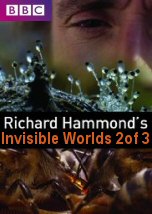
Out of Sight

   2012    Science
The human eye is a remarkable piece of precision engineering, but it is also extremely limited. Beyond the narrow range of light that makes up the familiar colours of the rainbow is a vast spectrum of light, entirely unseen. Richard Hammond does just that, using ground-breaking new imaging technologies to take the viewer on a breath-taking journey of discovery beyond the visible spectrum, seeing the world, quite literally, in a whole new light. From death-defying aerial repairmen in the United States using ultraviolet cameras to seek out an invisible force that lurks unseen on power lines, to German scientists unlocking the secrets of animal locomotion with the world's most powerful moving x-ray camera, to infrared cameras that can finally reveal the secrets within a humble beehive, he shows how new technologies are letting us see our world anew.
Series: Invisible Worlds
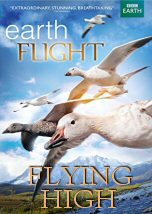
Flying High

   2012    Nature
To fly like a bird, Earthflight not only captured remarkable images of wild flocks but also relied on some extraordinary relationships between people and birds. Filmed over four years, in six continents and more than 40 countries, the Earthflight team used many extraordinary techniques. For some of the unique flying shots, members of the team became part of the flock. The birds followed wherever they went - even in a microlight over Edinburgh and London. In Africa, paragliders floated alongside wild vultures, while a model vulture carried a camera inside the flock. In South America, wild-living macaws, that were rescued as babies, still come back to visit their 'foster mother' as he travels along a jungle river. In Africa, a radio-controlled 'drone' silently infiltrates masses of pink flamingos without disturbing a feather, and microlights and helicopters capture the dramatic moment white storks arrive over Istanbul. In Africa a tame vulture carried a camera across the African bush and recreated the behaviour of his wild relatives. Similarly, in the USA, a flock of hand-reared snow geese followed the migration route of wild flocks and took in the sights and sounds of New York - managing to get lost in Brooklyn
Series: Earthflight

The Act of Killing

   2012    History
The filmmakers challenge former Indonesian death-squad leaders to reenact their mass-killings in whichever cinematic genres they wish, including classic Hollywood crime scenarios and lavish musical numbers. Anwar Congo and his friends have been dancing their way through musical numbers, twisting arms in film noir gangster scenes, and galloping across prairies as yodeling cowboys. Their foray into filmmaking is being celebrated in the media and debated on television, even though Anwar Congo and his friends are mass murderers.
Medan, Indonesia. When the government of Indonesia was overthrown by the military in 1965, Anwar and his friends were promoted from small-time gangsters who sold movie theatre tickets on the black market to death squad leaders. They helped the army kill more than one million alleged communists, ethnic Chinese, and intellectuals in less than a year. As the executioner for the most notorious death squad in his city, Anwar himself killed hundreds of people with his own hands.
The Act of Killing is about killers who have won, and the sort of society they have built. Unlike ageing Nazis or Rwandan génocidaires, Anwar and his friends have not been forced by history to admit they participated in crimes against humanity. Instead, they have written their own triumphant history, becoming role models for millions of young paramilitaries. The Act of Killing is a journey into the memories and imaginations of the perpetrators, offering insight into the minds of mass killers. And The Act of Killing is a nightmarish vision of a frighteningly banal culture of impunity in which killers can joke about crimes against humanity on television chat shows, and celebrate moral disaster with the ease and grace of a soft shoe dance number.

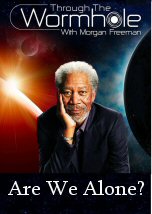
Are We Alone

   2011    Science
Aliens almost certainly do exist. So why haven't we yet met E.T.? It turns out we're only just developing instruments powerful enough to scan for them, and science sophisticated enough to know where to look. As a result, race is on to find the first intelligent aliens. But what would they look like, and how would they interact with us if we met? The answers may come to us sooner than we imagine, for one leading astronomer believes she may already have heard a hint of their first efforts to communicate
Series: Through the Wormhole

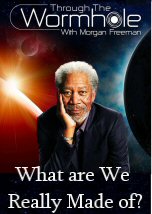
What are We Really Made of

   2011    Science
What is the universe made of? If you answered stars, planets, gas and dust, you'd be dead wrong. Thirty years ago, scientists first realized that some unknown dark substance was affecting the way galaxies moved. Today, they think there must be five times our understanding of the universe and the nature of reality itself has drastically changed over the last 100 years - and it's on the verge of another seismic shift. In a 17-mile-long tunnel buried 570 feet beneath the Franco-Swiss border, the world's largest and most powerful atom smasher, the Large Hadron Collider, is powering up. Its goal is nothing less than recreating the first instants of creation, when the universe was unimaginably hot and long-extinct forms of matter sizzled and cooled into stars, planets, and ultimately, us. These incredibly small and exotic particles hold the keys to the greatest mysteries of the universe. What we find could validate our long-held theories about how the world works and what we are made of -- or, all of our notions about the essence of what is real will fall apart.
Series: Through the Wormhole

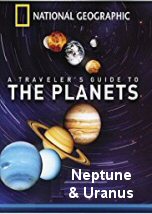
Neptune and Uranus

   2011    Science
Uranus and Neptune: The 'ice giants'. Strap yourselves in for an incredible voyage to the most remote and intriguing planets of all. There has never been a better time to boldly go where no human has gone before to follow in the footsteps of our robot pioneers and visit the planets of the Solar System. Ever wanted to be an astronaut? Imagine heading into the Ice Zone, the frigid, dark realm beyond the orbit of Saturn. So far from the Sun, you wouldn't expect much to be happening here. From orbit, Uranus appears sedate and calm. But why is the planet on its side? And Neptune: The second blue planet, and the last world in our Solar System. But something is driving its wild winds. And what about its Great Dark Spot? this planet just changes its spots. Leopards don't, but Neptune does.
Series: A Traveler Guide to the Planets
The Germanic Tribes

The Germanic Tribes

2007  History
The Human Body

The Human Body

1998  Medicine
D-Day

D-Day

2013  History
Planet Earth

Planet Earth

2007  Nature
The Germanic Tribes

The Germanic Tribes

2007  History
Top Gear

Top Gear

2012  Technology