
Last Watched

"Ant "  Sort by

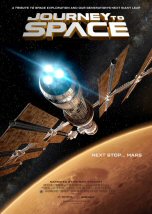
Journey to Space

   2015    Technology    3D    HD
NASA’s next era will be its greatest yet. That is the clear 'roadmap' painted by Journey To Space. The film absolutely annihilates the perception that the space program died with the end of the Space Shuttle Program by showcasing the exciting plans NASA and the space community are working on, and the challenges they must overcome to carry out audacious missions such as landing astronauts on Mars and capturing asteroids. In the past half century, humans have punched through the stratosphere, walked on the moon, and lived continuously in orbit. In the coming decades, our unquenchable curiosity will take our species beyond the cradle of Earth to touch the face of another world. Strap in for the next giant leap. Next stop ... Mars!
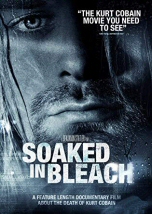
Soaked in Bleach

   2015    History
Reveals the events behind KURT COBAIN's death as seen through the eyes of Tom Grant, the private investigator that was hired by Courtney Love in 1994 to track down her missing husband Kurt only days before his deceased body was found at their Seattle home. Cobain's death was ruled a suicide by the police (a reported self-inflicted gunshot wound), but doubts have circulated for twenty years as to the legitimacy of this ruling, especially due to the work of Mr. Grant, a former L.A. County Sheriff's detective, who did his own investigation and determined there was significant empirical and circumstantial evidence to conclude that foul play could very well have occurred.
The film develops as a narrative mystery with cinematic re-creations, interviews with key experts and witnesses and the examination of official artifacts from the 1994 case.

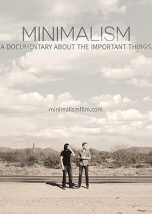
Minimalism: A Documentary About the Important Things

   2015    Culture
How might your life be better with less? The film examines the many flavors of minimalism by taking the audience inside the lives of minimalists from all walks of life -- families, entrepreneurs, architects, artists, journalists, scientists, and even a former Wall Street broker -- all of whom are striving to live a meaningful life with less.
Series: Minimalism

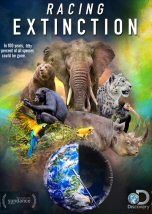
Racing Extinction

   2015    Nature
A team of artists and activists exposes the hidden world of extinction with never-before-seen images that will change the way we see the planet. Two worlds drive extinction across the globe, potentially resulting in the loss of half of all species. The international wildlife black market at the expense of creatures that have survived on this planet for millions of years. And the other surrounds us, hiding in plain sight — a world that the oil and gas companies don’t want the rest of us to see. Using covert tactics and state-of-the-art technology, the Racing Extinction team exposes these two worlds in an inspiring affirmation to preserve life as we know it.

A Sky Full of Ghosts

   2014    Science
Tyson begins the episode by explaining the nature of the speed of light and how much of what is seen of the observable universe is from light emanated from billions of years in the past. Tyson further explains how modern astronomy has used such analyzes via deep time to identify the Big Bang event and the age of the universe. Tyson proceeds to describe how the work of Isaac Newton, William Herschel, and James Clerk Maxwell contributed to understanding the nature of electromagnetic waves and gravitational force, and how this work led towards Albert Einstein's Theory of Relativity, that the speed of light is a fundamental constant of the universe and gravity can be seen as distortion of the fabric of space-time. Tyson describes the concept of dark stars as postulated by John Michell which are not visible but detectable by tracking other stars trapped within their gravity wells, an idea Herschel used to discover binary stars. Tyson then describes the nature of black holes, their enormous gravitational forces that can even capture light, and their discovery via X-ray sources such as Cygnus X-1. Tyson uses the Ship of Imagination to provide a postulate of the warping of spacetime and time dilation as one enters the event horizon of the black hole, and the possibility that these may lead to other points within our universe or others, or even time travel. Tyson ends on noting that Herschel's son, John would be inspired by his father to continue to document the known stars as well as contributions towards photography that play on the same nature of deep time used by astronomers.
Series: Cosmos: A Spacetime Odyssey

Hiding in the Light

   2014    Science
This episode explores the wave theory of light as studied by mankind, noting that light has played an important role in scientific progress, with such early experiments from over 2000 years ago involving the camera obscura by the Chinese philosopher Mozi. Tyson describes the work of the 11th century Arabic scientist Ibn al-Haytham, considered to be one of the first to postulate on the nature of light and optics leading to the concept of the telescope, as well as one of the first researchers to use the scientific method. Tyson proceeds to discuss the nature of light as discovered by mankind. Work by Isaac Newton using diffraction through prisms demonstrated that light was composed of the visible spectrum, while findings of William Herschel in the 19th century showed that light also consisted of infrared rays. Joseph von Fraunhofer would later come to discover that by magnifying the spectrum of visible light, gaps in the spectrum would be observed. These Fraunhofer lines would later be determined to be caused by the absorption of light by electrons in moving between atomic orbitals when it passed through atoms, with each atom having a characteristic signature due to the quantum nature of these orbitals. This since has led to the core of astronomical spectroscopy, allowing astronomers to make observations about the composition of stars, planets, and other stellar features through the spectral lines, as well as observing the motion and expansion of the universe, and the existence of dark matter.
Series: Cosmos: A Spacetime Odyssey