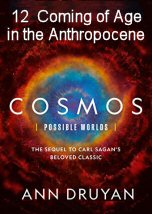
We as humans often question the creation of the universe. How was the universe created? How does it work? This series uses global experts from organizations like NASA and CERN to help us understand how this works, and uses CGI to demonstrate the phenomena. Episode 1 starts the new season as we dive deep into the black holes. The galaxy M87 is known for having at the core a super massive black hole. This black hole is the first ever photographed and we will witness the experts trying to find out the secrets of this famous black hole. In the meantime, they have overcome the scorching winds and death ray jets. And of all its hurdles, the event horizon will be the most difficult. This place is known for its uniqueness of time and space, where time stays still while the laws of physics fail.
They're the cooling corpses of stars like our sun, but new research proves white dwarfs are one of the driving forces of our universe. And they can tell us literally about the nature of the cosmos itself. Have scientists finally discovered how these small stars could be such massive galactic players?
Supermassive black holes are the engines that power our universe and one of the major players in the evolution of galaxies. They're in fact the driving force at the heart of nearly every galaxy in the cosmos. Now, a new mystery has emerged about the oldest supermassive black holes. We see supermassive black holes in the very early universe. And we don't understand how they grew so large so quickly. We have clues about their formation but, can we solve the mystery of this supermassive growth spurt?
The centre of our galaxy is home to an invisible monster of unimaginable power – a supermassive black hole named Sagittarius A star, with four million times the mass of the Sun. Recent astronomical breakthroughs have confirmed not only that black holes like Sagittarius A star exist, but that these bizarre invisible objects may be the ultimate galactic protagonists. Stunning CGI takes us back to witness the fiery origins of our galaxy’s black hole 13.6 billion years ago, when the early universe was home to colossal blue stars, and when they ran out of fuel, they collapsed under their own enormous mass, crushing down into an object so small and so dense it punched a hole in the fabric of the universe. Over billions of years, Sagittarius A star feasted on nearby gas, stars, and through cataclysmic mergers with other black holes. A breakthrough discovery by Nasa’s Fermi gamma-ray telescope has shown that our black hole had the power to sculpt the entire galaxy, creating vast bubbles of gas above and below our galaxy and even protecting stars systems as ours. In a mind-bending conclusion, Brian Cox reveals how our modern understanding of black holes is challenging our concepts of reality to the breaking point. In trying to understand the fate of objects that fall into Sagittarius A star, scientists have come to a stunning conclusion: space and time, concepts so foundational to how we experience the world around us, are not as fundamental as we once thought.
Five times, the Earth has faced apocalyptic events. Cataclysms that have swept away all life forms, or almost. Each time, a handful of species has survived, establishing a new world. What did these prehistoric worlds look like? What catastrophes led to their disappearance? How did our distant ancestors manage to survive the five mass extinctions that the Earth has suffered, finally giving rise to the world we know today? Combining CGI of ancient animal and plant life, VFX and filming, 'Prehistoric Worlds' looks back at the five mass extinctions of life on Earth that allowed the advent of the human race. On the brink of a sixth mass extinction that the scientific community considers imminent – this time caused by mankind – this film gives us an interesting and powerful look at Man's existence on the scale of the history of our planet.
At 11 o'clock on New Year's Eve of the Cosmic Calendar, Homo erectus stood up for the first time, freeing its hands and earning the species its name. They began to move around, to explore, daring to risk everything to get to unknown places. Our Neanderthal relatives lived much as we did and did many of the things we consider to be 'human.' More restless than their cousins the Neanderthals and Denisovans, our Homo sapiens ancestors crossed seas and unforgiving landscapes, changing the land, ocean and atmosphere, leading to mass extinction. The scientific community gave our age a new name, 'Anthropocene.' Since the first civilizations we've wondered if there's something about human nature that contains the seeds of our destruction. Syukuro Manabe was born in rural Japan and took an intense interest in Earth's average global temperature. In the 1960's, he would assemble the evidence he needed to predict the increase of Earth's temperature due to greenhouse gases until it becomes an uninhabitable and toxic environment, leading to our extinction. 'This doesn't have to be,' says Neil deGrasse Tyson, 'it's not too late. There's another hallway, another future we can still have; we'll find a way.'






.jpg "Montezuma")







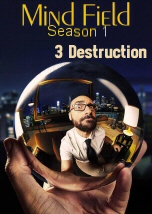





Episode 1 starts the new season as we dive deep into the black holes. The galaxy M87 is known for having at the core a super massive black hole. This black hole is the first ever photographed and we will witness the experts trying to find out the secrets of this famous black hole. In the meantime, they have overcome the scorching winds and death ray jets. And of all its hurdles, the event horizon will be the most difficult. This place is known for its uniqueness of time and space, where time stays still while the laws of physics fail.