

Last Watched

"Cat"  Sort by

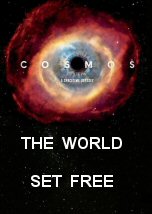
The World Set Free

   2014    Nature
This episode explores the nature of the greenhouse effect (discovered by Joseph Fourier and Svante Arrhenius), and the evidence demonstrating the existence of global warming from humanity's influence. Tyson begins by describing the long-term history of the planet Venus; based on readings from the Venera series of probes to the planet, the planet had once had an ocean and an atmosphere, but due to the release of carbon dioxide from volcanic eruptions, the runaway greenhouse effect on Venus caused the surface temperatures to increase and boiled away the oceans. Tyson then notes the delicate nature of the amount of carbon dioxide in the atmosphere can influence Earth's climate due to the greenhouse effect, and that levels of carbon dioxide have been increasing since the start of the 20th century. Evidence has shown this to be from mankind's consumption of oil, coal, and gas instead of from volcanic eruptions due to the isotopic signature of the carbon dioxide. The increase in carbon dioxide has led to an increase in temperatures, in turn leading to positive feedback loops of the melting polar ice caps and dethawing of the permafrost to increase carbon dioxide levels. Tyson then notes that humans have discovered means of harvesting solar power, such as Augustin Mouchot's solar-driven motor in the 19th century, and Frank Shuman's solar-based steam generator in the 1910's. Tyson points out that in both cases, the economics and ease of using cheap coal and oil caused these inventions to be overlooked at the time. Today, solar and wind-power systems would be able to collect enough solar energy from the sun easily. Tyson then compares the motivation for switching to these cleaner forms of energy to the efforts of the Space race and emphasizes that it is not too late for humanity to correct its course.
Series: Cosmos: A Spacetime Odyssey
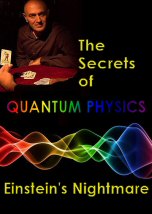
Einstein Nightmare

   2014    Science
Professor Jim Al-Khalili investigates the most accurate and yet perplexing scientific theory ever - quantum physics. At the beginning of the 20th century scientists were led into the hidden workings of matter, into the sub-atomic building blocks of the world around us. They discovered phenomena unlike any encountered before - a realm where things can be in many places at once, where chance and probability call the shots and where reality appears to only truly exist when we observe it. Albert Einstein hated the idea that nature, at its most fundamental level, is governed by chance. Jim reveals how, in the 1930s, Einstein thought he'd found a fatal flaw in quantum physics because it implies that sub-atomic particles can communicate faster than light in defiance of the theory of relativity. In the 1960s the scientist John Bell showed there was a way to test if Einstein was right and quantum mechanics was actually mistaken. Jim repeats this critical experiment - with shocking results.
Series: The Secrets of Quantum Physics

Ebola: The Search for a Cure

   2014    Medicine
The Ebola virus is one of the most virulent infections known to science. This special episode of Horizon meets the scientists and doctors from all around the world looking for the cure and hears first-hand accounts of what it is actually like to catch and survive the disease

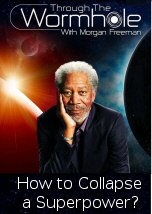
How to Collapse a Superpower

   2014    Technology
With a little imagination, could a few terrorists sabotage a mighty nation? Perhaps even tear down modern civilization? The stability of the US, Europe, China, or any global power depends on high-speed digital communication. Our increasing dependence on digital devices and global interactivity may be placing us in grave danger. Scientists around the world are dealing with new threats such as body hacking, Trojan horse viruses, and brain-damaging Internet addiction. But what if the ultimate threat isn’t an attack on technology, but the technology? Could the final superpower be the disembodied mind of the Internet itself?
Series: Through the Wormhole Season 5

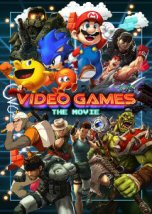
Video Games: The Movie

   2014    Technology
Video Games: The Movie, aims to educate & entertain audiences about how video games are made, marketed, and consumed by looking back at gaming history and culture through the eyes of game developers, publishers, and consumers. It is not just another film about the games industry, but attempts something much more ambitious; the question of what it means to be a 'gamer', a game maker, and where games are headed. Storytelling and the art of the video game medium are also explored in this first of it's kind film about the video game industry & the global culture it has created

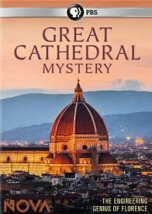
Great Cathedral Mystery

   2014    Art
The dome that crowns Florence's great cathedral of Santa Maria del Fiore, the Duomo, is a masterpiece of Renaissance ingenuity and an enduring source of mystery. Still the largest masonry dome on earth, it is taller than the Statue of Liberty and weighs as much as an average cruise ship. Historians and engineers have long debated how its architect, Filippo Brunelleschi, kept the dome perfectly aligned and symmetrical as the sides rose and converged toward the center." More than four million bricks could collapse at any moment -- and we still don't understand how Brunelleschi prevented it. To test the latest theories, a team of U.S. bricklayers will help build an experimental "mini-Duomo" using period tools and techniques.
Speed

Speed

2019  Technology
Reel Rock

Reel Rock

2014  Culture
Animal

Animal

2021  Nature
Wild Russia

Wild Russia

2009  Nature
Generation Iron

Generation Iron

2018  History