








Last Watched

"Disco"  Sort by

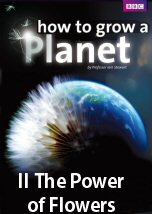
The Power of Flowers

   2012    Science
In the second episode, Professor Iain Stewart discovers how flowers have transformed our planet. He journeys to the remote islands of the South Pacific to track down the earliest flowers. In the deserts of Africa and rainforests of Vietnam, he sees how they brought brilliant colour to the most barren landscapes and sculpted the earth itself. And he learns how they drove the evolution of all animals - kick-starting our human story.
Series: How to Grow a Planet
Flight of the Butterflies

   2012    Nature    3D    HD
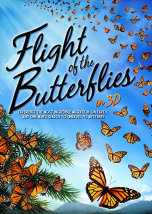
It's a natural history epic. It's a compelling detective story. It's a scientific adventure at its best. It took Dr Fred Urquhart almost 40 years to discover the monarch butterflies' secret hideaway and prove the most incredible migration on Earth. Following the year-long annual migration cycle of the butterflies, the award-winning production team filmed hundreds of millions of monarchs in their remote overwintering sanctuaries in Mexico in 2011 and again in 2012 and also along their migratory routes from Canada, across the U.S. and into Mexico. The film immerses you in the astounding migration experience as two generations of the butterflies migrate north and then a Super Generation miraculously finds its way from Canada to a few isolated mountaintops in Mexico.

Earthflight North America

   2012    Nature
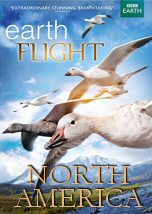
A bird's-eye view of some of the world's greatest natural spectacles. Amazing sights from five continents are revealed in a whole new light. Using cutting edge new filming techniques to show everything in exquisite detail, viewers have a uniquely privileged perspective. The first episode takes flight across North America, as a flock of millions of snow geese discover what it is like to be on the hit list of America's national bird: the bald eagle. In California, pelicans reveal devil rays that perform astonishing somersaults and find bizarre grunion fish that wriggle ashore to spawn. In Alaska, bald eagles swoop among brown bears fishing for salmon. And on the Great Plains, cowbirds duck and dive under the feet of fighting bison.
Series: Earthflight

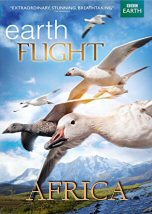
Earthflight Africa

   2012    Nature
Fly over Africa on the back of a vulture and see the most animal-packed continent with fresh eyes. Arrow-dive with cape gannets among sharks, dolphins and whales as they join the great sardine run. Soar with fish eagles as they discover an S-shaped living island comprised entirely of flamingos, and join them on a spectacular hunt. Fly with kelp gulls as they study the hunting behaviour of the greatest underwater predator of all: the great white shark. On the wings of eagles, fly through the mist-filled Victoria Falls and dive for fish in the mighty Zambezi. Circle with vultures high above the Serengeti as they watch the drama of the wildebeest migration below, and discover what happens when this canny scavenger suddenly becomes prey. Among toxic soda lakes, find out what it is like to be a flamingo, vulnerable to every predator on the continent, including baboons and hyenas. Join these flamingos as they take part in one of the most beautiful dances in the bird world. This is Africa as never seen before - from the wings of birds
Series: Earthflight

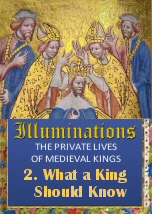
What a King Should Know

   2012    History
Dr Janina Ramirez shows how medieval manuscripts gave power to the king and united the kingdom in an age of plague, warfare and rebellion, discovers that Edward III used the manuscripts he read as a boy to prepare him for his great victory at the battle of Crecy and reveals how a vigorous new national identity bloomed during the 100 Years War with France. In the British Library's Royal Manuscripts collection Dr Ramirez finds out that magnificent manuscripts like the Bedford Hours, taken as war booty from the French royal family, were adapted for the education of English princes. She also explores how knowledge spread through a new form of book - the encyclopaedia.
Series: Illuminations: the private lives of medieval kings

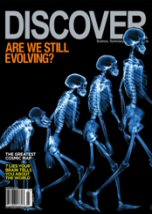
Are We Still Evolving

   2011    Science
Dr Alice Roberts asks one of the great questions about our species: are we still evolving? There's no doubt that we're a product of millions of years of evolution. But thanks to modern technology and medicine, did we escape Darwin's law of the survival of the fittest? Alice follows a trail of clues from ancient human bones to studies of remarkable people living in the most inhospitable parts of the planet and the frontiers of genetic research, to discover if we are still evolving - and where we might be heading.