Come fly with Iron Maiden and enjoy the hospitality of Flight 666 as the boys' take on the biggest tour of their career, flying around the world in their own private Boeing 757. This insight into the background noise that is the logistical workings' of the '2008 Somewhere Back in Time' World Tour is captivating, both behind the scenes as well as on stage. Performing in front of sell out crowds, this 'Rocumentary' is an insight into the minds, bodies and souls of the family that is Iron Maiden. The film is a complete chronological account of the band's 2008 world tour through India, Australia, Japan, USA, Canada, Mexico and South America in a jet piloted by the band's front man, Bruce Dickinson. Features interviews with the musicians, their road crew and fans.
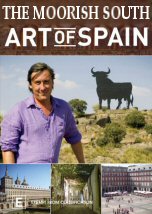
Travelling from the unique Muslim contribution in the medieval south, Andrew Graham-Dixon immerses himself in true Spanish culture and meets the people who live and work with this artistic legacy. He looks at Muslim political and cultural influence as he travels from Cordoba to Granada, seeing classic buildings such as the Great Mosque in Cordoba, the Alcazar in Seville and the Alhambra in Granada. He also shows how the Moors introduced new foods – including citrus fruits, coffee and spices
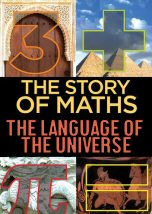
This four-part British television series outlines aspects of the history of mathematics. Written and presented by University of Oxford professor Marcus du Sautoy, it is a co-production between the Open University and the BBC. In the first episode, Marcus du Sautoy in Egypt uncovers use of a decimal system based on ten fingers of the hand and discovers that the way we tell the time is based on the Babylonian Base 60 number system. In Greece, he looks at the contributions of some of the giants of mathematics including Plato, Archimedes and Pythagoras, who is credited with beginning the transformation of mathematics from a counting tool into the analytical subject of today. A controversial figure, Pythagoras’ teachings were considered suspect and his followers seen as social outcasts and a little be strange and not in the norm. There is a legend going around that one of his followers, Hippasus, was drowned when he announced his discovery of irrational numbers. As well as his work on the properties of right angled triangles, Pythagoras developed another important theory after observing musical instruments. He discovered that the intervals between harmonious musical notes are always in whole number intervals.
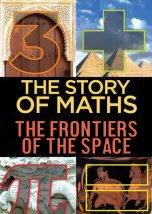
In the third episode we will see Europe by the 17th century taking over from the Middle East as the powerhouse of mathematical ideas. Great strides had been made in understanding the geometry of objects fixed in time and space. The race was on to discover the mathematics to describe objects in motion. This programme explores the work of Rene Descartes, Pierre Fermat, Isaac Newton, Leonard Euler and Carl Friedrich Gauss. Du Sautoy proceeds to describes René Descartes realisation that it was possible to describe curved lines as equations and thus link algebra and geometry. He talks with Henk J. M. Bos about Descartes. He shows how one of Pierre de Fermat’s theorems is now the basis for the codes that protect credit card transactions on the internet. He describes Isaac Newton’s development of math and physics crucial to understanding the behaviour of moving objects in engineering. He covers the Leibniz and Newton calculus controversy and the Bernoulli family. He further covers Leonhard Euler, the father of topology, and Gauss' invention of a new way of handling equations, modular arithmetic. The further contribution of Gauss to our understanding of how prime numbers are distributed is covered thus providing the platform for Bernhard Riemann's theories on prime numbers. In addition Riemann worked on the properties of objects, which he saw as manifolds that could exist in multi-dimensional space.
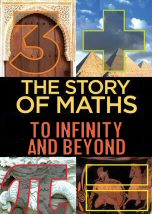
In the fourth episode, Professor Marcus du Sautoy concludes his investigation into the history of mathematics with a look at some of the great unsolved problems that confronted mathematicians in the 20th century. After exploring Georg Cantor's work on infinity and Henri Poincare's work on chaos theory, he sees how mathematics was itself thrown into chaos by the discoveries of Kurt Godel and Paul Cohen, before completing his journey by considering some unsolved problems of maths today, including the Riemann Hypothesis.
Zeitgeist Addendum attempts to locate the root causes of this pervasive social corruption, while offering a solution. This solution is not based on politics, morality, laws, or any other 'establishment' notions of human affairs, but rather on a modern, non-superstitious based understanding of what we are and how we align with nature, to which we are a part. The work advocates a new social system which is updated to present day knowledge, highly influenced by the life long work of Jacque Fresco and The Venus Project.







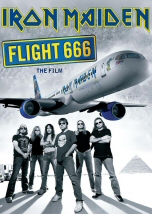



The film is a complete chronological account of the band's 2008 world tour through India, Australia, Japan, USA, Canada, Mexico and South America in a jet piloted by the band's front man, Bruce Dickinson. Features interviews with the musicians, their road crew and fans.