













Last Watched

"Moon"  Sort by

Off the Scale

   2012    Science
The human eye can see extraordinary detail, but the eye of a needle held at arm's length is pretty much at the limit of our vision. Anything smaller is simply invisible, at least to the naked eye. But what if we could see this hidden world all around us in greater detail and magnification than ever before? How different would our familiar surroundings then seem? Richard Hammond explores the astonishing miniature universe all around us, revealing that small is not only beautiful, it can also be very, very powerful. From seeing the microscopic changes to ice crystals that can trigger an avalanche to watching in horror the invisible aftermath of a sneeze on a commuter train and learning how the surface of an ordinary-looking plant hides an astounding secret that will make walking on the moon safer, Richard harnesses cutting-edge technologies to transport the viewer into a spectacular micro realm.
Series: Invisible Worlds
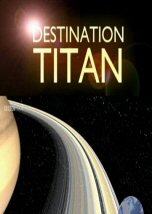
Destination Titan

   2011    Technology
It's a voyage of exploration like no other - to Titan, Saturn's largest moon and thought to resemble our own early Earth. For a small team of British scientists this would be the culmination of a lifetime's endeavour - the flight alone, some 2 billion miles, would take a full seven years. This is the story of the space probe they built, the sacrifices they made and their hopes for the landing. Would their ambitions survive the descent into the unknown on Titan's surface?

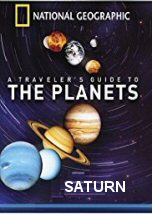
Saturn

   2011    Science
No planet beats Saturn for jaw-dropping beauty. Saturn is the most photogenic planet in all the solar system. Some of the pictures are to die for. But the postcards only tell part of the story. It really is rolling and seething inside. For ringside action, soar above the planet with its six-sided storms. Even more mystery surrounds the impressive Fountains of Enceladus where the secrets of life might spring from the moons salty geysers. And the samples are coming out in space, there's a big sign there: Free Samples: Take One.
Series: A Traveler Guide to the Planets

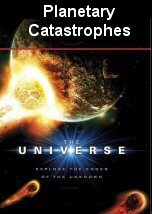
Catastrophes that Changed the Planets

   2011    Science
The planets of our solar system have experienced epic catastrophes throughout their long history, both raining down from outside and bubbling up from within. We'll voyage back in time to investigate the violent events that profoundly shaped the planets, including earth itself. We'll witness stunning revelations about what transformed Mars into a barren, hostile desert... The disaster that changed Venus from temperate to hellish... The impact that blew away Mercury's mantle, turning it into a planetary core... A colossal disturbance that rearranged the orbits of the gas giants... Titanic impacts on Jupiter... And how a lost moon may finally explain Saturn's rings.
Series: The Universe

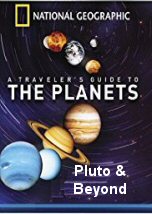
Pluto and Beyond

   2011    Science
Pluto is one of the Smaller than our own Moon, Pluto has never had a single visitor from Earth - until now. We keep saying, 'This is it, this is humanity's trip to Pluto. For the first time in human history, Pluto is about to be revealed. We can expect surprises, it's almost guaranteed. Until then, we can only guess what Pluto looks like. And recently, astronomers decided not to call it a planet any more. Once thought to be an isolated oddity, Pluto now marks the beginning of a whole new frontier. it's as if the explorers had climbed up to the top of the Rockies and were looking over and could see the lands of California on the other side. There has never been a better time to venture where no human has gone before. To follow in the footsteps of our robot pioneers and explore beyond the planets of our Solar System.
Series: A Traveler Guide to the Planets

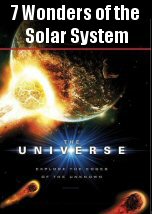
The Universe: 7 Wonders of the Solar System

   2010    Science    3D    HD
Take an exhilarating, unprecedented exploration of the seven most amazing wonders of our solar system. Our virtual tour begins with a trip to Enceladus, one of Saturn's outer moons, where icy geysers spout from its surface. Then venture to Saturn's famous rings, which contain mountain ranges that rival the Alps. Next dive into the eye of the biggest storm in the solar system--Jupiter's Great Red Spot. Soar through the Asteroid Belt, containing millions of leftover rocks from the formation of the solar system. Trek up Mount Olympus, the largest volcano, located on Mars. Have a close encounter with the searing surface of the Sun, and finish the journey by exploring our home planet Earth.
Series: The Universe
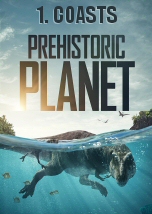
Prehistoric Planet

Prehistoric Planet

2022  Science
Clarkson Farm Season 2

Clarkson Farm Season 2

2023  Nature
Meet the Romans

Meet the Romans

2012  History
The Art of Germany

The Art of Germany

2010  Art
Tiger

Tiger

2020  History
The Putin Interviews

The Putin Interviews

2017  Culture
In the Age of AI

In the Age of AI

2019  Technology