







Last Watched

"Earth"  Sort by

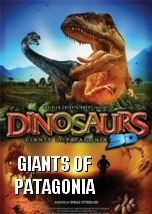
Dinosaurs Giants of Patagonia

   2007    Science    3D    HD
'Dinosaurs: Giants of Patagonia' Following Pr Rodolfo Coria, a world-reknown Argentinian paleontologist, we visit sites of major discoveries he has contributed to in Patagonia and travel back in time to see these amazing beasts come to life in 3D. Patagonia has given us the largest living animal to ever walk the Earth: the titanesque plant-eating Argentinosaur, and its nemesis, the Giganotosaur, a bipedal carnivore that could easily challenge the famous T-Rex.
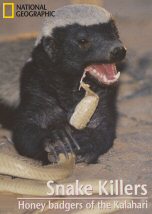
Snake Killers Honey Badgers of The Kalahari

   2007    Nature
The honey badger looks like something you might buy in pet shop and give to children, but turns out to be one of the most violent and determined creatures ever to scuttle across the face of the earth. Nothing in the badger’s world-not even the badgers themselves-are safe from its remarkable ability to create havoc and cause harm. Like a meter long skunk with the brain of a shark the Honey Badger’s metabolism compels it to eat constantly and live on the run. Its diet is admirably inclusive ranging from insects to its own young. If an animal is too big to eat then the badger will fight it anyway, indeed it is this almost supernatural tenacity that compels you respect it, as well as yielding some of the most spectacular sequences in the film. Five foot long cobra sleeping in the top of tree? No problem, the badger scoots up and bites its head off. When an ailing badger is attacked by a full size leopard it takes the leopard over an hour to finish it off. When one is bitten in the face by a snake that can kill a man, it just lies down for a while and sleeps it off.

Mountains

   2006    Nature
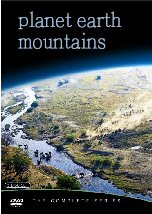
Welcome to an extreme landscape of rock, ice and snow. We tour the mightiest mountain ranges, starting with the birth of a mountain at one of the lowest places on Earth and ending at the summit of Everest. Find out how some of the most secretive animals rise to the challenge of mountain life. Share one of Earth's rarest phenomena, a lava lake that has been erupting for over 100 years. The same forces built the Simian Mountains where we find troops of gelada baboons nearly a thousand strong. In the Rockies, grizzlies build winter dens inside avalanche-prone slopes and climb the peaks to devour abundant summer moths. In another world first, the programme brings us astounding images of a snow leopard hunting on the Pakistan peaks.
Series: Planet Earth

The Jungles

   2006    Nature
Jungles cover roughly three per cent of our planet yet contain 50 per cent of the world's species. High-definition cameras enable unprecedented views of animals living on the dark jungle floor. In the Ngogo forest the largest chimpanzee group in the world defends its territory from neighbouring groups. Other jungle specialists include parasitic fungi which infiltrate an insect host, feed on it, and then burst out of its body.
Series: Planet Earth

Van Gogh

   2006    Art
Born in Groot-Zundert, The Netherlands, Van Gogh spent his early life as an art dealer, teacher and preacher in England, Holland and Belgium. His period as an artist began in 1881 when he chose to study art in Brussels, starting with watercolours and moving quickly on to oils. The French countryside was a major influence on his life and his early work was dominated by sombre, earthy colours depicting peasant workers, the most famous of which is The Potato Eaters, 1885. It was during Van Gogh's studies in Paris (1886-8) that he developed the individual style of brushwork and use of colour that made his name. In 1888 he moved to Arles where the Provençal landscape provided his best-known subject matter. However, it also marked the start of his mental crisis following an argument with his contemporary Paul Gauguin. Van Gogh was committed to a mental asylum in 1889 where he continued to paint, but he committed suicide in 1890.
Series: Power of Art

Ocean Deep

   2006    Nature
Life goes to extraordinary lengths to survive this immense realm. A 30 tonne whale shark gorges on a school of fish and the unique overhead heli-gimbal camera reveals common dolphins rocketing at more than 30km an hour. Descending into the abyss, deep sea octopus fly with wings and vampire squid use bioluminescence to create an extraordinary colour display. The first ever time-lapse footage taken from 2,000m down captures eels, crabs and giant isopods eating a carcass, completely consuming it within three hours.
Series: Planet Earth
The Human Body

The Human Body

1998  Medicine
Neanderthal

Neanderthal

  History
Prehistoric Planet

Prehistoric Planet

2022  Science
Order and Disorder

Order and Disorder

2012  Science
Leaving Neverland

Leaving Neverland

2019  Culture
The Hunt

The Hunt

2015  Nature