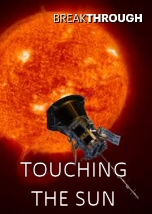
For all of human history, the Sun, our home star, has measured our days and our seasons while fueling all life on Earth. Yet it remains an enigma. NASA's Parker Probe Plus is on a mission to change that, flying through dangerous radiation to become the closest spaceship to orbit our Sun. It's a journey to the center of our solar system, a mission to gather information about the most critical celestial body in the sky, our star.
Gaby Roslin and Amir Khan present a program in which they apply the latest science to some of the worst sleepers. They include an extreme snorer, a man who suffers from night terrors, a woman who has restless leg syndrome, and a man with chronic insomnia for 20 years. The film also shows a sleep deprivation experiment to test for risky behaviour, pain resistance and emotional control. When the subjects reach the final hours of the challenge, the experiment begins to take its toll as the participants' emotions go into overdrive, with one threatening to quit altogether.
Join us on a journey into the mysterious depths of the human psyche as we investigate the strange and surprising terrain of the Mind Field. Chimps and Humans can be traced biologically back to a common ancestor. The Cognitive Tradeoff Hypothesis theorizes about the two different paths of development - particularly cognitive development - that occurred in these two species after the split. Chimps stayed in the trees and developed some extraordinary cognitive capabilities which are shown by the research work of Japanese scientists, while humans came down into the savanna and developed social capabilities and language. The hypothesis is that humans 'traded' some aspects of cognitive capabilities by re-purposing areas of the brain that had evolved in the context of other uses. Those capabilities are kept in chimps and are far surpassing that of normal humans. This is shown by the research work of scientists at the Primate Research Center connected with Kyoto University.
After years of anticipation, autonomous vehicles are now being tested on public roads around the world. As ambitious innovators race to develop what they see as the next high-tech pot of gold, some experts warn there are still daunting challenges ahead, including how to train artificial intelligence to be better than humans at making life-and-death decisions. How do self-driving cars work? How close are we to large-scale deployment of them? And will we ever be able to trust AI with our lives?
It all begins as a study on the psychology of prison life led by Stanford psychology professor Dr. Philip Zimbardo. 24 volunteers - 12 guards and 12 prisoners - have agreed to spend the next two weeks recreating life in a correctional facility. Normal people can become monsters, given the right situation, that's the standard narrative of the Stanford Prison Experiment, one of the most famous psychological experiments of all time. But what if the cause of its participants' cruel behavior wasn't what we've always been told?
Mind reading might sound like pseudoscientific, but its scientific counterpart, thought identification, is very much a real thing. It's based in neuroimaging and machine learning, and what's really cool is that experiments in mind reading aren't just about spying on what someone is thinking. They're about figuring out what thoughts are even made of. When you think of something, what does that mental picture actually look like? What resolution is it in? How high fidelity is a memory, and how do they change over time? In this episode, we are going to look at how
reading people's minds can help us answer these questions.













It's a journey to the center of our solar system, a mission to gather information about the most critical celestial body in the sky, our star.