











Last Watched

"Island"  Sort by

Nature Microworlds: Galapagos

   2012    Nature
A visit to arguably the most famous archipelago on Earth, the Galapagos. It's home to a myriad of bizarre and unique creatures, endemic to these islands - but how did they get here and what is the key to these extraordinary islands that allows them to thrive? The programme reveals that this key holds not just the secret to life here, but also to how Darwin was able to leave with the ideas that would revolutionise biology.

The Two Thousand Year Old Computer

   2012    History
In 1901, a group of divers excavating an ancient Roman shipwreck near the island of Antikythera, off the southern coast of Greece, found a mysterious object - a lump of calcified stone that contained within it several gearwheels welded together after years under the sea. The 2,000-year-old object, no bigger than a modern laptop, is now regarded as the world's oldest computer, devised to predict solar eclipses and, according to recent findings, calculate the timing of the ancient Olympics. Following the efforts of an international team of scientists, the mysteries of the Antikythera Mechanism are uncovered, revealing surprising and awe-inspiring details of the object that continues to mystify

The Power of Flowers

   2012    Science
In the second episode, Professor Iain Stewart discovers how flowers have transformed our planet. He journeys to the remote islands of the South Pacific to track down the earliest flowers. In the deserts of Africa and rainforests of Vietnam, he sees how they brought brilliant colour to the most barren landscapes and sculpted the earth itself. And he learns how they drove the evolution of all animals - kick-starting our human story.
Series: How to Grow a Planet

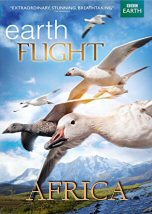
Earthflight Africa

   2012    Nature
Fly over Africa on the back of a vulture and see the most animal-packed continent with fresh eyes. Arrow-dive with cape gannets among sharks, dolphins and whales as they join the great sardine run. Soar with fish eagles as they discover an S-shaped living island comprised entirely of flamingos, and join them on a spectacular hunt. Fly with kelp gulls as they study the hunting behaviour of the greatest underwater predator of all: the great white shark. On the wings of eagles, fly through the mist-filled Victoria Falls and dive for fish in the mighty Zambezi. Circle with vultures high above the Serengeti as they watch the drama of the wildebeest migration below, and discover what happens when this canny scavenger suddenly becomes prey. Among toxic soda lakes, find out what it is like to be a flamingo, vulnerable to every predator on the continent, including baboons and hyenas. Join these flamingos as they take part in one of the most beautiful dances in the bird world. This is Africa as never seen before - from the wings of birds
Series: Earthflight

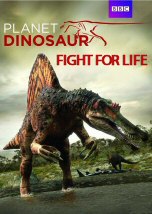
Fight for Life

   2011    Science
This episode focuses on the Jurassic period, a time when the first giant killers stalked the Earth and lurked in the seas; a time when the slightest advantage meant the difference between life and death. In North America the iconic allosaurus, an ambush hunter with a lethal bite, dominated. Not even the heavily-armoured stegosaurus was safe from this killer, and incredible evidence reveals a glimpse of a vicious battle between these two giants. Life in Jurassic oceans was no easier; in 2008, a fossil was dug out of a frozen island high in the Arctic. It was a colossal marine reptile, twice as big as most ocean predators, at 15 metres long and weighing about 45 tonnes. This was Predator X. Its skull alone was nearly twice the size of a tyrannosaurus rex's, and its bite force unmatched by anything in the Jurassic seas. The balance of power between predator and prey is a fine one, as prey continually evolves different ways to avoid predators. But for the most successful and enduring predators, the battle to survive has always been tipped in their favour
Series: Planet Dinosaur

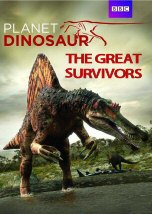
The Great Survivors

   2011    Science
The final episode explores dinosaurs' extraordinary ability to survive. Featured dinosaurs include the bizarre magyarosaurus, which lived in the shadow of the biggest flying animal - hatzegopteryx - and showed an amazing adaptation to island life; and the weird nothronychus, a carnivore that gave up meat eating. This astonishing capacity to evolve into ever more diverse and bizarre forms meant that dinosaurs not only spread throughout the world, but also dominated life upon it for more than 160 million years. It was only an unprecedented extraterrestrial event that finally saw the end of planet dinosaur.
Series: Planet Dinosaur
Rome

Rome

  History
Senna

Senna

2010  Culture
Untold

Untold

2021  Culture
The Last Narc

The Last Narc

2020  Culture
Becoming Martian

Becoming Martian

2021  Technology
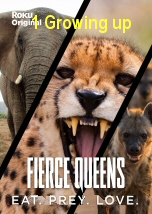
Fierce Queens

Fierce Queens

2020  Nature
High Score

High Score

2020  Technology