In his mid-eighties, when many believed his journey was winding down, David Attenborough embarked on a bold new chapter in natural history filmmaking. This adventure traces the epic story of life on Earth, from the first organisms that flourished on ancient seabeds hundreds of millions of years ago to the astonishing biodiversity of today. Revisiting iconic landscapes and harnessing cutting-edge technology, Attenborough reveals how our planet’s living tapestry was shaped across deep time. The three episodes can be enjoyed together in a single continuous viewing, creating one sweeping journey across continents and oceans. From the Galápagos Islands to the caves of Borneo, from China’s ancient tropics to the Great Barrier Reef, the series follows Attenborough’s global quest to understand how life rose, adapted, and endured. It is a grand exploration of evolution, resilience, and the fragile beauty of the world we inherit.
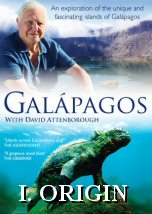
Sir David Attenborough returns to the Galápagos Islands and travels throughout the archipelago to explain their origins and their unique fauna in evolutionary terms. He has captured a new species of pink iguana on film for the first time. In the first episode, the islands of the Galapagos rose explosively from the ocean four million years ago. Although life would not seem viable in such a remote Pacific outpost, the first arrivals landed as the fires still burned. David Attenborough explores the islands for the animals and plants that descend from these pioneers: from the sea birds carrying the seeds that made a tentative foothold on these rocks, to equator-dwelling penguins and a dancing bird with blue feet. This is a story of treacherous journeys, life-forms that forged unlikely companionships, and surviving against all odds. It is the story of an evolutionary melting pot in which anything and everything is possible.
Sir David Attenborough reveals how Mammals have conquered the Earth, uncovering the secrets to their success with their winning design, incredible adaptability, unrivalled intelligence, and unique sociability. 66 million years ago, when the reign of the dinosaurs came to an end, mammals were set free to exploit every corner of the planet. Mammals reveals the strategies, behaviours and traits that lie behind the astonishing success of this remarkable group of animals. Above all, the series celebrates the amazing intelligence that enables mammals to learn, remember, problem-solve, parent, and co-operate. Experience the complete six-episode series in a single video, showcasing how mammals have adapted to thrive in every major environment on Earth. They inhabit every ocean and continent, from frozen wildernesses and dense jungles to baking deserts, the dark depths of the ocean, and even the skies above our forests.
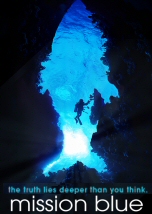
Legendary oceanographer and TED prize winner Dr. Sylvia Earle is on a mission to save our oceans. Mission Blue is part action-adventure, part expose of an Eco-disaster. More than 100 scientists, philanthropists and activists gather in the Galapagos Islands to help fulfill Dr. Earle's lifelong wish: build a global network of marine protected areas, like underwater national parks, to protect the natural systems that keep humans alive. As the expedition ends, the Deep water Horizon oil well explodes. With oil gushing into the Gulf of Mexico, Sylvia and an environmental dream team race around the world trying to defend her 'Hope Spots'.
14-year-old Laura Dekker sets out-camera in hand-on a two-year voyage in pursuit of her dream to be the youngest person ever to sail around the world alone. In the wake of a year-long battle with Dutch authorities that sparked a global storm of media scrutiny, Laura now finds herself far from land, family and unwanted attention, exploring the world in search of freedom, adventure, and distant dreams of her early youth at sea. Jillian Schlesinger's debut feature amplifies Laura's brave, defiant voice through a mix of Laura's own video and voice recordings at sea and intimate vérité footage from locations including the Galapagos Islands, French Polynesia, Australia, and South Africa.
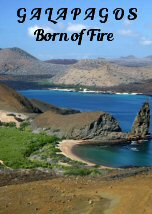
Natural history series exploring the Galapagos Islands, which lie 1,000 kilometres off the coast of South America. This programme examines the fascinating stages of the islands' lives and how a variety of creatures have found ways to survive, including marine iguanas, sea-going lizards and giant tortoises.

















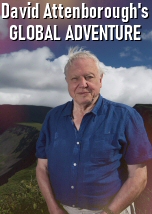




The three episodes can be enjoyed together in a single continuous viewing, creating one sweeping journey across continents and oceans. From the Galápagos Islands to the caves of Borneo, from China’s ancient tropics to the Great Barrier Reef, the series follows Attenborough’s global quest to understand how life rose, adapted, and endured. It is a grand exploration of evolution, resilience, and the fragile beauty of the world we inherit.