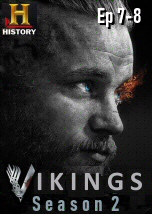
In episodes 7 and 8 of Season 2, rivalries harden and new alliances begin to reshape the balance of power on both sides of the sea. Ragnar and King Horik clash over the fate of Jarl Borg and over who should control their next expedition to England. While Horik argues that they still need Borg’s ships and warriors, Ragnar finds an unexpected new ally in Lagertha, now commanding warriors of her own. With that obstacle removed, Ragnar carries out one of the most terrifying punishments in Viking tradition: the blood eagle. At the same time, King Ecbert welcomes King Aelle to Wessex and seals an alliance between their kingdoms through marriage, preparing England for the Vikings’ inevitable return. The tension only increases when Aslaug’s dark prophecy appears to come true with the birth of Ragnar’s son Ivar, while the Viking fleet once again sails for Wessex. Ragnar wants negotiation and sees the possibility of something more lasting than simple plunder, but Horik is driven by revenge and increasingly resents Ragnar’s independence. Ecbert, meanwhile, prepares both for peace and war, using Athelstan as a link to the man he knows is unlike any other Viking leader. When Ragnar discovers that Athelstan is still alive and Ecbert offers talks under safe conduct, the possibility of a historic agreement suddenly emerges—but distrust, ambition and bloodshed threaten to destroy it before it can even begin.
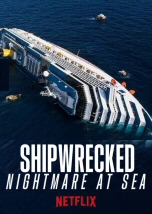
What begins as a dream Mediterranean holiday turns into an unimaginable fight for survival. On the night of January 13, 2012, passengers aboard the luxurious Costa Concordia are dining and putting children to bed when the ship sails dangerously close to the Italian island of Giglio and strikes underwater rocks. As the vessel loses power and begins to flood and tilt, confusion spreads through its glittering corridors. Passengers are initially told there is only an electrical problem, while precious minutes pass before an evacuation is ordered and lifeboats become increasingly difficult to launch. Through extraordinary footage recorded by those on board, black-box communications and deeply personal survivor testimony, the disaster unfolds almost minute by minute: Families desperately searching for a way off the ship, crew members risking their lives to help strangers, passengers trapped as corridors become walls, and rescuers entering the enormous wreck while it threatens to shift beneath them. Behind the terrifying struggle to survive emerges an equally disturbing question—how could a modern cruise ship carrying thousands of people end up on its side just metres from shore? The deaths of 32 people, the actions of Captain Francesco Schettino and the investigation that followed transform one catastrophic night at sea into a gripping story of human courage, fatal decisions and the consequences of failure when every second matters.
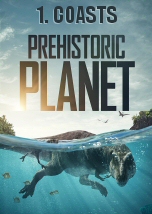
In the final three episodes of the series, Chris Packham follows three extraordinary evolutionary journeys to discover how the relentless demands of survival transformed simple early animals into some of the most remarkable creatures alive today. In Borneo, the voracious appetite of the bat leads back more than half a billion years to the origins of the through-gut, the first anus, heads and jaws, revealing how the need to find and consume food helped reshape animal life and ultimately produced the bat’s extraordinary powers of hearing. In the Bahamas, the intelligence of dolphins opens an even deeper story: from ancient cells able to sense light to the evolution of eyes, complex brains, sophisticated senses and the remarkable minds of modern dolphins. The journey culminates with one of nature’s supreme athletes. Tracing the horse’s ancestry through hundreds of millions of years, Packham reveals how primitive muscle cells evolved into increasingly powerful systems for movement, how beating hearts supplied those muscles with oxygen, and how limbs became ever more effective tools for locomotion. Slithering, swimming, walking and running eventually converge in an animal built for extraordinary speed and endurance. Together, these final episodes reveal a breathtaking truth: hunger, perception and movement were not merely necessities of survival—they were powerful evolutionary forces that helped create the astonishing complexity of animal life.
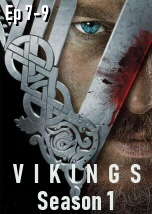
In the final three episodes of Season 1, Ragnar's ambition drives him toward his boldest gamble yet as a daring raid strikes at the heart of one of England's most powerful kingdoms. While victory promises unimaginable wealth and lasting fame, every decision carries devastating consequences, forcing alliances to shift and loyalties to be tested in ways no one expects. As the Vikings make their sacred pilgrimage to Uppsala, faith, sacrifice, and destiny collide in an unforgettable journey that changes the lives of Ragnar, Lagertha, and Athelstan forever. Political intrigue soon follows when Ragnar is sent to negotiate with the dangerous Jarl Borg, where diplomacy hangs by a thread and a single mistake could ignite a brutal conflict. Filled with epic battles, emotional turning points, and unforgettable characters, these episodes deliver a gripping conclusion that leaves you eager for the next season.
Captured during her Manchester shows on a sold-out world tour, this concert film brings Billie Eilish closer than ever, turning the stage into a dark, emotional and visually hypnotic space where every whisper, scream, silence and movement feels intensely personal. Co-directed with James Cameron, the film transforms a live performance into a cinematic experience, surrounding the audience with the atmosphere, scale and intimacy of one of the most distinctive artists of her generation. More than a concert recording, it becomes a journey through the sound and emotion of Hit Me Hard and Soft, where fragile ballads, explosive moments, dreamlike lighting and the roar of thousands of fans collide in one powerful experience. Billie moves between vulnerability and confidence, loneliness and connection, softness and strength, creating a show that feels both massive and intimate. The film invites viewers not just to watch the performance, but to feel as though they are part of it.
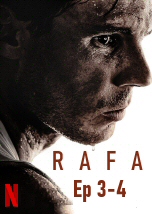
In the final two episodes, Novak Djokovic’s sudden rise changes everything, forcing Rafael Nadal into a new and even more demanding era: the age of the Big Three. What was once a rivalry defined by Roger Federer becomes a three-way battle for history, greatness and survival at the top of tennis. As Djokovic grows stronger and the pressure intensifies, Rafa is pushed to the limits of his body and mind, fighting through pain, doubt and exhaustion while trying to protect the place he has earned through years of sacrifice. But these episodes are not only about trophies, rankings or legendary matches. They reveal the deepest part of Nadal’s character: the refusal to surrender, even when injuries, age and time begin to close in. From the physical punishment of his greatest victories to the emotional weight of knowing that the end is coming, Rafa keeps searching for one more comeback, one more fight, one more reason to believe. Powerful, intimate and deeply moving, the final chapters become a portrait of a champion who built his legend not simply by winning, but by never giving up.




















The tension only increases when Aslaug’s dark prophecy appears to come true with the birth of Ragnar’s son Ivar, while the Viking fleet once again sails for Wessex. Ragnar wants negotiation and sees the possibility of something more lasting than simple plunder, but Horik is driven by revenge and increasingly resents Ragnar’s independence. Ecbert, meanwhile, prepares both for peace and war, using Athelstan as a link to the man he knows is unlike any other Viking leader. When Ragnar discovers that Athelstan is still alive and Ecbert offers talks under safe conduct, the possibility of a historic agreement suddenly emerges—but distrust, ambition and bloodshed threaten to destroy it before it can even begin.