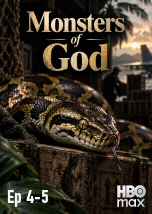
In the final two episodes of the series, the reptile trade enters a new and even more lucrative era. After prison, Tommy Crutchfield returns to find an industry transformed by the rise of genetically altered “morphs”, rare colour and pattern variations that can sell for enormous sums. What appears to be a more legitimate breeding business quickly collides again with illegal trafficking, as Operation Chameleon begins to expose the international network linking collectors, dealers and even major zoological institutions. The investigation then closes in on Anson Wong, the Malaysian trafficker described as one of the most powerful figures in the global reptile trade. As U.S. Fish and Wildlife agents work undercover to penetrate his organization, the story expands from rare snakes and lizards to critically endangered species such as the ploughshare tortoise, whose extraordinary black-market value has helped drive it toward extinction in the wild. These final episodes reveal how obsession, vast profits, corruption and international demand can turn the pursuit of exotic animals into a criminal empire with devastating consequences for wildlife.
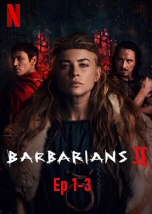
In the first three episodes of Season 2, the uneasy peace after Rome’s defeat begins to unravel. Arminius suspects the Romans are rebuilding their strength and turns to Marbod, the powerful leader of the Marcomanni, hoping to forge a broader Germanic alliance before Rome can strike again. At the same time, his brother Flavus returns to Germania in Roman service, reopening old wounds and forcing Arminius to confront the family he left behind. Thusnelda takes dangerous risks of her own, infiltrating the Roman camp as tensions rise on both sides. The situation becomes even more explosive when Marbod secretly meets Tiberius in an attempt to secure peace with Rome, while Germanicus questions Flavus’s loyalty and the Romans exploit every division among the tribes. Arminius brings his son Gaius into the village, then turns against Marbod when he discovers the depth of his dealings with Rome, while Thusnelda reacts furiously to the secrets Arminius has kept from her. These opening episodes turn the struggle into a dangerous web of betrayal, family conflict and political ambition, where every alliance could decide the future of Germania.
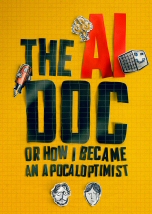
As artificial intelligence accelerates at a breathtaking pace, filmmaker Daniel Roher sets out to understand whether humanity is approaching an extraordinary new era or a catastrophe of its own making. What begins as a personal investigation becomes far more urgent when he and his wife learn they are expecting a child. Faced with predictions ranging from revolutionary medical breakthroughs and powerful new tools for creativity to mass unemployment, deepfakes, autonomous systems and even existential risk, he asks some of the world’s leading AI thinkers a deceptively simple question: should we be excited about the future, or terrified of it? The film explores how generative AI works, why its capabilities are advancing so quickly and what could happen if increasingly powerful systems become difficult to control. Experts debate AI safety and alignment, the race between competing companies, the possibility of machines seeking greater power, and the social consequences of automation and concentrated wealth. At the same time, the documentary confronts the technology’s remarkable promise, from personalized education to scientific discovery and potential cancer treatments. Moving between anxiety and hope, Roher ultimately searches for a way to face an uncertain future not as a pessimist or a blind optimist, but as something in between: an “Apocaloptimist.”
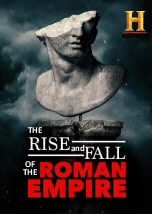
From a small and aggressive republic fighting for survival in the ancient Mediterranean to an empire that dominated much of the known world, Rome’s story is one of extraordinary ambition, conquest and transformation. The documentary follows the decisive struggles that shaped its rise, from the wars with Carthage and Hannibal to the upheavals of Spartacus, Julius Caesar and the collapse of the Republic, before Augustus establishes a new imperial order. Military power, political rivalry, engineering, law, spectacle and ruthless violence combine to reveal how Rome created a civilization of unprecedented scale, but also planted the seeds of its own destruction. At its height, the empire reaches astonishing levels of wealth and power under rulers such as Trajan and Marcus Aurelius, yet the system becomes increasingly difficult to control. Plague, civil conflict, destructive emperors such as Commodus, religious transformation and mounting pressure from Germanic peoples, Goths, Vandals and other invaders gradually weaken the foundations of Roman authority. From the Colosseum and the grandeur of imperial Rome to Attila and the invasions that accelerate its collapse, the two-part series shows how one of history’s greatest superpowers ultimately became a warning about the dangers of unchecked power and overextension. Presented here with both episodes combined into a single video, viewers can follow the complete rise and fall of Rome without interruption.
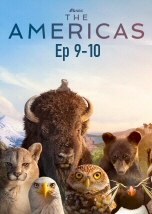
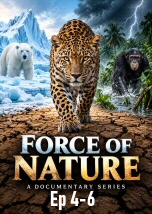
In the final two episodes, the journey reaches the Pacific edge of North America and the remote wilderness of Patagonia, two spectacular regions shaped by powerful oceans, towering forests and extreme weather. Along the West Coast, wolves comb the shoreline for food, sea otters battle crashing surf, blue whales gather in a rare display of speed and movement, and giant Pacific octopuses devote everything to protecting the next generation. High in the redwood canopy, even tiny salamanders perform extraordinary leaps to survive, revealing how life has adapted to one of the continent’s most dramatic coastal environments. The series then travels to the far south of the Americas, where Patagonia delivers a fittingly wild finale. Pumas stalk guanacos through snowy mountains, rockhopper penguins fight their way through violent waves to reach their colonies, giant stag beetles climb immense trees to compete for mates, and elephant seals clash for dominance along the coast. In one of the most remarkable scenes, a family of orcas passes down a dangerous hunting technique from one generation to the next, showing how survival here depends not only on strength, but also on experience, cooperation and learning.
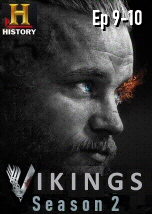
In the final two episodes of Season 2, Ragnar’s hopes of securing land in Wessex collide with King Horik’s hunger for revenge. As the Vikings advance towards King Ecbert’s villa, they walk straight into a carefully prepared Saxon response. The resulting battle is brutal, leaving Rollo gravely wounded and forcing Ragnar to reconsider what victory should really mean. While Horik still dreams of plunder and vengeance, Ragnar begins to see a different future: Farmland for his people, an alliance with Ecbert and the possibility of using Viking strength in the struggle for Mercia. Back in Kattegat, however, the most dangerous battle is no longer being fought with Saxons. Horik becomes convinced that Ragnar has grown too powerful and secretly prepares to destroy him and his entire family. Floki appears to turn against Ragnar, Siggy is drawn into Horik’s plans and every friendship suddenly becomes suspect. But beneath the deception, Ragnar is quietly testing the loyalty of those closest to him. What follows is a tense and violent reckoning in which betrayal is answered with betrayal, old alliances are shattered and Ragnar’s rise reaches a decisive new stage.












The investigation then closes in on Anson Wong, the Malaysian trafficker described as one of the most powerful figures in the global reptile trade. As U.S. Fish and Wildlife agents work undercover to penetrate his organization, the story expands from rare snakes and lizards to critically endangered species such as the ploughshare tortoise, whose extraordinary black-market value has helped drive it toward extinction in the wild. These final episodes reveal how obsession, vast profits, corruption and international demand can turn the pursuit of exotic animals into a criminal empire with devastating consequences for wildlife.