Snakes are among the most feared yet misunderstood predators on Earth. Across the Americas, Australia, Africa, Asia and Europe, more than 100 species reveal extraordinary adaptations that allow them to survive in rainforests, deserts, wetlands, mountains and oceans. Boas and pythons overpower prey with immense strength, while rattlesnakes, cobras, vipers, mambas, taipans and sea snakes deploy some of nature’s most sophisticated venoms, camouflage and sensory abilities. Far from being simple killers, they also play a vital role in controlling rodents and maintaining healthy ecosystems. From black mambas battling for mates and spitting cobras defending themselves with remarkable accuracy to the thousands of pit vipers inhabiting China’s extraordinary Shedao Island, the series reveals hunting techniques and behaviours rarely seen in such detail. Presented here with all three episodes combined into a single video, it offers a spectacular journey into the hidden lives of these highly specialised animals, showing how evolution has made snakes some of the planet’s most efficient and fascinating survivors.
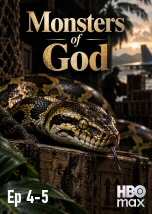
In the final two episodes of the series, the reptile trade enters a new and even more lucrative era. After prison, Tommy Crutchfield returns to find an industry transformed by the rise of genetically altered “morphs”, rare colour and pattern variations that can sell for enormous sums. What appears to be a more legitimate breeding business quickly collides again with illegal trafficking, as Operation Chameleon begins to expose the international network linking collectors, dealers and even major zoological institutions. The investigation then closes in on Anson Wong, the Malaysian trafficker described as one of the most powerful figures in the global reptile trade. As U.S. Fish and Wildlife agents work undercover to penetrate his organization, the story expands from rare snakes and lizards to critically endangered species such as the ploughshare tortoise, whose extraordinary black-market value has helped drive it toward extinction in the wild. These final episodes reveal how obsession, vast profits, corruption and international demand can turn the pursuit of exotic animals into a criminal empire with devastating consequences for wildlife.
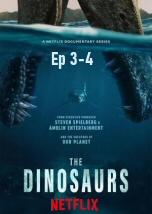
In the final two episodes of the series, produced by Steven Spielberg and narrated by Morgan Freeman, the Age of Dinosaurs reaches its most spectacular and dangerous chapter. After a harsh freeze reshapes life on Earth, the Cretaceous world emerges with rising seas, scattered islands and new hunting grounds where giant reptiles thrive. Pterosaurs glide across the skies searching for food while powerful predators patrol land and ocean in a planet completely ruled by dinosaurs. Among these rulers stands the most formidable hunter of all — Tyrannosaurus rex. Yet while these giants dominate the Earth, the planet itself is slowly changing. Continents drift apart, ecosystems evolve and an unseen threat begins its silent journey through space, foreshadowing the catastrophic event that will one day end the age of dinosaurs.
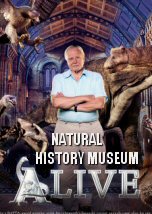
In this ground-breaking film, Sir David Attenborough takes us on a journey through the world-famous Natural History Museum in London in a captivating tale of discovery, adventure, and magic, where state-of-the-art CGI, science, and research combine to bring the museum's now long-extinct inhabitants to life to discover how these animals once roamed the planet. As the doors are locked and night falls, Attenborough stays behind and meets some of the most fascinating extinct creatures which come alive in front of his eyes; dinosaurs, ice age beasts, and giant reptiles. The film fulfils a lifelong dream of him, who said: 'I have been coming to the Natural History Museum since I was a boy. It's one of the great places to come to learn about natural history. In this film we have the technology to bring back to life some of the most romantic and extraordinary extinct creatures that can be conceived; some are relatively recent animals like the dodo, others older like the dinosaurs, and some we only know through fossil evidence. Using our current scientific knowledge, this film brings these creatures alive, allowing me to look at some of the biggest questions surrounding them.'
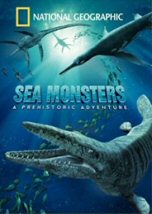
The setting alternates between prehistory and modern day times in which scientists study the fossilized remains of the creatures in the film. In 2009, a group of paleontologists discover a rare fossil in Kansas. The fossil was previously exposed by a summer rain, and it appears to be a marine reptile, tracing back over 70 million years. It was a female Dolichorhynchops and will be the inspiration for telling the story of Dolly, who travels the Kansas Inland Sea, 80 million years ago during the late Cretaceous period with her family. The film brings to life some of the most bizarre, ferocious and fascinating creatures to ever inhabit the ocean, incluing Tylosaurus, Xiphactinus, Cretoxyrhina, and Ammonite. It combines animation with recreations in a 3D prehistoric adventure. A journey to the bottom of the ancient oceans dramatizes awe-inspiring creatures.
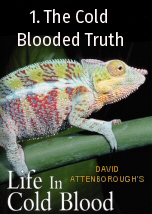
David Attenborough reveals the surprising truth about the cold-blooded lives of reptiles and amphibians. These animals are as dramatic in combat, as colourful in their communication and as tender in their parental care as any other animals. Join giant courting crocodiles, jousting tortoises and bright red sumo-wrestling frogs in their sophisticated, solar-powered lives.












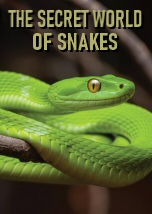



From black mambas battling for mates and spitting cobras defending themselves with remarkable accuracy to the thousands of pit vipers inhabiting China’s extraordinary Shedao Island, the series reveals hunting techniques and behaviours rarely seen in such detail. Presented here with all three episodes combined into a single video, it offers a spectacular journey into the hidden lives of these highly specialised animals, showing how evolution has made snakes some of the planet’s most efficient and fascinating survivors.