What begins as a dream Mediterranean holiday turns into an unimaginable fight for survival. On the night of January 13, 2012, passengers aboard the luxurious Costa Concordia are dining and putting children to bed when the ship sails dangerously close to the Italian island of Giglio and strikes underwater rocks. As the vessel loses power and begins to flood and tilt, confusion spreads through its glittering corridors. Passengers are initially told there is only an electrical problem, while precious minutes pass before an evacuation is ordered and lifeboats become increasingly difficult to launch. Through extraordinary footage recorded by those on board, black-box communications and deeply personal survivor testimony, the disaster unfolds almost minute by minute: Families desperately searching for a way off the ship, crew members risking their lives to help strangers, passengers trapped as corridors become walls, and rescuers entering the enormous wreck while it threatens to shift beneath them. Behind the terrifying struggle to survive emerges an equally disturbing question—how could a modern cruise ship carrying thousands of people end up on its side just metres from shore? The deaths of 32 people, the actions of Captain Francesco Schettino and the investigation that followed transform one catastrophic night at sea into a gripping story of human courage, fatal decisions and the consequences of failure when every second matters.
Many argue that flying saucers and other extra-terrestrial space ships continuously visit the earth. If that were true, what kinds of technologies would such alien spacecraft require? And do eyewitness reports of UFO sightings jibe with modern theories of how interstellar travel might be possible? Authors, astronomers and theoretical physicists weigh in with the blueprints for inertia-canceling devices, nuclear-powered craft, antimatter propulsion systems and even warp drives. Based on Einstein's theories and countless scientific studies, we'll find out how these visitors might bridge the vast distances between the stars. And if they could survive such hazardous journeys, are they flesh and blood or intelligent machines?
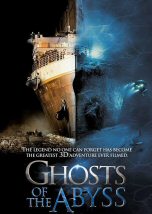
Director James Cameron returns to the site of the 1912 wreck of the RMS Titanic. With a team of history and marine experts he embarks on an unscripted adventure back to the final grave of 1,517 people. Using two small, purpose-built remotely operated vehicles, we can see inside the Titanic and with the help of CGI, view the ship's original appearance superimposed on the deep-dive images. Throughout the movie, there are re-enactments of events that are discussed that use CGI recreations of the interior of the Titanic. The documentary was named one of the Best 3D movies ever by Rolling Stone.
In the thrilling series finale, the journey culminates high in the Alps as our riders launch into an exhilarating paragliding flight above snow-dusted peaks, confronting the elements with sheer adrenaline. They then trade handlebars for putters on a breathtaking Swiss golf course, where each swing frames mist-shrouded valleys in the distance. A chance detour leads them to a quirky mountain artist’s hidden atelier, where kinetic sculptures seem to capture the spirit of their odyssey. As glaciers gleam and winding roads beckon, they pause to savour the bonds forged and miles conquered before embarking on the extended ride back home.
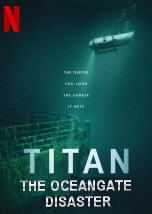
A gripping investigation into one of the most chilling maritime disasters in modern history. When a luxury submersible vanishes while descending toward the Titanic wreck, the world watches in suspense. Four days later, the truth shocks the globe: a catastrophic implosion, five lives lost, and a trail of ignored warnings. Through exclusive interviews and chilling archival footage, this film exposes the ambitious vision of an entrepreneur who defied engineering norms in pursuit of glory—and the irreversible consequences that followed. A haunting portrait of hubris, and the unforgiving power of the deep.
The future of transportation is no longer a distant dream — it's here, and it's electric. But beneath the sleek designs and zero-emission promises lies a more complex reality. From hidden environmental costs to the fierce battle for battery materials, and from government incentives to powerful oil lobbies, this gripping investigation peels back the glossy surface to reveal the full story behind the electric revolution. Experts, insiders, and whistleblowers offer unprecedented insights into the true cost — and potential — of going electric. Fast-paced, eye-opening, and often surprising, this journey challenges everything you thought you knew about the cars of tomorrow.








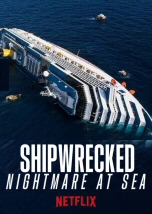





Through extraordinary footage recorded by those on board, black-box communications and deeply personal survivor testimony, the disaster unfolds almost minute by minute: Families desperately searching for a way off the ship, crew members risking their lives to help strangers, passengers trapped as corridors become walls, and rescuers entering the enormous wreck while it threatens to shift beneath them. Behind the terrifying struggle to survive emerges an equally disturbing question—how could a modern cruise ship carrying thousands of people end up on its side just metres from shore? The deaths of 32 people, the actions of Captain Francesco Schettino and the investigation that followed transform one catastrophic night at sea into a gripping story of human courage, fatal decisions and the consequences of failure when every second matters.