James Cameron journeys to some of the Earth's deepest, most extreme and unknown environments in search of the strange and alien creatures that live there. Joining him is a team of young NASA scientists and marine biologists who consider how these life forms represent life we may one day find in outer space not only on distant planets orbiting distant stars, but also within our own solar system. Aliens of the Deep is the result of expeditions to several hydrothermal vent sites in the Atlantic and the Pacific. These are violent volcanic regions where new planet is literally being born and where the interaction between ocean and molten rock creates plumes of super-heated, chemically-charged water that serve as oases for animals unlike anything ever discovered. Six-foot tall worms with blood-red plumes and no stomach, blind white crabs, and a biomass of shrimp capable of 'seeing' heat all compete to find just the right location in the flow of the super-heated, life-giving water or to fry.
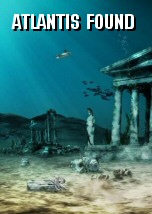
This documentary attempts to make history by finding the lost city of Atlantis once and for all. Adventurer-geologist Dr. Martin Pepper sets out to prove his theory – that the true Atlantis existed on the Greek island of Santorini, and was destroyed in the biggest volcanic eruption in human history". In order to achieve his goal, Pepper will use new scientific evidence gathered using state-of-the-art sonar scans of the sea bed and microscopic analysis of the ancient landscape. One of the challenges he faces is that he must also match Santorini to a series of key clues embedded in the first ever description of Atlantis by the Greek philosopher Plato – from the lost city’s strange ring-shaped design, to the role Egyptian priests played in recording the legend in the first place. His journey will take him across the Mediterranean and out into the Atlantic Ocean. By the end of the program, he reveals the stunning findings which may pinpoint the city and show exactly what it looked like.
This illuminating ten-part series tells the story of World War ll through the ten most pivotal turning points in the conflict. Gripping story-telling illustrated with exquisitely restored and colourised archived films and supported by a global cast of stellar historians bring this crucially important era in history to life. In the first chapter, Britain and France declare war when Hitler invades Poland. In May 1940 the Germans attack Holland and Belgium as a decoy. As the Wehrmacht comes through the Ardennes and the Luftwaffe strikes in force, French leaders are caught like rabbits in headlights. The Germans are on a drug called Pervitin, which beats off fatigue, and reach the Atlantic coast. There is a danger that the Germans will encircle the Allies and cut them off from the sea. But Hitler issues his Halt Order and some 340,000 Allies are evacuated.
The Southern Ocean, which circles the globe without being blocked by land, is home to the Antarctic Circumpolar Current (ACC), the longest of the world's ocean currents. Also known as the "channel", it connects the Indian, Atlantic and Pacific Ocean basins and exerts a powerful influence over the Earth's climate. The ACC carries 150 times more water around Antarctica than the flow of all the world's rivers combined.
The Atlantic is the second largest ocean on the planet. It is the resting place of the Titanic, home to the mysterious Bermuda Triangle and is the youngest of the Earth's great oceans. It reaches depths of 8,500 metres. Oceans investigates this influential body of water from a group of islands in its western reaches - the Bahamas.
1917. People have had enough of the war. Behind the scenes, uprisings are brewing, like the one that toppled the Tsar in Russia; on the front soldiers begin to mutiny as they did at Chemin des Dames in France. German submarine attacks in the Atlantic will finally pull the Americans into the war, but they arrive too late to help prevent the carnage of the Battle of Passchendaele.













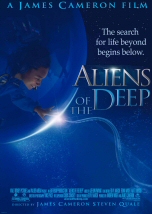









Aliens of the Deep is the result of expeditions to several hydrothermal vent sites in the Atlantic and the Pacific. These are violent volcanic regions where new planet is literally being born and where the interaction between ocean and molten rock creates plumes of super-heated, chemically-charged water that serve as oases for animals unlike anything ever discovered. Six-foot tall worms with blood-red plumes and no stomach, blind white crabs, and a biomass of shrimp capable of 'seeing' heat all compete to find just the right location in the flow of the super-heated, life-giving water or to fry.