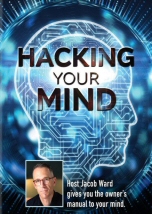
Jacob Ward travels the globe to investigate Decision Science. We imagine our conscious minds make most decisions but in reality we go through much of our lives on 'Autopilot'. And marketers and social media companies rely on it. The first part offers you the owner’s manual for this autopilot. The second part, 'Weapons of Influence', explores how politicians, social media companies and corporate marketers use big data to hack decision-making system. The third part, 'Us vs. Them', shows how this autopilot biases fuel the nation's divisions and how to overcome them. The last part, 'The Wings of Angels', explores why hacking for good is an important scientific discovery; how people can hack their own minds to improve their lives and change the world for the better.
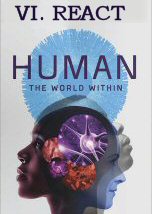
How do you react to the world around you? Through the lens of a boxer, a first responder, a cell tower climber and a man with a bionic limb, we'll go deep into the universe of the most powerful machine on earth: the human brain and the vast nervous system it controls. The human body is full of systems, but there's one system that controls all the others, and it might be the one that truly makes you you: The nervous system.
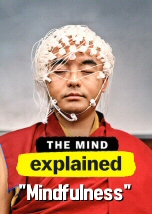
Modern headlines are claiming mindfulness may cure anxiety, depression, and a whole host of other health problems. How can this simple practice of watching your own breath change the way your brain works? And can that change your life? The fourth episode of the series looks at the power of mindfulness and meditation. It examines different kinds on meditation (transcendental, dynamic, and religious) and notes that they are different from mindfulness meditation (Satipatthana). Also it talks to neuroscientists who discuss what happens in the brain during meditation.
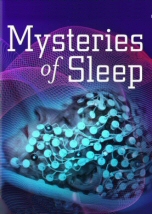
Why do we sleep? And what does sleep have to do with memory, trauma, and our emotions? From fruit flies to whales, virtually every animal sleeps. But why? Why do we need to spend nearly a third of our lives in such a defenseless state? Scientists are peering more deeply into the sleeping brain than ever before, discovering just how powerful sleep can be, playing a role in everything from memory retention and emotional regulation to removing waste from our brains. So why are we getting so little of it?
Two and a half thousand years ago, the Greek philosopher Socrates worried that the wide use of writing would have a negative impact on people's minds. He said that writing would create forgetfulness, because people will not use their memories. They would trust the external written characters and not remember themselves. In a world with an ever-growing tech industry, Michael Stevens tries to find out what effect technology has on our brains. He finds Technology isn't just changing our lives, it's changing our brains. In his experiments he tests what just 10 days of gaming does to things like our spatial memory.
Your brain is like a hungry sponge. It's constantly absorbing information. It thrives when stimulated. Between smartphones and books, and movies, and friends and family, thousands of sensations are constantly going into our heads. But what if it all got cut off?. Imagine being confined to a 10-by-10-foot room in complete isolation. No timekeeping devices, no phones, no books, nothing to write on, no windows. Psychologists say that fewer than three days in a room like this can lead to brain damage. I will be staying in this room for three days. Michael explores the effects of isolation on the human mind by subjecting himself to a very interesting experiment.








The first part offers you the owner’s manual for this autopilot. The second part, 'Weapons of Influence', explores how politicians, social media companies and corporate marketers use big data to hack decision-making system. The third part, 'Us vs. Them', shows how this autopilot biases fuel the nation's divisions and how to overcome them. The last part, 'The Wings of Angels', explores why hacking for good is an important scientific discovery; how people can hack their own minds to improve their lives and change the world for the better.