











Last Watched

"Research"  Sort by

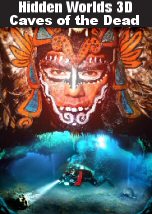
Hidden Worlds 3D Caves of the Dead

   2013    History    3D    HD
In the days of the Mayas, cenotes – deep, natural pits on the Yucatan peninsula - provided the only means of obtaining drinking water. But in the mythology of this advanced civilisation, these waterholes and caves were also the entrance to Xibalba – the underworld. All deceased were obliged to pass through Xibalba and wait there until they were called into heaven. It was a place in which one made sacrifices to the gods – objects of daily life, as well as bloody, human sacrifices. To this day, the relics of these acts are still in place preserved underwater for more than a thousand years. The entrance to the underworld begins at a dirty waterhole in the middle of the Mexican jungle overgrown and barely recognisable. But immediately after entry, a hall of breath-taking dimensions and beauty is revealed. As if they were sculptures, stalactites and stalagmites lend the underwater cave an almost sacred ambience. By now, one has succumbed to the fascination emanated by the world’s largest underwater cave system. We accompany four professional research divers to Yucatan – a team of specialists, able to squeeze their bodies through crevices and holes, barely larger than their bodies and who master dives that would push even the most experienced divers to their limits. With them, we penetrate worlds only a few people have ever ventured into. We encounter the remains of human victims, prehistoric fireplaces and primeval animal skeletons and undertake a dive, which takes us from the primeval forest to the open sea. We then enter Xibalba – the place of myths and the dead. In the days of the Mayas - a voyage of no return. Today, this is one of the greatest challenges one can face as a diver – the hidden world of the underwater caves of Yucatan – all filmed in 3D.
The Age of Aging

   2015    Medicine
In recent years, close study of the aging process has opened up new ways that could help us all live healthier for longer. Can we move beyond treating individual diseases, and instead treat the aging process itself? But would a longer life necessarily be a better life? A loose-knit group of researchers believe the real breakthrough is extending our health span - the period of life spent free of disease". Hear from Laura Deming, who dropped out of M.I.T. at the age of 14 and committed herself to finding and funding projects that can expand the human health span, and Dr. Brian Kennedy, whose work in the basic biology of aging has been crucial to the development of countless other researchers' work.

Can Alzheimer Be Stopped

   2016    Medicine
Join investigators as they untangle the cause of Alzheimer’s and race to develop a cure. Alzheimer’s disease strikes at the core of what makes us human: our capacity to think, to love, and to remember. The disease ravages the minds of over 40 million victims worldwide, and it is one of the greatest medical mysteries of our time. Join investigators as they gather clues and attempt to reconstruct the molecular chain of events that ultimately leads to dementia". Follow key researchers in the field who have helped to develop the leading theories of the disease. Along the way, meet individuals from all walks of life who will reveal what it’s like to struggle with Alzheimer’s. Among them, members of a unique Colombian family who have learned that their genetic predisposition all but guarantees early onset Alzheimer’s. Yet there may be hope. Join these courageous patients participating in clinical trials, and then go behind the scenes of the major drug trials to see how researchers target and test therapies that may slow and even prevent Alzheimer’s

The Internets Own Boy. The Story of Aaron Swartz

   2014    Culture
the rise and fall of a tech industry prodigy. Interviews with his friends and loved ones paint a portrait of Swartz as a martyr of freedom of information and hail his fight for the public's right to access tax-funded academic and scientific research, culminating in a personally devastating two-year Federal lawsuit." An avid researcher who had previously accessed otherwise private databases, Swartz, acting "in the grand tradition of civil disobedience to declare... opposition to this private theft of public culture" used MIT computers to access tax-funded research that would otherwise be held privately by for-profit publishers, an incident many viewers may remember from national headlines just a few year ago. Though neither MIT nor the digital repository Swartz accessed pressed charges, a US Attorney stepped in and filed a 13-count felony charge against Swartz, threatening him with over $1 million in fines and up to 35 years of jail time. Despite the defense of his peers, these events launched Swartz into a two-year long downward spiral of withdrawal and depression. Aaron Swartz's untimely death at the age of 26.

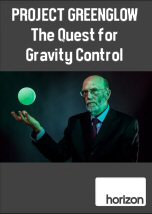
Project Greenglow The Quest for Gravity Control

   2016    Science
For centuries, the precise workings of gravity have confounded the greatest scientific minds - from Newton to Faraday and Einstein - and the idea of controlling gravity has been seen as little more than a fanciful dream. Yet in the mid 1990s, UK defence manufacturer BAE Systems began a ground-breaking project code-named Greenglow. Nasa was simultaneously running its own Breakthrough Propulsion Physics Project". It was concerned with potential space applications of new physics, including concepts like 'faster-than-light travel' and 'warp drives'. Looking into the past and projecting into the future, Horizon explores science's long-standing obsession with the idea of gravity control. It looks at recent breakthroughs in the search for loopholes in conventional physics and examines how the groundwork carried out by Project Greenglow has helped change our understanding of the universe. Gravity control may sound like science fiction, but the research that began with Project Greenglow is very much ongoing, and the dream of flying cars and journeys to the stars no longer seems quite so distant.

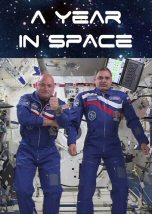
A Year in Space

   2016    Technology
Follow astronaut Scott Kelly’s record-breaking 12-month mission on the International Space Station, from launch to landing, as NASA charts the effects of long-duration spaceflight. A Russian Soyuz spacecraft carried Scott Kelly of NASA and Mikhail Kornienko of Roscosmos to the space station for the longest space mission ever assigned to a NASA astronaut". The expedition provided important insights into operational and scientific areas in human research in space and on Earth. Integrated scientific investigations between NASA and Roscosmos will combine resources to improve data sharing among space medical and human research communities, as well as help inform current assessments of crew performance and health and better determine and validate countermeasures to reduce the risks associated with future exploration as NASA plans for missions around the moon, to an asteroid and eventually to Mars.
The Cell

The Cell

  Science
Asia

Asia

2024  Nature
P.U.L.S.E

P.U.L.S.E

2006  Art
Prehistoric Planet II

Prehistoric Planet II

2023  Science
Life

Life

2009  Nature
First Life

First Life

2010  Science
The Green Planet

The Green Planet

2022  Nature