

Last Watched

"Social"  Sort by

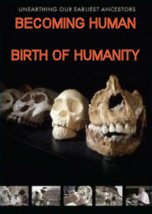
Birth of Humanity

   2010    History
We will nvestigate the first skeleton that really looks like us –Turkana Boy– an astonishingly complete specimen of Homo erectus found by the famous Leakey team in Kenya. These early humans are thought to have developed key innovations that helped them thrive, including hunting large prey, the use of fire, and extensive social bonds. The program examines an intriguing theory that long-distance running –our ability to jog– was crucial for the survival of these early hominids. Not only did running help them escape from vicious predators roaming the grasslands, but it also gave them a unique hunting strategy: chasing down prey animals such as deer and antelope to the point of exhaustion. Birth of Humanity also probes how, why, and when humans' uniquely long period of childhood and parenting began.
Series: Becoming Human
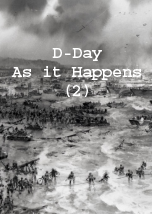
D-Day: As it Happens (2)

   2013    History
D-Day: As It Happens is a 24-hour history event to be broadcast across TV, web, mobile devices and social media, telling the story of this pivotal event in 20th-century history in a completely new way. Using newly-analysed archive footage, viewers can track the progress of seven people who were there on the day, each of them a real participant in the 1944 invasion. And they can do so moment by moment in real time, encountering the twists and turns of the fighting at the same time as the D-Day seven did, and learning their fate as the action unfolds in parallel with the present, Narrated by Peter Snow, with Channel 4 presenter and former marine Arthur Williams, and experts including former British Army officer Colonel Tim Collins and front-line journalist Lorna Ward. The second programme reveals what happened to the seven real people the event is following in real time, and also rounds up the events of D-Day.
Series: D-Day

Homo Interneticus

   2010    Technology
Dr Aleks Krotoski concludes her investigation of how the World Wide Web is transforming almost every aspect of our lives. Joined by Facebook founder Mark Zuckerberg, Bill Gates, Al Gore and the neuroscientist Susan Greenfield, Aleks examines the popularity of social networks such as Facebook and asks how they are changing our relationships. And, in a ground-breaking test at University College London, Aleks investigates how the Web may be distracting and overloading our brains.
Series: The Virtual Revolution

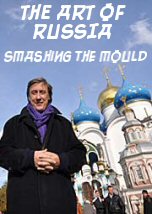
Smashing the Mould

   2009    Art
The final part examines political revolution and how art was at the forefront of throwing out 1,000 years of royal rule, from its earliest revolutionary days of enthusiasm and optimism when painting died, the poster was king and the machine-made triumphed over the handmade to the dead hand of Socialist Realism. Andrew roots out great portraits of Stalin now hidden in museum storerooms and never on public view, looks at the transformation of the Moscow metro into a great public art gallery and visits the most stunning creation of post-war Communist rule, the Space Monument. Finally, he comes to the confusion and chaos of Russia today and how it is producing some of the world's strangest art - from heroic sculptures of Russian leader Vladimir Putin to the insides of a giant erotic apple; from the recreation of the Imperial royal family facing the firing squad to sculpture in liquid oil; from Russia's embrace of the commercial art market to a return to Socialist Realism. Russia seems to stand on another brink of revolution.
Series: The Art of Russia

Are We All Bigots

   2015    Culture
If you had less than one second to make a life-or-death decision to shoot a man who might be armed with a lethal weapon, what would you do? Would the ethnicity of the man affect your decision? Are you sure? The outcome – whatever your race – will surprise you. Brain imaging studies are showing that negative cultural stereotypes hijack everyone’s subconscious decision-making. But some science says we can overcome bigotry through exposure, self-awareness and flexible social networks… and, most controversially of all, ultra-violent video games!
Series: Through the Wormhole Season 6

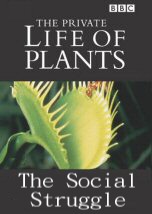
The Social Struggle

   1995    Nature
Fourth episode examines how plants either share environments harmoniously or compete for dominance within them. Attenborough highlights the 1987 hurricane and the devastation it caused. However, for some species, it was that opportunity for which they had lain dormant for many years. The space left by uprooted trees is soon filled by others who move relatively swiftly towards the light. The oak is one of the strongest and longest-lived, and other, lesser plants nearby must wait until the spring to flourish before the light above is extinguished by leaves. Tropical forests are green throughout the year, so brute force is needed for a successful climb to the top of the canopy: the rattan is an example that has the longest stem of any plant. As its name suggests, the strangler fig 'throttles' its host by growing around it and cutting off essential water and light. Some can take advantage of a fallen tree by setting down roots on the now horizontal trunk and getting nutriment from the surrounding moss and the fungi on the dead bark. The mountain ash (eucalyptus regnans) grows so tall, that regeneration becomes a considerable problem. It is easily flammable, so its solution is to shed its seeds during a forest fire and sacrifice itself. It therefore relies on the periodic near-destruction of its surroundings in order to survive. Attenborough observes that catastrophes such as fire and drought, while initially detrimental to wildlife, eventually allow for deserted habitats to be reborn.
Series: The Private Life of Plants
Cosmos

Cosmos

1980  Science
Planet Earth II

Planet Earth II

2016  Nature
Cosmos: Possible Worlds

Cosmos: Possible Worlds

2020  Science
Myths and Heroes

Myths and Heroes

2005  History
Modern Masters

Modern Masters

2024  Art
Food Inc

Food Inc

2023  Technology
Untold

Untold

2021  Culture