Seafood is a substantial part of the daily diet of over three billion people and oceans absorbs almost a third of all the greenhouse gases we emits. Buy the ocean it is not what it once was. Scenes of extraordinary ocean abundance now only exist in far-off places or in tales from the past. We urgently need to mend our relationship with our oceans and allow them to thrive once again. Prince William, David Attenborough and Shakira find out about inspiring people and projects across the world that can help us stop damaging the oceans and enable their revival.
Humans have long gazed up at the night sky, wondering whether other lifeforms and intelligences could be thriving on worlds far beyond our own. But over the last few decades, ultra-sensitive telescopes and dogged detective work have transformed alien planet-hunting from science fiction into hard fact. We expected to find worlds similar to the planets in our own solar system, but we instead discovered a riot of exotic worlds. Vivid animation based on data from the most successful planet hunter of them all, the Kepler space telescope, brings these worlds into view: puffy planets with the density of polystyrene, unstable worlds orbiting two suns and 1,000-degree, broiling gas giants with skies whipped into titanic winds. But perhaps the most startling discovery was the number of worlds that may be contenders for a second Earth, at the right distance from their sun to have that ingredient so crucial for life as we know it, liquid water. Amongst them, we witness the most tantalizing discovery of all: a so-called ‘super-Earth’, situated in the Goldilocks zone - the area just the right distance from a sun to potentially support life - and with the faint signal of water in its atmosphere.
In changing seas and oceans, cephalopods like the cuttlefish and the giant Pacific octopus must rely on their remarkable intelligence to survive. Their alien appearance comes with astonishing resources, independence, and invention. And there's still so much to learn about these rarely seen legends of the deep.
In 1940, France has fallen and Hitler orders Operation Sealion, the invasion of Great Britain. But first the Luftwaffe must defeat the RAF for seaborne landings to succeed. In July 1940 an epic struggle in the skies above England begins. Only a brilliant defensive system and the bravery of young pilots stand in the Luftwaffe’s way. Wave after wave of German bombers are attacked by British planes. Featuring the last interview with the youngest Spitfire-pilot in the battle, Geoffrey Wellum.
Lil Hughes Knipp recalls meeting Father Maskell near his end... and knowing that he would never be charged. The search for Brother Bob and a potential killer begins, and the revelation of a potential suspect named Edgar Davidson comes forward with an interesting story. With more people coming forward, more suspects appear including a man named Billy Schmidt who lived in Cathy’s apartment. A contact from one of Cathy’s sisters could give new insight on the case.
This is the first of two episodes dissecting the psyche of Daniel Ricciardo. A second big money move in two years now sees the Australian set foot on the shore of the McLaren Technology Centre, only to find the territory is already occupied by Lando Norris. The Australian looks like he was really hoping to flash the car up into Q3 with his teeth, only to find it isn’t that easy. Ricciardo is really struggling to get his head around the idiosyncratic MCL35M, but it gets worse: his boyish, funny, charismatic team-mate Norris is doing him over every week. The relations between the two drivers deteriorate also. Can Ricciardo recover his form? The footage is interspersed with short scenes featuring Ferrari drivers Charles Leclerc and Carlos Sainz.









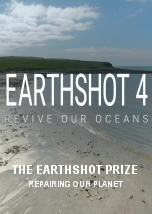




Prince William, David Attenborough and Shakira find out about inspiring people and projects across the world that can help us stop damaging the oceans and enable their revival.