Magic mushrooms, long considered sacred by the Indigenous Mazatec in Mexico, become the subject of scientific studies measuring the intense effects of its Psilocybin and its potential therapeutic use. In the second episode, we are introduced to Ben, who’s battled with crippling Obsessive-Compulsive Disorder (OCD) his entire life. When he had his firstborn, Ben’s life became full of panic attacks regarding his son’s safety, and he knew something had to change. Ben signed up for a psilocybin-assisted therapy clinical trial which was testing whether the psychedelic could help people with severe OCD. In the session under the influence of psilocybin, Ben felt decomposed and eventually grew into a tree. While living as a tree, he saw his human self, playing with his child. Though this sounds scary, from Ben’s perspective, it was beautiful. He was one with the universe, seeing himself in the ultimate third-person perspective. Finally, he saw how it could be different if he didn’t let his OCD control him. And several months out, all the symptoms disappeared. Ben’s story is one of many told in this series, which gives hope that help is right around the corner for the millions who suffer —often in silence— with debilitating mental disorders. But Michael Pollan’s work is showcasing the success stories. Often, even in the most successful trials, psychedelic-assisted therapy only helps up to a third of people enter remission. More frequently, patients are helped —sometimes substantially— but they still suffer with their illnesses and some people aren’t helped at all.
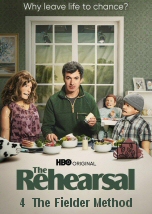
To recruit actors for his rehearsals, Nathan opens an acting studio in Los Angeles, teaching 'the Fielder Method', which involves covertly observing and imitating unaware subjects. Feeling insecure about his own performance, Nathan reenacts the class with actors and a fake Nathan as the teacher while the real Nathan plays the role of Thomas, a student. Nathan makes his students immerse themselves in other people's lives while he immerses himself in Thomas's life, even living in Thomas's home. Nathan returns to Oregon, where his 'son', Adam, is now a teenager. Nathan and Joshua, the actor playing Adam, decide that Adam should lash out due to resentment of his absentee father and develop a drug problem, a situation that mirrors Angela's own past. Adam suffers an overdose and is tended to by emergency responders played by Thomas and another Fielder Method graduate. After he runs away from home, the 15-year-old Adam reverts to a 6-year-old since Nathan plans to relive his son's earlier years.
All of our pets survived for thousands of years in the wild without any help from us, and this has led them to develop astonishing athletic abilities which we sometimes take for granted. As greyster dogs and endurance champ tortoises. Dog scootering uses one or more dogs to pull a human riding an unmotorized scooter. Greysters are a naturally-athletic breed that can run at 20 miles per hour for five miles while handling these carriages. No other animal can run at this speed, exerting this power, and expending this energy for so long. So, what's their secret? Greysters' stride length can be a staggering 16 feet and they are super efficient at absorbing and using oxygen. Greyster dogs have nearly twice mitochondria inside their cells than humans.
Clarkson is ready to submit his application for his farm restaurant; he must use gentle navigation and respect for bureaucracy in order to keep his interests afloat. This, of course, is not easy for Jeremy, so he must be careful. Faced with Council powers that be, Jeremy uses two of his greatest skills: diplomacy and respect for red tape.
The world waits as Koresh makes new promise of surrender but the FBI's controversial tactics turn the compound into an apocalyptic scene. U.S. Attorney General Janet Reno approved recommendations of FBI officials to proceed with a final advance in which the Branch Davidians would be removed from the Mount Carmel Center by force. In an attempt to flush Koresh out of the stronghold, the FBI resorted to pumping CS gas into the compound with the aid of an M728 Combat Engineer Vehicle, which was equipped with a battering ram. In the course of the advance, the Mount Carmel Center caught fire under circumstances that remain disputed. Barricaded inside the building, 79 Branch Davidians perished in the ensuing blaze; 21 of these victims were children under the age of 16. Koresh, then 33, died of a gunshot wound to the head during the course of the fire. It is unknown whether he committed suicide or if he was killed.
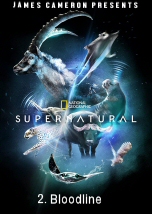
Continuing your bloodline is life's ultimate mission. In this unpredictable world, animals will do whatever it takes to keep their families safe. When family sticks together, communicating, collaborating and combining as one, everyone has the very best chance of survival. It takes every superpower possible to protect and provide for the family and secure the future for a new generation of amazing animals.











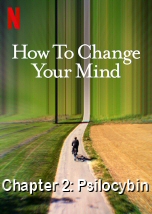









In the second episode, we are introduced to Ben, who’s battled with crippling Obsessive-Compulsive Disorder (OCD) his entire life. When he had his firstborn, Ben’s life became full of panic attacks regarding his son’s safety, and he knew something had to change. Ben signed up for a psilocybin-assisted therapy clinical trial which was testing whether the psychedelic could help people with severe OCD. In the session under the influence of psilocybin, Ben felt decomposed and eventually grew into a tree. While living as a tree, he saw his human self, playing with his child. Though this sounds scary, from Ben’s perspective, it was beautiful. He was one with the universe, seeing himself in the ultimate third-person perspective. Finally, he saw how it could be different if he didn’t let his OCD control him. And several months out, all the symptoms disappeared.
Ben’s story is one of many told in this series, which gives hope that help is right around the corner for the millions who suffer —often in silence— with debilitating mental disorders. But Michael Pollan’s work is showcasing the success stories. Often, even in the most successful trials, psychedelic-assisted therapy only helps up to a third of people enter remission. More frequently, patients are helped —sometimes substantially— but they still suffer with their illnesses and some people aren’t helped at all.