


Last Watched

"History"  Sort by

War of the Century: High Hopes

   2005    History
It was the bloodiest war in history, yet Hitler's brutal invasion of the Soviet Union and Stalin's subsequent fight back is surprisingly little known in the West. More than 30 million people died during Hitler and Stalin's terrible war in the East - more than in any other single war in history. With direct testimony from people who perpetrated atrocities and the victims who suffered on both sides, we bring the unspeakable to the screen and allowing victims and aggressors to tell the truth as they see it. In the first episode, we will look at Hitler's plans to invade the Soviet Union and the horror of the first months of conflict.
Series: War of the Century

The Crimes

   2007    History
Soldiers and officers continually came into conflict with their consciences. How much freedom did individuals have? Were they executing Hitler's criminal plans, or was it the Wehrmacht's war? There were crimes against humanity, against civilians, prisoners of war, and there was the Holocaust itself. The Trent Park records discovered and analysed by historian Sönke Neitzel, author of Tapping Hitler's Generals, show that the 84 German generals who were interned at Trent Park were aware of the severity of the war crimes they had been involved in and that some discussed them almost compulsively. They included the Commissar Order, to kill any Soviet commissar, and Rathenau's order to kill the Jews, including children.
Series: The Wehrmacht

Art of Spain: The Dark Heart

   2008    Art
Graham-Dixon journeys to the country’s scorched centre to explore Spanish art of the 16th and 17th centuries. From the mystical world of El Greco to the tender genius of Velazquez, this was a moment so extraordinary it became known as the Golden Age. But beneath the glittering surface was a dark and savage heart. Travelling from the architectural jewel of Toledo to majestic Madrid, Andrew Graham-Dixon traces the rise and fall of the Spanish Empire, the brutal conquest of the New World, and the religious madness of the Inquisition, to discover how a history so violent could produce some of the most beautiful art ever seen.
Series: Art of Spain

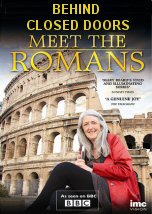
Behind Closed Doors

   2012    History
In this final episode, Mary Beard delves even deeper into ordinary Roman life by going behind the closed doors of their homes. She meets an extraordinary cast of characters - drunken housewives, teenage brides, bullied children and runaway slaves - and paints a more dynamic, lusty picture of Roman family life. Mary uncovers their preserved beds, furniture and cradles, tries on Roman wedding rings and meets some eccentric wives like Glyconis, praised by her husband for liking a drink or two, and Allia Potestas, who lived in a Roman menage a trois. Mary explores Roman parenting, childbirth and children, including Sulpicius Maximus, an 11-year-old schoolboy who was worked to death by his pushy parents, and Geminia Mater, a 5-year-old tomboy. Finally, Mary paints a more nuanced picture of Roman slavery and asks why if it was such a brutal institution did many Romans choose to be buried with their servants - living cheek by jowl in death, as in life
Series: Meet the Romans

The Genius of Charles Darwin: The Fifth Ape

   2008    Culture
Richard Dawkins deals with some of the philosophical and social ramifications of the theory of evolution. Dawkins starts out in Kenya, speaking with palaeontologist Richard Leakey. He then visits Christ is the Answer Ministries, Kenya's largest Pentecostal church, to interview Bishop Bonifes Adoyo. Adoyo has led the movement to press Kenya's national museum to sideline its collection of hominid bones pointing to man's evolution from ape to human.[5] The collection includes the Turkana Boy discovered by Kamoya Kimeu, a member of a team led by Richard Leakey in 1984. Dawkins discusses social darwinism and eugenics, explaining how these are not versions of natural selection, and that 'Darwin has been wrongly tainted'. He then meets with evolutionary psychologist Steven Pinker to discuss how morals can be compatible with natural selection. He goes on to explaining sexual selection, with peafowls as an example. To find out whether sexual selection plays a role for altruism and kindness among humans, he visits women who are looking for sperm donors, as well as a sperm bank manager. Dawkins also explains kin selection and selfish genes.
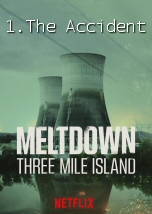
Meltdown: Three Mile Island

Meltdown: Three Mile Island

2022  Technology
The Cell

The Cell

  Science
Invisible Worlds

Invisible Worlds

2010  Science
Food Inc

Food Inc

2009  Technology
Leaving Neverland

Leaving Neverland

2019  Culture
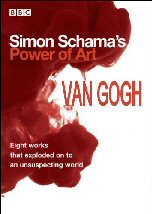
Power of Art

Power of Art

2006  Art