


Last Watched

"Han"  Sort by

Homo Interneticus

   2010    Technology
Dr Aleks Krotoski concludes her investigation of how the World Wide Web is transforming almost every aspect of our lives. Joined by Facebook founder Mark Zuckerberg, Bill Gates, Al Gore and the neuroscientist Susan Greenfield, Aleks examines the popularity of social networks such as Facebook and asks how they are changing our relationships. And, in a ground-breaking test at University College London, Aleks investigates how the Web may be distracting and overloading our brains.
Series: The Virtual Revolution
U2 Live at the Rose Bowl 3of3

   2010    Art
The 25 October 2009 concert in Pasadena, California was streamed live on U2's YouTube channel, the first time a concert was streamed live on YouTube. Over 10 million viewers streamed the concert, making it the largest streaming event in the website's history. The shoot was directed by Tom Krueger, who had previously worked with the band on the film U2 3D.
Series: U2 Live at the Rose Bowl

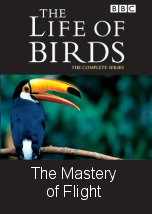
The Mastery of Flight

   1998    Nature
The second programme deals with the mechanics of flight. Getting into the air is by far the most exhausting of a bird's activities, and Sir Attenborough observes shearwaters in Japan that have taken to climbing trees to give them a good jumping-off point. The albatross is so large that it can only launch itself after a run-up to create a flow of air over its wings. A combination of aerodynamics and upward air currents (or thermals), together with the act of flapping or gliding is what keeps a bird aloft. Landing requires less energy but a greater degree of skill, particularly for a big bird, such as a swan. Weight is kept to a minimum by having a beak made of keratin instead of bone, a light frame, and a coat of feathers, which is maintained fastidiously. The peregrine falcon holds the record for being fastest in the air, diving at speeds of over 300 km/h. Conversely, the barn owl owes its predatory success to flying slowly, while the kestrel spots its quarry by hovering. However, the true specialists in this regard are the hummingbirds, whose wings beat at the rate of 25 times a second. The habits of migratory birds are explored. After stocking up with food during the brief summer of the north, such species will set off on huge journeys southwards. Some, such as snow geese, travel continuously, using both the stars and the sun for navigation. They are contrasted with hawks and vultures, which glide overland on warm air, and therefore have to stop overnight.
Series: The Life of Birds

Fear

   2014    History
The French army stops the German advance at the battle of the Marne, while the Germans halt the Russians at Tannenberg on the eastern front. In France, the warring parties dig themselves in for 4 years in the trenches. Soldiers from the colonies come lend a hand to their colonizers and the war becomes global.
Series: Apocalypse: World War 1

When Did Time Begin

   2014    Science
We float along the river of time. But does that river have a source? Where did time come from? Some believe time and space are one thing, and the Big Bang started the cosmic clock. Others believe the universe existed for almost half a million "years" before light could move and time began. Still others say time is older than our universe. But what if time itself is an illusion? Incredible new experiments may hold the answer. One groundbreaking experiment gives us the power to punch holes in time…and another may create a machine that operates outside time’s boundaries!
Series: Through the Wormhole Season 5