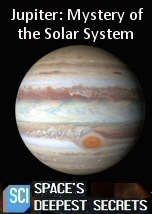
This documentary journeys with the scientists into the heart of a giant. Juno is the Nasa mission designed to peer through Jupiter's swirling clouds and reveal the wonders within. By projecting a 70-foot-wide, life-size Juno on a Houston rooftop, Scott Bolton, head of Juno, shows us how its fragile electronics are encased in 200kg of titanium. As Scott puts it, 'we had to build an armoured tank to go there.' Professor Andrew Ingersoll, Juno's space weatherman, reveals they have seen lightning inside Jupiter, perhaps a thousand times more powerful than Earth's lightning. This might be evidence for huge quantities of water inside Jupiter. Under the extreme conditions of Jupiter thousands of miles under the surface, hydrogen becomes a liquid metal. Juno is finding out how much liquid metallic hydrogen is inside Jupiter, and scientists hope to better understand how this flowing metal produces the most powerful aurora in the Solar System. But what is at Jupiter's heart? In Nice, Prof Tristan Guillot explains how Juno uses gravity to map the planet's centre. This can take scientists back to the earliest days of the solar system, because Jupiter is the oldest planet and it should contain clues to its own creation. By chalking out an outline of the Jupiter, Tristan reveals there is a huge rocky core - perhaps ten times the mass of Earth.
Blowing your mind, that's what Doctor Who's all about. What makes it all so fun is that while all this crazy science fiction is going on, there's actual facts. You've got space travel, you've got time travel, you've got regeneration. These are all the powerful themes of Doctor Who. And they're also the things that drive science forward.
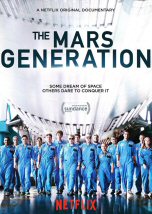
This history of NASA includes a look at a group of youths attending a space camp, whose enthusiasm could be the key to launching an expedition to Mars. 'Ever since we first began exploring space, every generation has had a craft to transport their dreams into space. We have seen the Apollo Era, the Shuttle Era, and now we are ready to see the Orion Era. My generation, the Mars Generation, will make it happen. It's our time, we are ready.' - Astronaut Abby.
On March 13, 1997 thousands of people claimed to have simultaneously witnessed unexplainable lights in the Phoenix, Arizona night sky. What were the lights? To this day it remains a mystery and footage of the incidents has been used in documentaries on the subject of UFOs. The Phoenix Incident is a fictionalized heart-pounding thriller based on this real-life event. This one-night event uses whistleblower testimony, recovered military footage and eyewitness accounts to create a sci-fi thriller that examines the US military's alleged engagement of alien spacecrafts. In addition to being able to experience this exciting film, event attendees will be exposed to an exclusive 5-minute documentary about UFO sightings and government cover ups and a special panel discussion previously captured at this year's UFO congress.
Exploring the moon was humankind’s most incredible journey. Now through the magic of 3D, you can take that giant leap for yourself. Presented and narrated by Tom Hanks, Magnificent Desolation: Walking on the Moon will transport you to the lunar surface to walk alongside the 12 extraordinary astronauts who have been there to experience what they saw, heard, felt, thought and did. A romantic, inspirational depiction of the Apollo astronauts travels on the moon peppered by their quotations of their impressions.
Is it humankind's greatest achievement? 12 billion miles away a tiny spaceship is leaving our Solar System and entering the void of deep space. It is the first human-made object ever to do so. Slowly dying within its heart is a plutonium generator that will beat for perhaps another decade before the lights on Voyager finally go out. But this little craft will travel on for millions of years, carrying a Golden Record bearing recordings and images of life on Earth. In all likelihood Voyager will outlive humanity and all our creations. It could be the only thing to mark our existence. Perhaps some day an alien will find it and wonder. The story of Voyager is an epic of human achievement, personal drama and almost miraculous success. Launched 16 days apart in Autumn 1977, the twin Voyager space probes have defied all the odds, survived countless near misses and almost 40 years later continue to beam revolutionary information across unimaginable distances.


















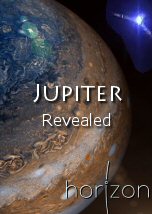





Under the extreme conditions of Jupiter thousands of miles under the surface, hydrogen becomes a liquid metal. Juno is finding out how much liquid metallic hydrogen is inside Jupiter, and scientists hope to better understand how this flowing metal produces the most powerful aurora in the Solar System. But what is at Jupiter's heart? In Nice, Prof Tristan Guillot explains how Juno uses gravity to map the planet's centre. This can take scientists back to the earliest days of the solar system, because Jupiter is the oldest planet and it should contain clues to its own creation. By chalking out an outline of the Jupiter, Tristan reveals there is a huge rocky core - perhaps ten times the mass of Earth.