The documentary tells the story of the extremely rare discovery of evidence of Roman crucifixion, unearthed in a routine archaeological dig in the Cambridgeshire Fens. When human remains were found alongside a variety of Roman artifacts, none of the team at Albion Archaeology saw anything out of the ordinary. But once the bones were washed back at HQ, something highly unusual was uncovered: a nail through the heel bone of one of the individuals. Could this be evidence of a Roman crucifixion? When they did some research, they found that only one confirmed example had ever been unearthed before, discovered in the 1960s in Jerusalem. To find out more, they called in renowned osteoarchaeologist Dr Corinne Duhig to investigate. With exclusive access to Corinne’s investigation and the remains themselves, The Cambridgeshire Crucifixion sets out to find out who this person was, how they lived and why they were put to death in this notoriously gruesome way. We perform a CT scan, DNA and isotope analysis of the remains, and use them to create a cutting-edge virtual autopsy of the skeleton, conducted by Corinne and one of her former students, biologist Prof Ben Garrod. A supporting cast of expert contributors help to analyse the artefacts found at the Fenstanton site and reveal a compelling picture of life in Roman Britain in the 1st century CE. The film culminates in a world first: a full forensic facial reconstruction of a victim of Roman crucifixion, conducted by world-leading expert Joe Mullins.
Winner of the Best Documentary Short Award, the film tells the story of four unassuming heroes who ensure no student is deprived of the joy of music. It is also a reminder of how music can be the best medicine, stress reliever and even an escape from poverty. Since 1959, Los Angeles has been one of the few United States cities to offer and fix musical instruments for its public school students at no cost. Those instruments, numbering around 80,000, are maintained at a Los Angeles downtown warehouse by a handful of craftspeople. The film profiles four of them, each specializing in an orchestra section, as well as students whose lives have been enriched by the repair shop's work. The film concludes with a performance by district alumni.
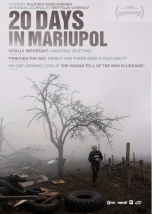
A team of Ukrainian journalists from The Associated Press trapped in the besieged city of Mariupol struggle to continue their work documenting atrocities of the Russian invasion. As the only international reporters who remain in the city, they capture what later become defining images of the war: dying children, mass graves, the bombing of a maternity hospital, and more. Drawing on director Mstyslav Chernov's daily news dispatches and personal footage of his own country at war, the film is a vivid, harrowing account of civilians caught in the siege, as well as a window into what it's like to report from a conflict zone, and the impact of such journalism around the globe.
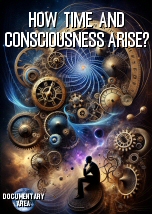
The documentary, an own production, immerses the viewer in a journey that blends science and philosophy, questioning the nature of time and unveiling a 4-dimensional universe, where space and time are integrated. We are invited to consider a universe in which past, present, and future coexist, suggesting that our linear perception of time might be more of a mental construction than a physical reality. The narrative progresses by exploring how quantum particles exist in states of probability until they are observed, at which point they acquire defined properties. Then, the provocative hypothesis is presented that observation also fixes the temporal dimension of the particles. The sensation of the flow of time and the distinction between past, present, and future are introduced as mental constructions, arising from the human brain's limited capacity to process the complexity of reality. It is then proposed that the mind, by observing itself, fixes itself in the temporal dimension, thus creating the illusion of the present. Finally, the impact of these theories on free will is discussed. This documentary challenges viewers to look beyond their everyday perceptions and consider the possibility that reality is much more complex and fascinating than our immediate experiences suggest. It is an invitation to explore the limits of science, philosophy, and the mind itself in search of answers to some of the deepest questions of existence.
More information on https://www.javier-serrano.blog/Ciencia/representacion_tridimensional_del_universo.php
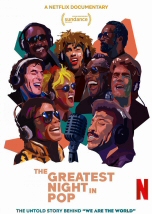
On January 25th, 1985, dozens of the era's most popular musicians gathered in Los Angeles to record a charity single for African famine relief. Setting egos aside, they collaborated on a song that would make history. The documentary transports viewers back to the recording of ‘We Are the World,’ capturing a seminal moment in music with gripping detail and emotion. Through an intimate lens, the film chronicles the night when some of the biggest names in the music industry united for a cause greater than themselves. With exclusive behind-the-scenes footage, candid interviews with the artists involved, and insights from music historians, the documentary reveals the challenges, camaraderie, and sheer talent that converged to make the recording session an unparalleled event in pop culture, making it a poignant reminder of the power of art to effect change.
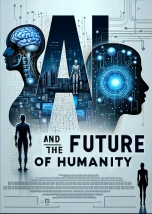
In this captivating film hosted by Anderson Cooper, viewers are presented with an insightful exploration of artificial intelligence (AI), its profound implications, and the ethical dilemmas it poses. The documentary begins with a startling revelation: what appeared to be Anderson Cooper was actually an AI-generated version, raising questions about the authenticity of what we see and hear. The narrative then shifts to broader concerns about AI replacing human roles across industries and its capability to outperform humans in tasks ranging from driving to creating art. Viewers are taken on a journey through various facets of AI, from the streets of San Francisco, where robot taxis hint at a future dominated by AI, to the insights of Yoshua Bengio, a pioneer in deep learning. The film also addresses the darker side of AI, including the potential for misuse and the challenges in distinguishing between reality and AI-generated content. The climax of the documentary presents a critical question: Can AI save humanity, or does it pose a threat to our existence? This thought-provoking exploration of AI's impact on our world is a must-watch for anyone curious about technology and its intersection with human life.










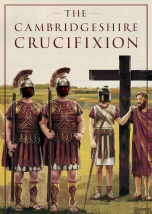



A supporting cast of expert contributors help to analyse the artefacts found at the Fenstanton site and reveal a compelling picture of life in Roman Britain in the 1st century CE. The film culminates in a world first: a full forensic facial reconstruction of a victim of Roman crucifixion, conducted by world-leading expert Joe Mullins.