

Last Watched

"Food"  Sort by

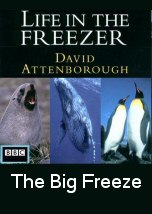
The Big Freeze

   1993    Nature
As almost all animal inhabitants of Antarctica are forced to migrate north, the sea underneath the frozen ice still provides a home to many specially adapted fish whose cells are protected from freezing through an 'antifreeze' liquid. Many of them feed on the faeces of other animals. The most notable larger animal that does not migrate north is perhaps the Weddell Seal, which can be found as close as 1300 kilometres to the pole. Groups of seals tear holes into the ice to dive for food and come up to breathe. The females come back to the ice to give birth. This episode also describes primitive plant life such as lichen, which can still be found on the continent in winter, even in the extremely dry and permanently frozen valleys conditions under which dead animals can lie frozen for many centuries without decomposing. It details the life of the Emperor Penguin, 'the only birds to lay their eggs directly on ice'. While other animals retreat, Emperors migrate not just to the ice, but into the Antarctic continent. The females lay eggs which are incubated by the males under the harshest conditions on Earth (huddling closely together for warmth), while the females return to the sea.
Series: Life in the Freezer
Earthlings

   2005    Nature
A feature length documentary about humanity's absolute dependence on animals (for pets, food, clothing, entertainment, and scientific research) but also illustrates our complete disrespect for these so-called 'non-human providers'. With an in-depth study into pet stores, puppy mills and animals shelters, as well as factory farms, the leather and fur trades, sports and entertainment industries, and finally the medical and scientific profession, the film uses hidden cameras and never before seen footage to chronicle the day-to-day practices of some of the largest industries in the world, all of which rely entirely on animals for profit. Powerful, informative and thought-provoking, EARTHLINGS is by far the most comprehensive documentary ever produced on the correlation between nature, animals, and human economic interests. There are many worthy animal rights films available, but this one transcends the setting.

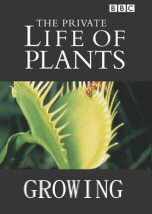
Growing

   1994    Nature
The second episode is about how plants gain their sustenance. Sunlight is one of the essential requirements if a seed is to germinate, and Attenborough highlights the cheese plant as an example whose young shoots head for the nearest tree trunk and then climb to the top of the forest canopy, developing its leaves en route. Using sunshine, air, water and a few minerals, the leaves are, in effect, the "factories" that produce food. However, some, such as the begonia, can thrive without much light. To gain moisture, plants typically use their roots to probe underground. Trees pump water up pipes that run inside their trunks, and Attenborough observes that a sycamore can do this at the rate of 450 litres an hour — in total silence. Too much rainfall can clog up a leaf's pores, and many have specially designed 'gutters' to cope with it. However, their biggest threat is from animals, and some require extreme methods of defence, such as spines, camouflage, or poison. Some can move quickly to deter predators: the mimosa can fold its leaves instantly when touched, and the Venus flytrap eats insects by closing its leaves around its prey when triggered. Another carnivorous plant is the trumpet pitcher that snares insects when they fall into its tubular leaves. Attenborough visits Borneo to see the largest pitcher of them all, Nepenthes rajah, whose traps contain up to two litres of water and have been known to kill small rodents.
Series: The Private Life of Plants

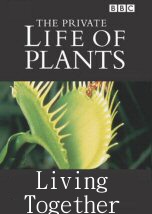
The Private Life of Plants Living Together

   1995    Nature
The fifth programme explores the alliances formed between the animal and plant worlds. Attenborough dives into Australia's Great Barrier Reef and contrasts the nocturnal feeding of coral, on microscopic creatures, with its daytime diet of algae. Some acacias are protected by ants, which will defend their refuge from any predator. Besides accommodation, the guards are rewarded with nectar and, from certain species, protein for their larvae as well. Fungi feed on plants but can also provide essential nutriment to saplings (Mycorrhiza). The connection is never broken throughout a tree's life and a quarter of the sugars and starches produced in its leaves is channelled back to its fungal partners. Meanwhile, fungi that feed on dead wood leave a hollow trunk, which also benefits the tree. Orchids enjoy a similar affiliation. Lichens are the product of a relationship between fungi and a photosynthetic associate, usually algae. They are extremely slow-growing, and a graveyard is the perfect location to discover their exact longevity. Mistletoe is a hemiparasite that obtains its moisture from a host tree, while using own leaves to manufacture food. Its seeds are deposited on another by the mistletoe tyrannulet, following digestion of the fruit. The dodder (Cuscuta) is also parasitic, generally favouring nettles, and siphons its nourishment through periodic 'plugs' along its stem. The rafflesia has no stem or leaves and only emerges from its host in order to bloom — and it produces the largest single flower: one metre across.
Series: The Private Life of Plants

Steve Jobs Man in the Machine

   2015    History
Directed by Alex Gibney, it follows the life and work of ex-Apple CEO Steve Jobs. Gibney starts the doc by showing how much people around the world worship Steve Jobs as if he were an idol. He then provides you with a wealth of background information about Jobs' childhood, teenage and college years including how he formed Apple Inc. Fortunately, not all of the doc is hagiography because Gibney does briefly delve into the darker side of Jobs, particularly how selfish he was and mistreated those around him including his ex-wife. Jobs comes across as a charming, intelligent narcissist who knows how to captivate an audience whenever he speaks. In other words, like all great narcissists, he's a very good actor. Gibney certainly knows how to choose the right subject because Jobs' complexity makes him all the more captivating and worthy of a feature-length film. As is usually the case with Gibney's docs, this one is slickly-edited and has just the right amount of comic relief, mostly in the brief video of an young boy joyfully lists all of Apple's technological devices that Steve Jobs created. You'll catch a glimpse of what makes Jobs fallible, and find a little mildly provocative food for thought about the advancement of modern technology, i.e. how technology helps to connect us to one another yet alienates us at the same time.

Tarsier Forest

   2020    Nature
Deep in the twisted roots of a giant strangler fig tree, hidden from view, lives perhaps the most bizarre nighttime creature of all. The spectral tarsier, tiny primates barely larger than a tennis ball. As darkness falls, a family of these small primates in Sulawesi ventures into the jungle to find food while protecting their babies.
Series: Earth at Night in Color