The natural world is full of colours. For us, they are a source of beauty, but for animals they are a tool for survival. David Attenborough reveals the extraordinary ways in which animals use colour: to win a mate, to fight off rivals and to warn enemies. New camera technologies - some developed especially for this series – also allow us to see colours and patterns usually invisible to human eyes. Ultraviolet cameras reveal bright signals on a butterfly’s wings and facial markings on yellow damselfish that are used as secret communication channels. Some animals can also detect polarized light, and specialist cameras can now show us how fiddler crabs see the world, and how mantis shrimp have strange polarization patterns on their bodies to signal to a mate or rival.
The most spectacular moments from the Seven Worlds, One Planet series that highlights the incredible rich and wonderful diversity of life found on our planet's seven unique continents. Millions of years ago incredible forces ripped apart the Earth's crust creating our seven continents - each with its own distinct climate, its own distinct terrain and its own unique animal life. Narrated by David Attenborough.
Through ancient manuscripts and oral tales Michael Wood charts the first human migrations out of Africa. He travels from the tropical backwaters of South India through lost ancient cities in Pakistan to the vibrant landscapes of the Ganges plain. In Turkmenistan dramatic archaeological discoveries cast new light on India’s past.
The search for extraterrestrial life is an age-old quest. But recent breakthroughs make today an era like no other in the history of astronomy. From the exhilarating probing of our own solar system and the Kepler mission’s astounding discovery of thousands of extrasolar planets, to the next-generation telescopes under development, the prospects for finding life beyond Earth have never been stronger. Still, daunting hurdles remain. How can we study anything light years away, let alone a little planet? In the vast universe, where should we even start to look? Is our failure to hear any other voices in the galaxy a sign that we are special? Join leading explorers now searching the galaxy for life and intelligence on other planets—and asks, if we do find other life in the universe... what would that mean?
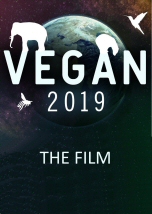
The film covers the ever growing vegan movement and how it's best for the animals, human health, and the planet. Every year Plant Based News puts together a highlight reel of vegan related events and developments. This has served as a great way to look back on the events of the year as we take a closer look at the effectiveness of the film as a whole.
COVID-19 is far from the first pandemic to wreak havoc in the world. A long line of infectious diseases have devastated and in some cases destroyed entire societies. Almost all of them started in animals and made the jump to humans. The Black Death spread across Europe and Asia in the 14th century leaving millions dead in its wake. Between the 15th and 18th centuries, European colonists brought smallpox to the Americas, the Pacific region and to Australia. In Europe, the 17th century saw a series of major epidemics. And at the end of the First World War, more people died of the Spanish flu than on the battlefield. This documentary examines the causes of these epidemics - whether it be lack of hygiene, interaction with animals, overcrowding, or the growth of cities - and how people travelling helped to spread disease and promote pandemics. It also sheds a light on the impact these infectious diseases have had on politics and societal change. Over the centuries, scientists managed to develop treatments and medicines to help control or even eradicate infectious diseases. Virologists are facing that task again with the coronavirus, as the world frantically searches for ways to overcome a pandemic which threatens our modern way of life.













Ultraviolet cameras reveal bright signals on a butterfly’s wings and facial markings on yellow damselfish that are used as secret communication channels. Some animals can also detect polarized light, and specialist cameras can now show us how fiddler crabs see the world, and how mantis shrimp have strange polarization patterns on their bodies to signal to a mate or rival.