





Last Watched

"Revolution"  Sort by

Jacques-Louis David

   2006    Art
Painting became an important means of communication for David since his face was slashed during a sword fight and his speech became impeded by a benign tumour that developed from the wound, leading him to stammer. He was interested in painting in a new classical style that departed from the frivolity of the Rococo period and reflected the moral and austere climate before the French Revolution. David became closely aligned with the republican government and his work was increasingly used as propaganda with the Death of Marat proving his most controversial work.
Series: Power of Art
Downloaded

   2013    Technology
Alex Winter explores the downloading revolution; the kids that created it, the bands and the businesses that were affected by it, and its impact on the world at large. He focuses on the advent of digital media sharing, including the rise of game-changing company Napster and controversial pioneers Shawn Fanning and Sean Parker. The digital revolution ultimately created a technology paradigm shift and upended the music industry. Audiences will hear insight from well known music artists and figures within the music industry including: The Beastie Boys' Mike D, Noel Gallagher, Henry Rollins, former Sony Music Chairman, Don Ienner, former record producer and Island Records founder Chris Blackwell and Hilary Rosen, former CEO of the Recording Industry Association of America.

Fractals Hunting the Hidden Dimension

   2010    Science
The ultimate adventure in scientific inquiry, this fascinating program follows the exploits of a small group of pioneering mathematicians who discovered a whole area of study that is revolutionizing all branches of understanding in the world: fractal geometry. Fractals are most recognized as a series of circular shapes with a border surrounded by jagged "tail-like" objects. The program, aimed at the average viewer does a fine job of explaining the background of fractals, first by beginning with the story of Pixar co-founder, Loren Carpenter's work at Boeing, developing 3D terrain from scratch using fractals. From there the program starts at the beginning with an introduction to Benoit Mandelbrot and his revolutionary work. The explanations are full of solid factual information but never talk above the level of a viewer who has some understanding of basic mathematical principles. Once the concept is presented the program spends the rest of the time showing how prevalent the fractal is in life. For a program about a mathematical concept, "Fractals" is very engaging, showing how the process was applied to special effects as far back as the Genesis planet from "Star Trek II" all the way to the spectacular finale on Mustafar in "Star Wars: Episode III." I found myself astonished at how fractals were the source of the lava in constant motion and action during the Obi-Wan/Anakin fight. What is more amazing is when the program delves into practical applications such as cell phone antennas, and eventually the human body. For the average person who enjoys watching science related programs, even on a sporadic basis, "Fractals" will prove to be a very worthwhile experience. The program is well produced, integrating talking head interviews (including some with Mandelbrot himself) with standard "in the field" footage. The structure of the program is very logical and never finds itself jumping around without direction. In simplest terms, this is a program as elegant as the designs it focuses on.

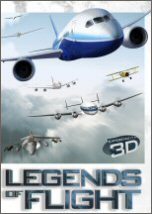
Legends of Flight

   2010    Technology    3D    HD
A film that will not only delight and entertain the aviation enthusiast but also educate and inspired renewed interest in aviation by the traveling public, the media and young people who may ultimately aspire to a career in aviation. It dramatized the design challenged, the financial risks and the many lessons learned from a century of aviation trial and error, bringing us to the dawn of a new era of revolutionary aircraft, the 787 Dreamliner and the A380". The film will focus on the 787 to facilitate audience understanding of the dynamic design differences between the two latest aircraft technologies. Search aviation history for the ultimate flying experience with some of today's greatest pilots. See how the airplanes of the 20th century helped influence the radical new design of 21st century aircraft. See how high tech manufacturers around the world use modern technology to coordinate the design and construction of new aircraft. Fly in the cockpit with chief test pilot, Mike Carriker, as he takes the new 787 Dreamliner on its first test flight.

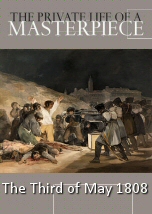
The Third of May 1808

   2004    Art
Arguably the most powerful painting about war ever achieved. It portrays the slaughter of civilians after Napoleonic troops entered Madrid in 1808. The programme reveals the historical truths behind the painting and shows exactly how Goya achieved this masterpiece of protest. he painting's content, presentation, and emotional force secure its status as a groundbreaking, archetypal image of the horrors of war. Although it draws on many sources from both high and popular art, The Third of May 1808 marks a clear break from convention. Diverging from the traditions of Christian art and traditional depictions of war, it has no distinct precedent, and is acknowledged as one of the first paintings of the modern era.
According to the art historian Kenneth Clark, The Third of May 1808 is 'the first great picture which can be called revolutionary in every sense of the word, in style, in subject, and in intention'. Discover how Goya used drawings by authentic witnesses to depict a real firing squad.
Series: The Private Life of a Masterpiece

China Has a Plan

   2019    Technology
From fears about work and privacy to a rivalry between the U.S. and China, the series explores the promise and perils of AI. It traces a new industrial revolution that will reshape and disrupt our lives, our jobs and our world, and allow the emergence of the surveillance society.
Today, China leads the world in e-commerce and is a society that bypassed credit cards. Now shops in stores are without cashiers, where the currency is facial recognition. No country has ever moved that fast. And in a short two-and-a-half years, China's A.I. implementation really went from minimal amount to probably about 17 or 18 unicorns, that is, billion-dollar companies. The progress was powered by a new generation of ambitious young techs pouring out of Chinese universities, competing with each other for new ideas, and financed by a new cadre of Chinese venture capitalists.
Series: In the Age of AI