Episode three explores the mind of one of the most fanatical of all Nazis and the insight that gives into the psychology of dictatorship. Hess is brought to Nuremberg from the UK where he had flown 4 years earlier much to the bemusement of the British. Overy explains that they must have quickly realised he was not normal. In the intervening time Hess’s mental state has further deteriorated and when interviewed by Chief Interrogator Colonel John Amen proclaims amnesia. Chief Interpreter Richard Sonnenfeldt explains that they brought in Göring to confront Hess but that he too failed to make an impression. Psychopathologist Prof. Edgar Jones proposes Hess’s behaviour patterns may be his way of escaping reality as he is forced to face the extent of the atrocities and choose between accepting his part of the blame or forsaking his Führer. However, as history Professor Robert Gellatel explains it is difficult to construct a case against Hess as he was imprisoned in England when the worst of the atrocities were carried out so British Prosecutor Mervyn Griffith-Jones must argue a conspiracy charge linking the pre-1939 persecutions to the post-1939 atrocities and a crimes against peace charge proving the flight to Scotland was merely a ruse.
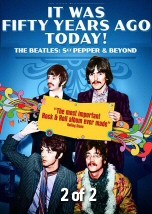
Featuring interviews with former employees, fellow musicians, family members and journalists, and supported by original and exclusive never-seen-before footage, this star-studded rockumentary offers a fascinating insight into the creation and recording of one of the most ground-breaking and influential albums in pop history. A documentation of the influences that went on to help create the seminal album Sgt. Pepper's Lonely Hearts Club Band.
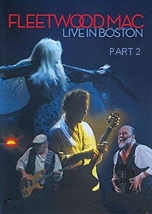
The band are captured performing live on 23–24 September 2003 at the FleetCenter (now known as the TD Garden) in Boston, Massachusetts during the group's Say You Will Tour, before a specially invited audience of industry insiders and friends. Having sold an amazing amount of records, and gone through tumultuous personal problems that would have finished off most bands, Fleetwood Mac have created an enduring legacy for themselves.
There is a majesty in the filming and editing that is missing in the other performances. Maybe it's the energy of this awesome Wembley crowd. Shot just before sunset, the transition to night time is magic and Freddie commands! He is loved by and connected to the crowd like very few performers. The sound is stellar, Brian is in great form, the harmonies are spot on, it is incredible to realize this wall of great sound is coming mostly from a live trio.
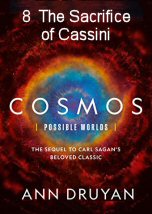
The 8th episode reviews Giovanni Cassini's life. His observations of Saturn and its moons would have an enduring effect on the scientific world. Neil deGrasse Tyson also narrates the mysterious untold story of the scientist who figured out how to go the Moon while fighting for his life in a WWI trench. Aleksandr Shargei changed his name to Yuri Kondratyuk out of fear for his life and wrote a manuscript on rocket motion and space colonization. This letter would end up capturing the attention of an engineer working on the Apollo program, John Houbolt, and would made the Apollo Mission possible. We will also know the saga of the twenty-year long odyssey of Cassini-Huygens spacecraft, a robotic explorer ordered to commit suicide on another world.
In the 1998 NBA finals, the defending NBA champion Chicago Bulls played against Utah Jazz in a repeat of the previous year's Final. With Utah leading 86-85 and few seconds remaining of the definitive match, John Stockton passed the ball to Karl Malone but Jordan stole the ball away and dribbled down the court to hit a 20-footer to end the finals. Battered and exhausted, the Bulls conclude their 'Last Dance' with a sixth championship. Michael, Phil Jackson and others reflect on the end of the dynasty.

















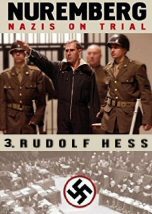






Psychopathologist Prof. Edgar Jones proposes Hess’s behaviour patterns may be his way of escaping reality as he is forced to face the extent of the atrocities and choose between accepting his part of the blame or forsaking his Führer. However, as history Professor Robert Gellatel explains it is difficult to construct a case against Hess as he was imprisoned in England when the worst of the atrocities were carried out so British Prosecutor Mervyn Griffith-Jones must argue a conspiracy charge linking the pre-1939 persecutions to the post-1939 atrocities and a crimes against peace charge proving the flight to Scotland was merely a ruse.