






Last Watched

"Ship"  Sort by

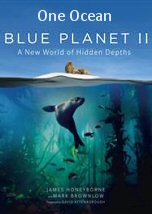
One Ocean

   2017    Nature    HD
Nearly a generation after the acclaimed Blue Planet documentary was released, David Attenborough returns to narrate this groundbreaking sequel/reboot. Blue Planet II focuses more heavily on mankind's influence on the world's oceans through both global pollution and climate change. This series features a variety of revolutionary segments never before seen in a video documentary. One Ocean Footage of marine life in different environments around the north, beginning with a tropical coral reef which has medicinal properties for dolphins, and is used as a tool by tusk fish. In Japan, a shipwreck is home to the Asian sheepshead wrasse, which can change gender, while in the polar north, walruses struggle to find ice floes for their pups to rest on as climate change takes its toll on the environment.
Series: Blue Planet II
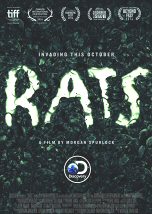
Rats

   2016    Culture
The film goes deep beneath the surface to explore the lives of man's greatest parasite. Morgan Spurlock unveils a new form of documentary horror storytelling, journeying around the world to bring viewers face to face with rats while delving into our complicated relationship with these creepy creatures. Taking us into the rats nests in ways never before captured on film, RATS dives deep into New York City's parks, subway tunnels, and sewers; venture to rice paddies in Cambodia and Vietnam where rats are caught and sold as food, cross worldly streets in India paroled by the revered Night Rat Killers, journey to English countryside where packs of terriers kill hundreds of rats per day, and look inside a New Orleans lab, where scientists are studying how flooding and abandoned neighbourhoods are making rats more invasive than ever.

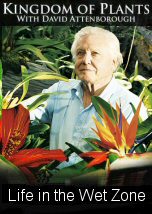
Kingdom of Plants Life in the Wet Zone

   2012    Nature    3D    HD
Written and presented by David Attenborough, who said: 'One of the most wonderful things about filming plants is that you can reveal hidden aspects of their lives, you can capture the moment as one plant strangles another, and as they burst into flower. But whilst time-lapse photography allows you to see things that no human being has ever seen before". David begins his journey inside the magnificent Palm House, a unique global rainforest in London. Here, he explores the extraordinary plants that are so well adapted to wet and humid environments and unravels the intimate relationships between wet zone plants and the animals that depend on them. It was in the wet zones of the world that plants first moved on to land and in the Waterlily House David reveals how flowers first evolved some 140 million years ago. Watching a kaleidoscope of breath-taking time-lapses of these most primitive of flowers swelling and blooming in 3D, he is able to piece together the very first evolutionary steps that plants took to employ a wealth of insects to carry their precious pollen for the first time. David discovers clues to answer a question that even had Charles Darwin stumped: how did flowering plants evolve so fast to go on to colonise the entire planet so successfully?
Series: Kingdom of Plants

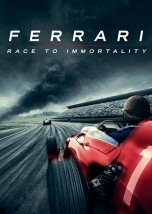
Ferrari: Race to Immortality

       Culture
The 1950's - the iconic Scuderia Ferrari battle to stay on top in one of the deadliest decades in motor racing history. Cars and drivers were pushed to their limits, and the competition for the world championship meant racing on a knife edge where one mistake could take a life. At the centre of it all was Enzo Ferrari, a towering figure in motor racing who was driven to win at any cost.
Amidst the stiff competition within his Ferrari team, two of its British stars, Peter Collins and Mike Hawthorn, put friendship first and the championship second. Ferrari: Race to Immortality tells the story of the loves and losses, triumphs and tragedy of Ferrari's most celebrated drivers in an era where they lived la dolce vita during the week and it was win or die on any given Sunday.

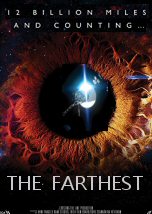
The Farthest

   2017    Technology
Is it humankind's greatest achievement? 12 billion miles away a tiny spaceship is leaving our Solar System and entering the void of deep space. It is the first human-made object ever to do so. Slowly dying within its heart is a plutonium generator that will beat for perhaps another decade before the lights on Voyager finally go out. But this little craft will travel on for millions of years, carrying a Golden Record bearing recordings and images of life on Earth. In all likelihood Voyager will outlive humanity and all our creations. It could be the only thing to mark our existence. Perhaps some day an alien will find it and wonder. The story of Voyager is an epic of human achievement, personal drama and almost miraculous success. Launched 16 days apart in Autumn 1977, the twin Voyager space probes have defied all the odds, survived countless near misses and almost 40 years later continue to beam revolutionary information across unimaginable distances.

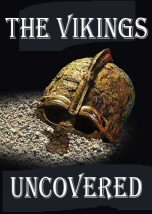
The Vikings Uncovered

   2016    History
Dan Snow uncovers the lost Vikings in America with space archaeologist Dr Sarah Parcak. Sarah uses satellites 383 miles above the earth to spot ruins as small as 30cm buried beneath the surface. As Sarah searches for Viking sites from Britain to America, Dan explores how they voyaged thousands of miles when most ships never left the shoreline. He also tracks their expansion west, first as raiders and then as settlers and traders throughout Britain and beyond to Iceland and Greenland. In North America they excavate what could be the most westerly Viking settlement ever discovered.
The Sky at Night

The Sky at Night

2025  Science
The Story of the Jews

The Story of the Jews

2013  History
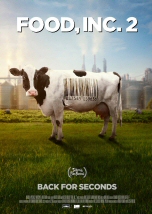
Food Inc

Food Inc

2023  Technology
Welcome to Earth

Welcome to Earth

2021  Nature
Top Gear

Top Gear

2012  Technology