

Last Watched

"family"  Sort by

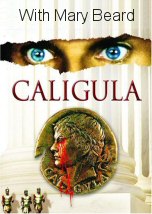
Caligula

   2013    History
Two thousand years ago one of history's most notorious individuals was born. Professor Mary Beard embarks on an investigative journey to explore the life and times of Gaius Julius Caesar Augustus Germanicus - better known to us as Caligula. Caligula has now become known as Rome's most capricious tyrant, and the stories told about him are some of the most extraordinary told about any Roman emperor. He was said to have made his horse a consul, proclaimed himself a living God, and indulged in scandalous orgies - even with his own three sisters - and that's before you mention building vast bridges across land and sea, prostituting senators' wives and killing half the Roman elite seemingly on a whim. All that in just four short years in power before a violent and speedy assassination in a back alley of his own palace at just 28-years-old." But how much of his story is true? Travelling across the Roman world - from Germany and Capri in the bay of Naples to the astonishing luxury of his life in imperial Rome - Mary attempts to peel away the myths. Some stories are difficult to get to the bottom of as they were written by hacks long after his death, but there is plenty of surviving evidence where the 'real' Caligula can be glimpsed. Such as in the extraordinary luxury of his private yachts outside Rome; in the designs he chose for his coins when he became Emperor; in an eye-witness account of Caligula's withering humour written in 41AD; the trial documents covering the mysterious death of his father when he was just seven-years-old; and even in a record of his imperial slaves - from the palace spy to his personal trainer. Piecing together the evidence, Mary puts Caligula back into the context of his times to reveal an astonishing story of murder, intrigue and dynastic family power. Above all, she explains why Caligula has ended up with such a seemingly unredeemable reputation. In the process, she reveals a more intriguing portrait of not just the monster, but the man.
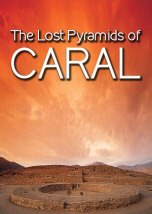
The Lost Pyramids of Caral

   2002    History
The magnificent ancient city of pyramids at Caral in Peru is a thousand years older than the earliest known civilisation in the Americas and, at 2,627 BC, is as old as the pyramids of Egypt. Many now believe it is the fabled missing link of archaeology - a 'mother city'. If so, then these extraordinary findings could finally answer one of the great questions of archaeology: why did humans become civilised?" For over a century, archaeologists have been searching for what they call a mother city. Civilisation began in only six areas of the world: Egypt, Mesopotamia, India, China, Peru and Central America. In each of these regions people moved from small family units to build cities of thousands of people. They crossed the historic divide, one of the great moments in human history. Why? To find the answer archaeologists needed to find a mother city - the first stage of city-building. Caral, is so much older than anything else in South America that it is a clear candidate to be the mother city. It also is in pristine condition. Nothing has been built on it at all. Instead laid out before the world is an elaborate complex of pyramids, temples, an amphitheatre and ordinary houses. Scientists developed a number of theories. Some said it was because of the development of trade, others that it was irrigation. Some even today believe it was all because of aliens. Gradually an uneasy consensus emerged. The key force common to all civilisations was warfare. Crucially, there is not the faintest trace of warfare at Caral; no battlements, no weapons, no mutilated bodies. Instead, Ruth's findings suggest it was a gentle society, built on commerce and pleasure. In one of the pyramids they uncovered beautiful flutes made from condor and pelican bones. They have also found evidence of a culture that took drugs and perhaps aphrodisiacs. Most stunning of all, they have found the remains of a baby, lovingly wrapped and buried with a precious necklace made of stone beads.

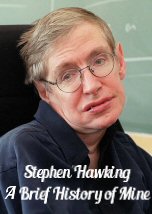
Stephen Hawking: A Brief History of Mine

   2013    History
This new feature-length biographical film tells the extraordinary and dramatic story of the planet's most famous living scientist, told for the first time in his own words and by those closest to him. Made with unique access to his private life, this is an intimate and moving journey into Stephen Hawking's past and present. Interviewees include Stephen Hawking's sister Mary, his ex-wife Jane, carers and students, as well as colleagues such as Roger Penrose, plus Apollo astronaut Buzz Aldrin, actors Benedict Cumberbatch and Jim Carrey, and Sir Richard Branson This inspirational portrait of an iconic figure relates Hawking's incredible personal journey from boyhood underachiever to scientific genius and multi-million-selling author. And it charts how he overcame being diagnosed with motor neurone disease - and being given just two years to live - to make amazing scientific discoveries and become a symbol of triumph over adversity. Born exactly 300 years after the death of Galileo, Hawking grew up in a family some regarded as eccentric. Always asking questions, he was nicknamed 'Einstein' at school. Hawking blossomed at Oxford, although he only spent an hour a day studying. He noticed that he was becoming clumsy and fell over for no apparent reason. He was diagnosed with motor neurone disease, but nevertheless started a family and embarked on his academic career, finding himself at the heart of a searing scientific debate about the origins of the universe. And as he lost the use of his body, Hawking had to find new ways to think. He went on to write the huge bestseller A Brief History of Time, and the film reveals the high and lows of his resulting fame and fortune.

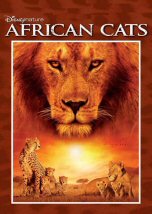
African Cats

   2011    Nature
An epic true story set against the backdrop of one of the wildest places on Earth, African Cats captures the real-life love, humour and determination of the majestic kings of the savannah. Narrated by Samuel L. Jackson, the story features Mara, an endearing lion cub who strives to grow up with her mother’s strength, spirit and wisdom; Sita, a fearless cheetah and single mother of five mischievous newborns; and Fang, a proud leader of the pride who must defend his family from a rival lion and his sons.

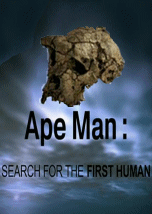
Ape Man: Search for the First Human

   2005    Science
After eight grueling years of hunting in the hot, wind-scoured desert of central Africa, an international team of researchers has uncovered one of the most sensational fossil finds in living memory: the well-preserved 7 million years old skull of a chimp-size animal, probably a male, that doesn't fit any known species. According to paleontologist Michel Brunet of the University of Poitiers in France, whose team reported the find in Nature last week, there is no way it could have been an ape of any kind. It was almost certainly a hominid — a member of a subdivision of the primate family whose only living representative is modern man.

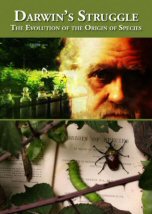
Darwin Struggle - The Evolution of the Origin of Species

   2009    Science
Documentary telling the little-known story of how Darwin came to write his great masterpiece, On the Origin of Species, a book which explains the wonderful variety of the natural world as emerging out of death and the struggle of life. In the twenty years he took to develop a brilliant idea into a revolutionary book, Darwin went through a personal struggle every bit as turbulent as that of the natural world he observed. Fortunately, he left us an extraordinary record of his brilliant insights, observations of nature, and touching expressions of love and affection for those around him. He also wrote frank accounts of family tragedies, physical illnesses and moments of self-doubt, as he laboured towards publication of the book that would change the way we see the world.
Alien Worlds

Alien Worlds

2020  Science
Cosmos

Cosmos

1980  Culture
Sonic Highways

Sonic Highways

2014  Art
Space Deepest Secrets

Space Deepest Secrets

2019  Science
Food Inc

Food Inc

2023  Technology