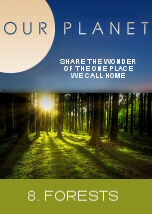
The last episode examines the fragile interdependence that exists between forests' wide variety of residents, including bald eagles, hunting dogs and Siberian tigers. Over half of all the world's trees, evergreen and deciduous, stand in great assemblies. For many of us, they are places of mystery and darkness. They are key to our climate, and home to countless unique species. The boreal forest contains 750 billion trees, and it stores over 40 percent of the world's carbon, making it a vital element in the fight against climate change. In the past, we have destroyed them without hesitation. Yet, forests do have an astonishing ability to recover. If we choose to give forests time and space, they could reclothe the earth with much of the rich and varied communities of animals and plants of which we have, so recently, robbed it. A future with more forests is key to the resilience of our planet.
Michael Jordan's return in 1995 energizes the Chicago Bulls, the city and the NBA, and the playoff loss the previous season fuels him to work harder than ever to get back on top. In 1998, Phil Jackson was given one final season with his legendary squad and thus the last dance of the 90s.
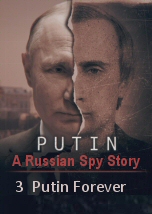
Putin returns to power under a storm after a four-year absence, but his attempts to improve his popularity are hobbled by accusations of corruption. The final part of this sinister history doesn’t quite come up to date with Vladimir Putin’s recent moves to 'reset' the Russian constitution so he can rule, theoretically, until at least 2036 – longer than Stalin. But it does walk us through some of his other moves to entrench power, including vote-rigging in parliamentary elections that was so brazen, his approval ratings fell amid mass street protests. Leading the protests was opposition leader Boris Nemtsov, who was then simply gunned down on a street near the Kremlin. These days, we are told, the world stage interests Putin more than the Russian one, and with various 'mini-Putins' installed around the world, his legacy looks safe.
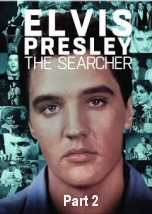
The second part of this series begins with his return home after his discharge from the army, and how he dealt with a rapidly changing pop scene. The picture is more complicated than even a fairly serious Elvis fan may understand. Priscilla Presley, who made some appearances in the first part, offers much more here, helping us understand how being forced into making a string of lousy movies was one kind of artistic prison, and then being ensconced in casino hotels for his famous Las Vegas residency was another. The man who had so carefully created his original persona was now stuck in the shallow roles others forced him to play.
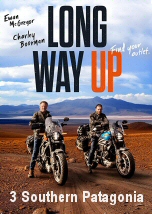
Episode 3 continues to show the obstacles faced with charging electric bikes in remote places, but Ewan McGregor and Charley Boorman start to learn and evolve their process. The risk of cold temperatures is high but they bravely do it anyway. The duo is having a hard time of it out there but, thankfully, the scenery is absolutely stunning. Heading through Patagonia, Ewan and Charley stay at an eco-lodge in one of the world’s remotest areas with people that live off the grid.
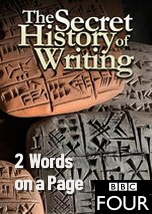
Writing itself is 5,000 years old, and for most of that time words were written by hand using a variety of tools. The Romans were able to run an empire thanks to documents written on papyrus. Scroll books could be made quite cheaply and, as a result, ancient Rome had a thriving written culture. With the fall of the Roman Empire, papyrus became more difficult to obtain. Europeans were forced to turn to a much more expensive surface on which to write: Parchment. Medieval handwritten books could cost as much as a house, they also represent a limitation on literacy and scholarship. No such limitations were felt in China, where paper had been invented in the second century. Paper was the foundation of Chinese culture and power, and for centuries how to make it was kept secret. When the secret was out, paper mills soon sprang up across central Asia. The result was an intellectual flourishing known as the Islamic Golden Age. Muslim scholars made discoveries in biology, geology, astronomy and mathematics. By contrast, Europe was an intellectual backwater. That changed with Gutenberg’s development of movable type printing. The letters of the Latin alphabet have very simple block-like shapes, which made it relatively simple to turn them into type pieces. When printers tried to use movable type to print Arabic texts, they found themselves hampered by the cursive nature of Arabic writing. The success of movable type printing in Europe led to a thousand-fold increase in the availability of information, which produced an explosion of ideas that led directly to the European Scientific Revolution and the Industrial Revolution that followed.








Over half of all the world's trees, evergreen and deciduous, stand in great assemblies. For many of us, they are places of mystery and darkness. They are key to our climate, and home to countless unique species. The boreal forest contains 750 billion trees, and it stores over 40 percent of the world's carbon, making it a vital element in the fight against climate change. In the past, we have destroyed them without hesitation. Yet, forests do have an astonishing ability to recover. If we choose to give forests time and space, they could reclothe the earth with much of the rich and varied communities of animals and plants of which we have, so recently, robbed it. A future with more forests is key to the resilience of our planet.