Oceans are the largest ecosystem on earth, covering two thirds of our world’s surface and providing half the oxygen in our atmosphere. They are home to as much as 80 per cent of all life on earth, and nearly three billion people rely on them for their primary source of food. But our planet’s oceans would be little more than stagnant wastelands, and life on planet earth would cease to exist, were it not for one simple factor: a global network of powerful ocean currents. Every drop of seawater on earth rides these currents, taking 1,000 years to complete a single circuit. Without the constant mixing of currents, tides and waves, our oceans would stop supporting life - and a healthy ocean is vital to a healthy planet.
A new force threatens our perfect planet. In the past, five mass extinction events were caused by cataclysmic volcanic eruptions. It was not the lava or ash that wiped out life, but an invisible gas released by volcanoes: carbon dioxide. Almost every part of modern life depends on energy created by burning fossil fuels, and this produces CO2 in huge amounts. Humans are changing our planet so rapidly, it’s affecting earth’s life support systems: our weather, our oceans and the living world. The greatest change to be made is in how we create energy, and the planet is brimming with natural power that can help us do just that. It’s these forces of nature - the wind, the sun, waves and geothermal energy - that hold the key to our future. Through compelling animal-led stories and expert interviews, we discover how CO2 is destabilising our planet. We meet rescued orphaned elephants in Kenya, victims of ever worsening droughts, and join ocean patrols off the coast of Gabon fighting to save endangered sharks. In the Amazon, we witness wildlife teams saving animals in the shrinking forests, and in San Diego we enter a cryogenic zoo preserving the DNA of endangered species before they become extinct.
The Caribbean is home to a notorious band of British pirates called the Flying Gang. They plunder merchant ships, sailing from the Americas to Europe and Africa. England's King George I has had enough, so he comes up with a shock tactic to end piracy. It's an offer from the King, a pardon, clemency for those who turn their backs on piracy. Those who refuse will be hunted down and hanged. Two pirates, Blackbeard and Charles Vane stand the King's man, Woodes Rogers. Who will win the final battle?
(Click CC for subtitles) Hector Berrellez's informants give him ground breaking evidence - first-hand, eyewitness accounts of Kiki's kidnapping, torture, and murder. He learns the incident took place in a cartel hacienda where high-level Mexican government officials were present, along with a mysterious Cuban. They also reveal the cartel and governments attempts to cover up the crime.
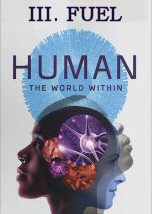
The episode is a journey through the human gut and the process of turning food into energy to keep the body going. Humans have turned eating into culture, a way to celebrate our roots, to bring us together. But food is really just one thing: Fuel. It's where you get the power to live your life. Even when you're sitting completely still, your body needs a lot of energy to stay on. But nowhere is the need for fuel more apparent than when you push yourself to the absolute limit. And the microbiome, the bacteria living in our gut, plays a great role in all this.
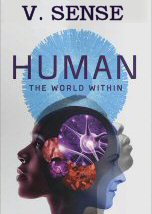
How do the five senses really work? In fact, there are many more than five, and they all work together to create our own version of reality. We dive into the stories of a pairs figure skating team, a perfumer, a cave explorer, and a musician to decipher how different ways of sensing the world all create their own vivid, and unique, picture. This episode explores the world of human sensation and how it defines reality.

















But our planet’s oceans would be little more than stagnant wastelands, and life on planet earth would cease to exist, were it not for one simple factor: a global network of powerful ocean currents. Every drop of seawater on earth rides these currents, taking 1,000 years to complete a single circuit. Without the constant mixing of currents, tides and waves, our oceans would stop supporting life - and a healthy ocean is vital to a healthy planet.